Jabeen Sahiba

Jabeen Sahiba is a talented content writer known for creating engaging, clear, and informative content across various topics. Her versatile writing style makes her a valuable asset to any project.

Tony Stewart, known to fans everywhere as “Smoke,” is an American racing legend whose career has stretched across go-karts, open-wheel cars, NASCAR stock cars, dirt machines, and now NHRA dragsters. Few drivers have ever reinvented themselves as boldly or as successfully as Stewart, and even today, he continues to chase new speed, new danger, and new glory.

On any given race weekend, you might now find Tony Stewart walking toward a Top Fuel dragster instead of a stock car. The scenery is different, but the energy around him feels the same: loud, unpredictable, and a little bit dangerous. His story is not just about championships. It is about a racer who never stopped looking for the next challenge.

From Small-Town Go-Karts to Big-Time Open-Wheel

Tony Stewart was born in Columbus, Indiana, in 1971. He began racing the way many greats do, behind the wheel of a go-kart. By 1980, he had already won his first championship, and by the end of his teens, he had collected national karting titles and the attention of the open-wheel world.

Stewart’s rise through the United States Auto Club (USAC) became the stuff of modern racing folklore. He mastered midgets, sprint cars, and Silver Crown machines, and in 1995, he did the nearly impossible: winning all three USAC national championships in the same year. This “Triple Crown Champion” instantly marked him as a generational talent capable of taming anything on four wheels.

His open-wheel dominance carried him into the newly formed Indy Racing League. In 1997, Stewart captured the IRL championship, proving that his speed translated just as well on the sport’s biggest stages.

Conquering NASCAR and Becoming “The People’s Champion”

When Tony Stewart joined NASCAR’s Cup Series in 1999, some questioned whether an open-wheel star could succeed in the heavier, more unruly stock cars. Stewart silenced those doubts almost immediately. He won three races as a rookie, claimed Rookie of the Year honors, and made it clear he was not just visiting. He belonged.

Driving the iconic orange No. 20 car, Stewart became known for a mix of brute aggression and uncanny race craft. Across 18 full seasons, he racked up 49 Cup Series victories and three championships in 2002, 2005, and 2011.

That 2011 title run remains one of NASCAR’s most thrilling championship battles. Stewart entered the playoffs as an underdog, then dominated the final stretch with a run of pure determination, eventually clinching the championship on a tiebreaker.

Fans connected with him because he was not polished or predictable. Tony Stewart said what he felt, raced with his heart on fire, and never tried to play the role of a corporate poster boy. That honesty, rough edges and all, made people love him. Before long, he had a nickname that fit him perfectly: “The People’s Champion.”

Stewart-Haas Racing: Driver, Owner, Leader

In 2009, Tony Stewart took one of the biggest risks of his career by becoming an owner-driver. He left Joe Gibbs Racing to join and co-own the rebranded Stewart-Haas Racing. Most owner-driver experiments fade out. Stewart’s became a powerhouse.

Behind the wheel of the No. 14 car—a tribute to his hero A.J. Foyt—he quickly found success. By 2011, he delivered the team’s first Cup championship as both driver and part-owner. Stewart-Haas Racing went on to claim another championship in 2014 with Kevin Harvick and grew into one of NASCAR’s elite operations.

Though the team later faced the hard decision to close after the 2024 season, Stewart’s impact as a competitive driver-owner remains one of the sport’s most impressive achievements.

A Man Who Refused to Stay in One Lane

Even after retiring from full-time NASCAR competition in 2016, Tony Stewart never slowed down. Through Tony Stewart Racing, he continued fielding sprint cars and midgets on dirt, collecting national titles with talented young drivers and giving back to the grassroots tracks where he built his reputation.

Then he made a move that surprised even his longtime fans: he jumped into NHRA drag racing. Stewart trained, tested, and embraced a new discipline that demands precision at 330-plus mph. He won the 2024 Top Alcohol Dragster title, then stepped into Top Fuel—the fastest, most explosive class in drag racing.

By 2025, Stewart had already earned multiple Top Fuel victories, proving once again that his talent is not confined to one type of machine or one type of racing world.

Racing has also become a family venture. Stewart is married to NHRA star Leah Pruett, and the pair have formed one of motorsport’s most compelling modern power couples, balancing team ownership, competition, and family life with an intensity that fits the Stewart brand.

Temper, Triumph, and the Hardest Moment

Tony Stewart’s career has not been without turbulence. His fiery personality, run-ins with competitors, and blunt exchanges with the media became part of his lore. They also made him human, brilliant, flawed, passionate, and unapologetic.

The darkest moment of his life came in 2014, when driver Kevin Ward Jr. was fatally struck during a sprint-car race. Stewart was not charged, but the tragedy cast a long shadow and reshaped how he viewed the sport he loved. He has rarely spoken about the incident in depth, yet its emotional weight is unmistakable in the years since.

A Hall of Famer Whose Story Is Not Finished

Tony Stewart holds a résumé that reads like a racing fantasy:

  • USAC Triple Crown champion
  • IndyCar champion
  • Three-time NASCAR Cup champion
  • Championship-winning team owner
  • Drag racing winner and title contender
  • NASCAR Hall of Famer
  • Motorsports Hall of Fame of America inductee

He remains the only driver in history to win top-level championships in both IndyCar and NASCAR—a testament to his unmatched versatility.

But perhaps the most exciting part of Tony Stewart’s legacy is that it is not complete. Even now, he walks toward new challenges with the same gritty conviction he had as a kid with a go-kart and big dreams.

Wherever Tony Stewart races next—dirt track, superspeedway, or a thunderous quarter-mile—fans will follow. Because with Stewart, there is always the feeling that the best chapter could still be ahead.

Conclusion

In the end, Tony Stewart’s career reminds us why motorsport captures the imagination in the first place. He is not just a driver with impressive statistics. He is a living example of grit, adaptability, and the pursuit of pure speed. From dirt ovals to NASCAR’s brightest stages and now the explosive world of Top Fuel, he has shown that passion does not fade with time. It simply finds new roads. And as long as Tony Stewart keeps suiting up, fans will keep watching, knowing that wherever he goes next, the ride will be unforgettable.

The AI chat world has expanded rapidly over the last two years, but only a few platforms have garnered as much attention as PolyBuzz AI. Whether you check out TikTok, Reddit, or AI-focused communities, you will find people talking about this fast-growing character chat platform. Some claim it is the most entertaining place for creative storytelling and emotional conversations, while others point out concerns about stability, content controls, and aggressive upsells.

This 2025 PolyBuzz AI review walks you through everything you need to know, like how it works, what makes it special, what its weaknesses are, whether it is safe, and if it is worth using compared to better-known alternatives like Character.ai or Replika.

What Is PolyBuzz AI?

Polybuzz AI is a character-based chat platform where you can talk with millions of AI personalities. These characters are created by the community and range from anime heroes to fictional villains, romantic partners, fantasy creatures, and fully original personalities. You can also design your own characters with detailed backstories and conversation styles. This allows you to shape the tone and personality you want.

Unlike some AI chat apps that focus on productivity or emotional support, PolyBuzz AI is built around creativity, entertainment, and free-flowing roleplay. Many users join to chill out in fictional worlds, chat through story scenes, or simply talk to characters that match their moods.

The app is available both on mobile and web, so it is easy to use anywhere. This flexibility, which is combined with a massive character collection, is one of the reasons the app gained viral popularity.

How does PolyBuzz AI Works? The User Experience

After you create an account, you have to choose a character to start chatting instantly. One of the most appealing things about PolyBuzz is that the core chat experience is free, with no message caps interrupting your conversations. This makes it feel welcoming, especially to new users who want to explore without paying.

The app does offer optional paid upgrades and coins, which give you things like extra rerolls, better memory, and access to image generation. These add-ons can make your chats feel smoother and more immersive, but you do not need them to enjoy the app. Most people start out using the free version and only consider upgrading if they end up chatting every day.

Chat Quality: Does It Really Feel “Human-Like”?

The real evaluation of any chat app is how it actually feels to talk to the characters, and in that area, PolyBuzz AI does a pretty impressive job. Conversations usually come across as expressive and emotionally aware, and the characters often stay true to their personalities. They respond with enough detail and color that it is easy to get pulled into the story.

Of course, it is not perfect. In longer chats, the AI can forget earlier parts of the conversation or drift off-topic, which breaks the flow a bit. But, this is not just a PolyBuzz issue; it happens with most AI chat apps. Well, it can still interrupt things if you are deep into a storyline. Overall, the platform shines in medium-length chats and playful conversations where you are not relying on long-term memory.

Despite these small weaknesses, the general chat quality is lively and engaging, especially for users who enjoy roleplay.

Is PolyBuzz AI Safe? A Look at Privacy and Moderation

Safety is something a lot of people think about when trying out AI companionship or more imaginative roleplay. PolyBuzz markets itself as a private, secure space, but your actual experience with safety really depends on how you use it.

Compared to many other AI chat apps, PolyBuzz AI is a lot more open. That gives adults more room to explore mature or intense fictional scenarios, which many users enjoy. But that same freedom also means the app’s rules and filters are not as tight as some people might expect. Since most of the characters are created by the community, the tone and content can vary a lot from one chat to the next.

Well, generally for the sake of privacy, each user should avoid sharing personal details and treat the app like any other online platform. PolyBuzz offers content filters, but they are not as firm as those on Character.ai or Replika. If you want a heavily moderated or family-friendly experience, this may not be the best choice. However, for adults who prefer flexibility and fewer restrictions, the openness of PolyBuzz is part of its appeal.

PolyBuzz AI Features: What Makes It Stand Out?

Several features help PolyBuzz distinguish itself from other AI chat apps:

1. Millions of Characters

Instead of having a limited character library, PolyBuzz thrives on community-created personalities. This gives the platform a sense of endless discovery. No matter what mood you are in, romantic, adventurous, silly, or dramatic, there is a character that fits.

2. Custom Character Creation

Users can design their own characters with detailed instructions and personality qualities. This attracts creative storytellers who want a character tailored perfectly to their style.

3. Unlimited Free Chatting

This is a major selling point. Many competitors restrict free users, but PolyBuzz AI lets you chat as long as you want. This makes it ideal for casual roleplay lovers.

These features make the app a fun and open-ended playground for creativity.

Pros and Cons 

It is not possible that anything comes with only positive points and no disadvantages at all. Similarly, we have the case of PolyBuzz AI. 

Firstly, let us talk about the positive side of PolyBuzz AI. It really stands out for its freedom and creativity. People love that they can chat as much as they want without running into annoying message limits. The huge range of characters keeps things feeling new, and the emotional tone of the conversations often feels more natural than you’d expect from a playful roleplay app. Being able to create your own characters is another big plus, especially for users who like shaping their own stories.

On the flip side, the app is not perfect. It can struggle with reliability and memory, especially in longer chats where things sometimes drift off-topic. From time to time, you might hit a glitch or slow response, which can break the flow. Some users also mention that the app pushes coins and premium upgrades a bit more than they’d like. And while the open content is fun for adults who want flexibility, the lighter safety controls might feel like a drawback if you prefer a more structured or closely managed environment.

Alternatives to PolyBuzz AI

If you are considering other options, a few alternatives are worth looking into. Character.ai is probably the closest match, offering steady storytelling and tighter content controls. Replika leans more toward emotional connection than creative roleplay. Apps like Talkie, Chai, and Kindroid are built for people who want a mobile-first, relationship-focused experience. Each platform brings something different to the table, so the best choice really depends on what you care about most, whether that is safety, romance, creativity, or a long-term AI companion.

Is PolyBuzz AI Worth It in 2025?

After looking at both the good and the not-so-good, whether PolyBuzz AI is right for you really comes down to what you want from an AI chat app. If you are after something fun, imaginative, and flexible, PolyBuzz AI is definitely worth a try. Its huge range of characters, expressive conversations, and unlimited free chatting make it one of the more enjoyable options out there.

If you need strict safety controls, stronger long-term memory, or a more polished emotional companion, you might prefer another app. But for creative roleplay and casual, spur-of-the-moment chats, PolyBuzz AI offers a lively and genuinely entertaining experience.

The best approach is simple: try the free version first and see how it feels. You will know pretty quickly whether it is a world you want to dive deeper into.

When people hear the name Jim Cramer, they often picture the high-energy TV host shouting about stocks on CNBC. But long before the cameras and catchphrases, there was a very different scene: a small, windowless trading office in Manhattan where two young traders, Jim Cramer and Karen Backfisch-Olufsen, sat at matching desks, rapidly buying and selling stocks as a team.

Karen Backfisch-Olufsen is best known publicly as Cramer’s first wife. In reality, she was also a sharp hedge fund trader, a steadying force in one of Wall Street’s most volatile eras, and later a low-key businesswoman and board member who chose privacy over celebrity.

Her low-profile lifestyle is similar to David Nehdar, the private husband of actress Lacey Chabert, who also avoids the spotlight despite being linked to a public figure.

If you are interested in knowing more about her, below is her story.

Early Life: From Student Journalist to Finance Professional

A sense of profession is shaped long before you step in, which makes the early years of life a very important part. Talking about Karen Backfisch-Olufsen’s childhood is deliberately hard to find, as she has never sought the spotlight. 

What we can confirm is that she grew up in the United States and showed an early interest in writing and current events. At Stony Brook University in New York, a “Karen Backfisch” appears in the student newspaper masthead, suggesting she was active in campus media before heading into finance. 

According to some reports, her studies at the State University of New York at Stony Brook and graduating in a field have prepared her for analytical work. 

Like many of her Wall Street peers, she did not start in a glamorous front-office role. Early in her career, she worked as an assistant to a vice president at Lehman Brothers, learning the culture and pace of the trading floor from the support side before moving into risk-taking roles herself. 

That combination of communication skills from journalism and number-driven training in finance later made her unusually good at reading markets and people.

Steinhardt Partners And The Making of a “Trading Goddess”

Karen’s real break came when she joined legendary investor Michael Steinhardt’s hedge fund in the 1980s, one of the most intense trading shops on Wall Street at the time. 

Steinhardt Partners was known for aggressive strategies, huge positions, and an unforgiving performance culture. If you were not good, you did not last.

It was here that she met Jim Cramer, another young trader with big ambitions. They sat side by side on the trading desk, where Karen quickly earned respect for her cool head and ability to spot patterns in the flow of orders. 

Cramer himself has repeatedly credited her with being tougher and more clear-eyed about the market than he was. In a New York magazine piece from 2002, he described realizing that stock prices were driven by a mix of luck and promotion, and that someone “much tougher and smarter” than he was could exploit that system. That “someone,” he said, was Karen. 

Around the same time, she picked up a nickname on the street: the “Trading Goddess,” shortened by colleagues to “T.G.” because, as one article joked, on Wall Street, even nicknames can not waste time. 

Building Cramer & Co.: Partners at Work And at Home

In 1987, Cramer launched his own hedge fund, Cramer & Co. (later Cramer Berkowitz). Karen Backfisch-Olufsen joined him as a full partner, not a supporting character. She owned half the firm and effectively ran trading operations while he focused more on ideas and research. 

The timing was brutal: 1987 was the year of Black Monday, one of the worst single-day market crashes in history. Karen is widely reported to have anticipated the downturn and helped position the fund defensively, a moment people inside the firm remembered for years

While Cramer later became the public face of the operation, many business outlets at the time profiled the couple as true equals. Karen executed many of the orders, Cramer pitched ideas, and highlighted the remarkable returns they achieved out of the gate. 

Inside the firm, Karen was known for flow trading: taking advantage of large institutional sell-offs, buying when others were panicking, then stepping back as prices recovered. Her strength was emotional discipline. When Cramer became too excited or fearful about a stock, he has said, she would rein him in. 

Their partnership moved from the office to their personal lives in 1988, when they married after several years of dating. 

Stepping Back For Family Life

In the early 1990s, after the birth of their first daughter, Karen started to pull back from full-time trading. She effectively retired from the day-to-day hedge fund grind at that time, choosing to focus more on raising their children while still staying involved in investment decisions at a higher level. 

The couple eventually settled in Summit, New Jersey, where they raised two daughters, Cece and Emma. Cramer remained heavily involved in markets and later moved into financial media, but Karen mostly stayed in the background, showing up occasionally at events yet rarely giving interviews.

That choice, to step away at what might have been the peak of her trading career, is part of what makes her story relatable. Many professionals, especially women, face similar crossroads: continue climbing or recalibrate life around family. Karen’s decision suggests she was comfortable letting her work speak for itself rather than chasing public recognition.

Her choice to value privacy over publicity mirrors other quiet figures connected to celebrities, such as Michelle Moyer, Dennis Rodman’s ex-wifea, who also centered her life around family rather than fame.

Life After Divorce: Boards, Business, And Privacy

After 21 years of marriage, Karen Backfisch-Olufsen and Jim Cramer divorced in 2009. Unlike many ex-spouses of TV personalities, she did not build a brand around the split. Instead, she leaned into a quieter phase of her career.

Recent profiles describe Karen as a businesswoman and former TV panelist who has used her financial expertise on several corporate and nonprofit boards. Among the roles most often linked to her are:

1. Trustee of Montefiore Medical Center.

2. Member of the Michael J. Fox Foundation for Parkinson’s Research board

3. Member of the GrafTech International board

4. She is also frequently described as a vice president at Lehman and co-founder of the investment firm Metropolitan Capital Advisors. 

Here is where things get tricky: some of these titles clearly belong to another well-known Wall Street figure, Karen Finerman, who shares the same birth date and is a regular on CNBC’s Fast Money. 

Over time, many online biographies appear to have blended details of Finerman’s public career with Karen Backfisch-Olufsen’s more private life.

Because Karen herself maintains a very low profile and does not actively correct the record, it is difficult to untangle every overlap. What is safest to say is that she worked at Lehman and Steinhardt, played a central role at Cramer & Co., and today favors work behind the scenes rather than on camera. 

Most estimates place her personal net worth at around $1 million, modest by Wall Street standards, but consistent with someone who stepped away early from the most lucrative years of the hedge fund boom and has not pursued celebrity-driven ventures. 

Clearing Up A Common Mix-Up

If you Google “Karen Backfisch-Olufsen,” you will see photos and descriptions that do not always match. Some show Cramer’s former trading partner; others show CNBC panelist Karen Finerman, who is a separate person with her own well-documented career and four children. 

This confusion matters because it can erase the specific achievements of each woman. Backfisch-Olufsen’s story is about mastering high-pressure trading and then choosing a more private life. Finerman’s is about co-founding a hedge fund and becoming a visible advocate for women in finance. Both are impressive, and both deserve to be recognized accurately.

Why Does Karen Backfisch-Olufsen’s Story Still Resonate?

In an age when many financial figures build brands on social media, Karen Backfisch-Olufsen is almost the opposite: a reminder that you can shape markets, guide a major hedge fund, and influence a famous investor’s career without becoming a public personality yourself. 

Today’s finance world includes outspoken entrepreneurs like Codie Sanchez, who share their strategies publicly—offering a sharp contrast to Karen’s quiet influence.

Her legacy sits in three places:

1. In the performance of Cramer’s early fund, where her trading discipline helped navigate crashes and rallies alike. 

2. In the way Cramer and others talk about her, as the person who steadied his emotions and sharpened his strategies when the stakes were highest. 

3. In her later choice to turn down the volume, serve quietly on boards, and focus on family life away from the studio lights. 

In short, Karen Backfisch-Olufsen shows that you do not have to be the loudest voice on Wall Street to have a lasting impact. Sometimes, the real power is at the other desk, calmly reading the tape, making the trade, and then stepping out of the spotlight when the work is done.

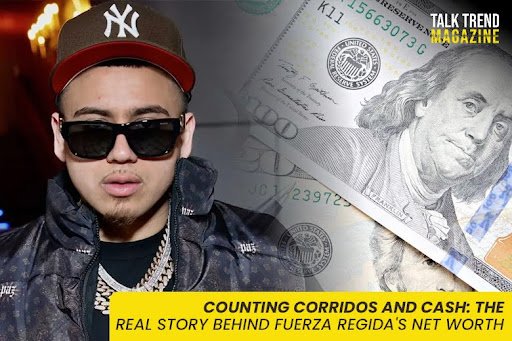
When you see Fuerza Regida onstage in designer suits, luxury jewelry, roaring crowds, it is natural to wonder: just how rich are these guys? This makes fans search for their net worth, but the truth is a lot more layered than a single number.

Let us walk through what we actually know about their money, what is just guesswork, and why the truth is more interesting than a single dollar amount.

Who exactly is cashing in?

Fuerza Regida is a Mexican-American band from San Bernardino, California. They started small, making corridos with a modern twist, and ended up helping push the genre into global playlists. The group is led by singer Jesús Ortiz Paz (JOP), joined by Khrystian Ramos, Samuel Jaimez, and José García.

Over the last few years, they have gone from local buzz to major tours, charting songs, and collaborations with stars across Latin music. That climb to fame is exactly why the internet can’t stop talking about Fuerza Regida’s net worth.

What do the net worth sites actually say?

Here is where things get messy. Different sites use different methods to calculate the fortune, which is why the numbers do not match.

Some sites calculate Fuerza Regida’s net worth at about $5.25 million, based mostly on music sales, streaming, and concerts.

YouTube tracking site Youtubers.me looks at their channel performance and puts “FUERZA REGIDA” net worth around $11.7 million, noting that the channel has over 6 million subscribers and more than 9.6 billion views.

Some other social-income trackers claim their combined monthly earnings across platforms can run into the multi-million-dollar range, mainly driven by YouTube. That figure is likely aggressive, but it shows how powerful their digital presence has become.

Put side by side, most “competitor” sites are circling the same idea:

As of 2025, realistic public estimates tend to place Fuerza Regida’s overall net worth somewhere in the mid-single-digit to low-eight-figure range, roughly $5–15 million, depending on what is included. None of this is official. The band has never posted a real number themselves. But these ranges give us a ballpark.

Where does all that money come from?

To understand fuerza regida’s net worth, you have to look at their income streams, not just one viral song. 

YouTube and Audio Streaming

First, there is YouTube and audio streaming. Their main YouTube channel sits at over 6 million subscribers and billions of views, with it a high-performing A-level channel.

Another “Fuerza Regida – Topic” channel on YouTube pulls in its own massive view counts and is estimated to earn up to the mid-six-figures per month by some tracking tools.Every play on Spotify, Apple Music, and other platforms adds more to the pot.

Live Shows and Touring

Next comes live shows, which are where modern artists often make the biggest money. A booking site that works with corporate events lists an example fee for Fuerza Regida in the $750,000–$999,998 range for a single performance, with the final price depending on details like location and event type.

And while not every concert lands in that highest fee range, a packed tour with multiple arena stops can easily rack up millions in revenue.

Music Sales, Features, Collaborations, and Merchandise

Add in album and single sales, features and collaborations – including work with huge names and cross-genre acts – and the band is pulling checks from many directions at once. In addition, like most touring acts at their level, they also earn from merchandise: shirts, caps, and other pieces that fans buy at concerts or online, often at high margins.

Social Media and Brand Partnerships

Finally, there is social media and brand money. Both the band account and JOP’s personal profile attract millions of followers, which can translate into paid posts, sponsorships, and partnerships, even if the exact deals are kept private.

When you put that all together, the picture behind fuerza regida net worth looks less like a single pipe of money and more like a whole network of rivers feeding the same ocean.

The Frontman Factor: JOP’s Personal Net Worth

A lot of people searching “fuerza regida net worth” are actually curious about Jesús Ortiz Paz himself. As the band’s frontman, co-founder, songwriter, and the force behind Street Mob Records, JOP brings in revenue from far more than just the group’s music.

Most biography and celebrity-finance sources place his personal net worth in 2025 is around the low to mid-millions, estimated to fall between $5 million and $10 million. It is because of touring, sales, merchandise, and his own business ventures.

Earlier write-ups from a few years ago had him at a more modest $1.5 – 5 million, which fits an artist whose career has skyrocketed in a short time. With the luxury cars he shows on social media and the expansion of his label, it’s clear he’s turned his success into real, tangible wealth.

So while Fuerza Regida’s net worth reflects the collective power of the group, JOP’s growing personal fortune is a major story of its own.

Why do The Numbers Vary?

If you have clicked through several net worth articles, you might feel a little confused. One says $5.25 million, another claims more than double that, and others throw around giant yearly incomes.

Part of the problem is that none of these sites has access to the band’s real bank statements. They are working from public pieces such as YouTube views, tour announcements, social media growth, and typical industry rates.

Some focus more on earnings (how much money comes in each year), while others try to guess net worth (what is left after costs and debts). That means high show fees or big streaming payouts can make estimates shoot up, even if taxes, crew salaries, travel, marketing, and management take a large cut before the band sees a cent.

There is also timing. Fuerza Regida’s rise has been rapid. An article written in 2022 or early 2023 is likely far too low when compared with their current tour sizes, streaming numbers, and chart success in 2024–2025.

That is why it is best to see any “fuerza regida net worth” claim as more of an educated guess than a concrete number.

So… How Rich Are They, Really?

If you strip away the hype and look across the major sources, a reasonable picture appears.

On the band level, estimates from music sites and YouTube analytics tools together suggest that Fuerza Regida’s net worth currently falls somewhere around $5–15 million, with the lower end based on conservative music-only models and the higher end including aggressive assumptions about digital income and touring.

On the individual side, especially for JOP, most modern biographies and financial write-ups land in the $5–10 million range, which fits the profile of a young artist who is not only performing but also building a label and brand around himself.

The true fuerza regida net worth may be even higher, especially if you factor in private investments, real estate, and future tour profits that aren’t public yet. It is also possible that some flashy numbers on tracking sites overshoot reality.

But one thing is clear: Fuerza Regida has turned their corridos into a serious business. From back-yard vibes to arena tours and top-tier booking fees, they are no longer just the sound of the streets. They are a multi-million-dollar force, and their balance sheet, like their fan base, is still growing.

When people hear the name “Combs,” they usually think of music mogul Sean “Diddy” Combs and his headline-making career. But away from the flashing cameras is someone who prefers a softer kind of life: his sister, Keisha Combs.

Over the last couple of years, searches for Keisha Combs’ net worth have exploded online. Dozens of blogs now claim to know exactly how rich she is, even though she rarely appears in public and rarely speaks to the media. So who is Keisha really, and what can we honestly say about her money, her work, and her life?

Who Is Keisha Combs?

The best introduction of Keisha Combs is as the sister of Sean “Diddy” Combs. Sean regularly mentions that he has a sister. She was raised in New York by Diddy’s mother, Janice Combs, in the same close-knit family that shaped the future hip-hop star.

 Their early years were far from glamorous: their father died when they were young, and money was tight. That shared background of struggle and survival is often credited with fueling Sean’s ambition and, in a quieter way, Keisha’s as well.

Unlike her brother, who built a global empire in music, fashion, and spirits, Keisha has always preferred life behind the scenes. Photos from events and red carpets show her occasionally standing with him at parties, premieres, and fashion launches, but she has never chased the spotlight.

Why Is Everyone Suddenly Talking About “Keisha Combs Net Worth”?

So, the reason why the internet has become so obsessed with Keisha Combs’ net worth is that a wave of new celebrity-style websites has turned her into a mystery figure as the quiet, private relative of someone who is nearly a billionaire. Many of these sites repeat each other’s claims, but their numbers do not always line up:

Some articles put her wealth at “around $3 million,” sometimes giving a range from about $1 million to $5 million. Others lean higher, suggesting figures between $5 million and $12 million.

Almost all of them agree on one thing: nobody actually knows her true net worth. Unlike her brother, whose business moves and Forbes valuations are widely reported, Keisha’s finances are private. There are no public company filings in her name, no reality shows, no tell-all interviews. The online numbers are best described as guesses, not verified facts.

What Does Keisha Actually Do?

Since she keeps such a low profile, it is easy for rumors to grow. A few detailed profiles try to piece together a more complete picture of her life and work.

One long-form feature describes her as a casting director and behind-the-scenes figure in the entertainment world, as well as a philanthropist and mental-health advocate. According to that report, Keisha has built a career helping choose actors for film and television projects, working quietly while others stand in front of the camera.

Some say she has also moved into business, consulting, and real estate investing, areas that would fit with the entrepreneurial spirit her family is known for.

 The details differ from site to site, but a few themes keep coming up:

  1. She prefers steady, long-term income over flashy, quick wins.
  2. She chooses roles where she can support and organise rather than perform.
  3. She values privacy and trust, which makes her attractive to people who don’t want their projects splashed across the tabloids.

Put simply, Keisha seems to have built a “quiet career”: useful, well-paid, but mostly invisible to the public.

So, What Is Keisha Combs Net Worth – Really?

After reading through many of the competing articles, one thing becomes very clear: no one outside her inner circle can state an exact number with confidence.

Most of the better-researched pieces settle around a middle ground. They describe Keisha Combs’ net worth as being somewhere in the low-million range, often “around $3 million,” with a cautious band that runs from the low seven figures up to perhaps $5 million.

The more dramatic claims of $10 million or $12 million are usually not backed by hard data; they tend to be based on guesses about property values, investments, or assumed family support.

That does not mean those higher estimates are impossible, but it does mean they should be read as speculation, not fact.

This kind of online guessing game around Keisha Combs’ finances is similar to what happens with other private figures, like Tammi Menendez, whose true net worth also remains undisclosed. 

What We Can Say?

She comes from one of the wealthiest families in entertainment, and that environment likely gave her access to knowledge, networks, and early opportunities many people never get.

At the same time, there is no public proof that she lives a flashy, billionaire-style life. Most sources describe her lifestyle as comfortable but relatively modest and family-centered.

Overall, it is reasonable, though still not certain, to place Keisha’s personal net worth somewhere in the low-million range. Enough to be financially secure; not enough to match her brother’s empire.

A Life Built on Purpose, Not Headlines

One of the most interesting things about Keisha Combs is the way she has chosen to define success. Profiles of her emphasize her work supporting others: casting actors, mentoring, speaking about mental health, and giving back. While the internet zooms in on numbers, she appears more focused on the kind of human legacy she is leaving, as a sister, a mother, and a quiet force in her community.

Her story also reminds us that being related to a superstar does not automatically mean living the same way. Keisha grew up with the same family pain and pressure as Sean, but she chose a very different path. Where he built a global brand, she built a life that allows her to walk down the street without being mobbed, to protect her children from constant attention, and to choose when and how she wants to show up in public.

What Can We Learn From Keisha’s Quiet Wealth?

In an age where people share bank balances, luxury cars, and designer wardrobes on social media, Keisha Combs is almost old-fashioned. She does not brag. She does not correct rumours. She simply lives her life.

Looking at the many articles chasing Keisha Combs net worth tells us as much about our culture as it does about her. We are fascinated by the idea of “hidden” wealth, especially when it belongs to someone standing just offstage from a famous name.

But perhaps the real lesson in Keisha’s story is this: it is possible to be successful without turning your life into a spectacle. You can build a solid financial base, help others, and raise a family, all without everyone on the internet knowing your address, your earnings, or the brand of your car.

For readers who dream of stability more than stardom, that might be the most inspiring kind of wealth of all.

If you are a fan of classic TV, the name Andy Griffith brings you back to warm memories of small-town streets, front porches, and easy Southern charm. From time to time, another name that you may remember is Solica Casuto (more formally spelled Solica Cassuto).

She never ran for fame in Hollywood, rarely gave interviews, and has spent decades far from the public eye. Yet curiosity about her life has not faded. Who was this Greek actress who briefly stepped into the orbit of one of America’s favorite TV stars, and then quietly stepped away again?

Who Is Solica Casuto, Really?

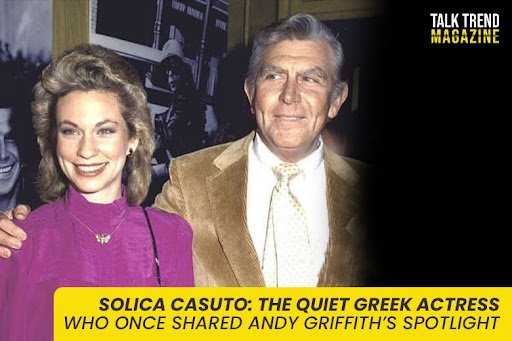
The firmest fact we have is simple: Solica Cassuto was Andy Griffith’s second wife. Authoritative biographies and reference works list her as a Greek actress who married Griffith in the 1970s, after his divorce from his first wife, Barbara Edwards.

They got married in 1973 and divorced in 1981, during the period between The Andy Griffith Show and his later success on Matlock. Outside of that, much of what is repeated about Solica Casuto online comes from secondary celebrity sites rather than official records.

Even so, when you look through these sources, a clear picture starts to form: she was a Greek, sometimes considered a Greek-American, actress who had already made a name for herself at home long before anyone in the U.S. knew who she was.

Early Life and Acting Career in Greece

Some biography sites state that Solica was born around 1950 in Greece, although the exact date and city are not public. Growing up in a country that has a rich tradition of theater and music, she has developed an early interest in performance.

By the 1960s and 1970s, many accounts say she was working regularly in Greek television and film, and some people even recall her performing as both an actress and a singer. Unfortunately, many of the shows and films she worked in were local productions that never made it into English-language databases. That is why, when you look for her filmography today, you mostly find brief mentions rather than a full list of titles. 

Solica Casuto was far more than just “a famous man’s wife.” She had already built her career on her own terms and in her own language, long before anyone in the United States connected her name to Andy Griffith.

Meeting Andy Griffith and a Backyard Wedding

After more than two decades of marriage, Andy Griffith and his first wife, Barbara Edwards, divorced in 1972. In the years that followed, Griffith met Solica while working around a film or television set, though the exact project has been lost to time.

Their wedding has become a small piece of Hollywood folklore. The wedding is portrayed as a simple backyard ceremony at Griffith’s own home in California. 

That house had once served as the Taylor family backyard on The Andy Griffith Show and had previously belonged to singer Bing Crosby, which gave the whole occasion an almost surreal mix of TV and music history.

Guests later remembered seeing a large harp placed in the spot where Opie’s bicycle once stood for the cameras, and writer Daniel de Visé notes in his book on Griffith and Don Knotts that actor Ken Berry described Solica as a “flower child” beside the more traditional, country-raised star. It was an unexpected but warm pairing—Southern small-town charm meeting a Mediterranean free spirit.

Inside a Short but Significant Marriage

The marriage between Andy Griffith and Solica Casuto lasted around eight years. Reliable biographies and obituaries list their union from 1973 until a divorce in 1981, with no children from the marriage.

During this time, Griffith continued to work steadily, easing out of his sheriff image and taking roles in TV movies and features, while also navigating the quieter years between his two biggest series. Solica, by contrast, was rarely in the spotlight in the United States. Profiles from the period describe her mainly in personal terms: as kind to Griffith’s adopted children from his first marriage and as someone who brought a more cosmopolitan, European note into his life.

Friends interviewed in later years often commented on the couple’s differences, like age, background, and personality, but also noted that, for a while, the match seemed to make Griffith genuinely happy. As for why the marriage ended, neither Andy nor Solica ever discussed it publicly, and biographers avoid speculation.

Life After Divorce: Choosing to Disappear

When the marriage ended in 1981, Andy Griffith eventually remarried; he wed actress Cindi Knight in 1983, and they stayed together until he died in 2012. Solica’s path after the divorce was very different.

She walked away from public life and effectively ended her acting career and retreated from the spotlight, whether in the United States, Greece, or both. There are no verified social-media accounts, no recent interviews, and very few contemporary photographs that can be confidently confirmed as hers.

Some lifestyle and celebrity sites estimate her net worth at around one million dollars, but these figures are estimated on guesses based on her past work and possible divorce settlement, not on published financial records. Even her current location and, in some reports, whether she is still alive, are treated as uncertain, precisely because she has kept herself so far from the public eye.

Known Facts vs. Online Rumors

Because Solica Casuto left so little official information behind, the internet has tried to fill the gaps. That is why you will see conflicting claims about her birth year (sometimes 1940, sometimes 1950), whether she was born in Greece or the United States, and whether she was also a television producer or singer.

When we strip away the rumors and compare multiple sources, a smaller, more reliable core remains:

1. She was a Greek actress

2. She married Andy Griffith as his second wife in the mid-1970s

3. Their marriage lasted until 1981

4. She maintained a very low profile before and especially after their divorce.

Everything beyond that, like her exact schooling, all of her roles, and the details of her finances, is largely reconstructed from secondary sites that often repeat one another. For readers searching for her name, it helps to keep this in mind. The mystery is not that something dramatic must have happened. The mystery is that she simply chose not to share more.

Why Does Solica Casuto Still Fascinate Fans?

The name Solica Casuto keeps appearing in searches decades after her brief time in the American spotlight. Part of it is Andy Griffith’s enduring popularity; fans naturally become curious about everyone who had a place in his life. Part of it is the romantic image of a Greek actress marrying a beloved TV sheriff in the very backyard viewers had seen on their screens.

There is also something quietly compelling about her decision to step away. In a culture where many people share every detail of their lives, Solica’s choice to live privately stands out. She reminds us that not everyone connected to fame wants it for themselves, that a person can touch the edge of Hollywood history and still keep most of their story offstage.

In the end, what we truly know about Solica Casuto could fit on a single, careful page. Yet perhaps that is exactly as she intended. For the rest, we are left with a respectful distance: a glimpse of a talented Greek actress, a brief but important chapter in Andy Griffith’s life, and a long, deliberately quiet life that continues out of view.

When you start looking for different types of boxes, you may find out that there are many choices available. Each box plays a unique role. Whether it is a folding carton, premium rigid boxes, or strong corrugated mailers. The packaging you choose affects everything from how well your product is protected to how much it costs to ship, and even the first impression customers get when they open it.

In this guide, we will walk through the main types of boxes. We will also look at newer packaging trends, including minimal options like cardboard lids, so you get a full picture of what is available and what might work best for your product.

What “Types of Boxes” Really Means?

Although there are hundreds of different types of boxes, most of the box designs fall into three main categories: folding cartons, rigid boxes, and corrugated boxes. These three designs are the foundation of most packaging you will see in stores or online orders. From them, brands create more specialized styles like mailers, sleeve boxes, pillow boxes, and display packaging.

Understanding these core types makes it much easier to choose packaging that fits your product’s size, weight, and overall brand style.

Folding Carton Boxes

Folding cartons are widely used in retail because they are lightweight, affordable, and easy to customize. They are made from paperboard that is printed, cut, and folded into shape. 

Typical folding carton examples include cereal boxes, skincare packaging, small electronics, or pharmaceutical cartons.

Since folding cartons are easy to print on, brands often choose them for products that need strong shelf appeal. So, if your product is an everyday item, then go for folding cartons as they provide the right balance between cost, design, and protection.

Rigid Boxes

Rigid boxes are known for their durability and high-end look. The quality that makes them different from folding cartons is that they do not fold flat. They are built from thick, sturdy board and wrapped in printed or textured paper to give them a premium feel.

These boxes are most commonly used with luxury products like perfumes, watches, electronics, jewelry, and gift items. Opening a rigid box feels special, and that is intentional. The unboxing experience is part of the value. Designs such as magnetic-closure boxes or drawer-style boxes add to the sense of quality.

Rigid packaging costs more than other box types, but for brands selling high-value goods, it is worth the investment.

Corrugated Boxes

When people think of “cardboard boxes,” they are usually imagining corrugated boxes. These boxes have a fluted (wavy) layer sandwiched between two flat sheets, which gives them strength and shock absorption. If you have to ship your product, consider it as your trusted choice. They also work ideal for storing inventory, and packaging heavy or fragile items.

Corrugated boxes come in many thicknesses, from single-wall to triple-wall, depending on how much protection is needed. E-commerce brands often choose corrugated mailer boxes, which are sturdy but still visually appealing when printed with logo designs or patterns. This blend of protection and branding is one reason mailer boxes have become so popular for subscription services.

Mailer Boxes

Mailer boxes bridge the gap between shipping durability and visual presentation. They open from the front with built-in flaps and are strong enough for mailing while still allowing for creative branding.

Many small businesses and online shops rely on mailer boxes because they simplify both shipping and presentation. They are especially useful for curated subscription kits, influencer PR boxes, handmade goods, and boutique apparel.

Display Boxes

Display boxes are used in retail stores when a product needs to be visible to customers from a distance. These boxes often have an open front or a small window so customers can actually see what is inside. You will usually spot them holding things like candy bars, lip balms, travel-size toiletries, or small electronics.

A display box is meant to draw attention and make it easier for shoppers to grab what they want without thinking twice. With a good design, it keeps products tidy, accessible, and attractive on the shelf.

Sleeve, Drawer, and Specialty Boxes

Some packaging styles offer a more creative unboxing experience. Sleeve boxes, for example, use a paper sleeve that slides over an inner tray. Drawer boxes open like a mini drawer, adding a sense of elegance and discovery. Pillow boxes, gable boxes, and even cardboard tubes provide unique shapes for brands wanting something different from standard square or rectangular packaging.

These specialty styles are often seen in gift items, boutique products, candles, artisanal foods, and promotional sets.

Eco-Friendly and Minimal Packaging Options

Not every product requires a full box, and many companies are exploring packaging that uses fewer materials. One example is minimalist covers or lids that protect products without the bulk of traditional packaging. A good illustration of this is the cardboard lid, also known in some markets as a Pappedeckel, this simple lid is used for food items, takeaway containers, and small packaged goods. It offers a recyclable and lightweight alternative to plastic covers, making it a popular choice for brands aiming for sustainability.

This trend shows how modern packaging is not only about boxes; it is about finding the right combination of protection, cost efficiency, and environmental responsibility. For some products, especially those that are not fragile, a lid or flexible cover can be just as effective as a box.

How to Choose the Right Type of Box?

Choosing the right packaging becomes easier when you focus on your product’s needs. 

1. Start with weight and fragility: heavier or breakable items do best in corrugated or rigid packaging, while lighter items fit comfortably in folding cartons.

2. Think about your brand’s message, too. If you want a premium feel, rigid boxes or drawer-style boxes enhance the experience. If you want something practical and cost-efficient, corrugated mailers or folding cartons work well. And if sustainability is a priority, kraft materials or minimalist lid-based packaging can support that goal while reducing waste.

Final Thoughts

Even though packaging comes in many shapes, materials, and designs, the main types of boxes can be grouped into clear categories. Folding cartons serve lightweight retail products, rigid boxes elevate luxury goods, and corrugated boxes deliver strength for shipping. Around these core types, mailer boxes, display boxes, sleeves, and even eco-friendly lids help brands fine-tune the customer experience.

Understanding these options makes it easier to choose packaging that protects your product, reflects your brand, and suits your customers’ expectations, all while keeping costs and sustainability in mind.

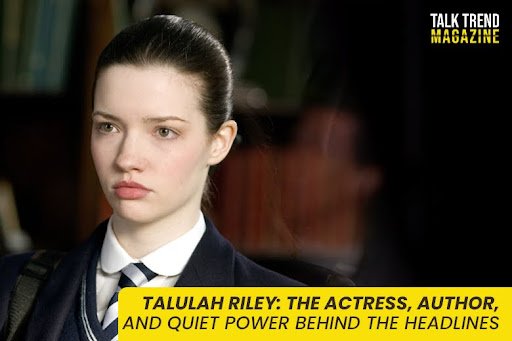
For years, almost every story about Talulah Riley starts with a relation to Elon Musk. It is a quick yet incomplete introduction to her. If you dig deeper into her, you will find a woman with a rich acting career, two published novels, a directing credit, and a life story full of interesting turns. Today, she is also newly married to fellow actor Thomas Brodie-Sangster and embracing a peaceful countryside lifestyle far from Hollywood noise.

This blog takes a closer look at the real Talulah Riley, the British actress who has quietly carved her own path.

From Hertfordshire Roots to Film Sets

Talulah Jane Riley-Milburn came into this world in 1985 in Hertfordshire, England. Her family created a warm, intellectually curious environment that helped shape who she became. Her father held senior policing roles, while her mother ran companies in public relations and security. In her home, ideas, discipline, and ambition were simply part of everyday routine

Riley was always a bookworm, and had an analytical streak. She even studied physics and maths through the Open University while building her acting career. That mix of being a performer with a genuinely scientific streak quickly caught the attention of journalists and added to her early appeal.

Her entry into acting started with British television classics. She appeared in Poirot, Marple, and Doctor Who gave her early visibility and helped her build experience on sets known for quality storytelling.

Pride & Prejudice, St Trinian’s and the Roles That Shaped Her

Riley’s breakout came in 2005 with Pride & Prejudice, where she played Mary Bennet, the socially awkward but earnest middle sister. The film’s success introduced her to an international audience and showed her skill for refined, character-driven work.

She then moved to the opposite end of the tonal spectrum with St Trinian’s and its sequel, playing Annabelle Fritton, the privileged girl turned mischievous boarding-school rebel. The films were loud, colourful, and a complete contrast to her Austen role, proving her range early on.

Hollywood soon came calling. Riley showed up in the 1960s-inspired comedy The Boat That Rocked and later had a brief role in Christopher Nolan’s blockbuster Inception. Her part in Inception was small, but the film’s huge worldwide success still helped raise her profile.

In 2016, she reached a new level of international visibility with Westworld. As Angela — the alluring android guide within the futuristic theme park — Talulah Riley brought a serene, almost eerie presence to the screen. Her role expanded in the second season, placing her firmly among the cast of prestige television.

More recently, she portrayed fashion pioneer Vivienne Westwood in Pistol, FX’s energetic retelling of the Sex Pistols’ beginnings. Critics praised Riley for capturing both the creativity and sharpness of Westwood’s personality.

A Creative Voice Beyond Acting

While many actors stick to life in front of the camera, Riley has always wanted to help craft the stories too, not simply appear in them. After years of developing a script with her father, she decided to step behind the camera and direct Scottish Mussel, a romantic comedy about pearl poaching. She also wrote the film and played the lead role.

It was an ambitious project for a young filmmaker, and though the movie received mixed reviews, it established her as someone unafraid to take risks or learn publicly.

Her writing career grew even more with the publication of two novels.

Acts of Love (2016) introduced readers to a sharp, manipulative journalist whose tangled romantic life makes for darkly comic reading.

Her second novel, The Quickening (2022), is a bold dystopian story imagining a future matriarchy where women seize total power after generations of abuse. The book sparked conversation for its provocative themes and showcased Riley’s willingness to explore complicated social ideas.

Together, her books reveal a writer who combines imagination with psychological insight — a different but equally expressive side of Talulah Riley.

The Headlines, the Marriages, and Moving On Gracefully

It would be impossible to ignore the chapter of her life that made her the gossip pages’ favourite. Riley met Elon Musk in 2008, married him in 2010, divorced in 2012, remarried in 2013, and divorced again in 2016. Their relationship ended up playing out in full view of the public.

Yet Riley has consistently spoken kindly about Musk, telling about him as supportive and insisting they remained friends after the split. She has also clarified that while her marriage drew attention, her career existed before and continued strongly after.

Her calm, diplomatic handling of that spotlight, especially in an era of loud online drama, has often impressed interviewers.

A New Beginning with Thomas Brodie-Sangster

The next chapter of Talulah Riley’s life is gentler, quieter, and far more her own. She met actor Thomas Brodie-Sangster on the set of Pistol, and their friendship gradually grew into romance. In 2024, the pair married in a small Hertfordshire church, the same region where Riley spent her childhood.

Rather than diving back into Hollywood, the couple settled in the English countryside. Riley has written fondly about their farm-like home with dogs, pigs, chickens, and sheep. Contrary to online claims labeling her a “trad wife,” she has been clear that her rural lifestyle is not about ideology. It is simply what makes her happy.

She still writes. She still acts. But she now does so at her own pace, with a quieter, more centered way to her days.

More Than a Headline

When you look at her full journey, the picture becomes clear: Talulah Riley is more than the relationships that once dominated her press coverage. She is an actress with memorable roles in both film and television, an author with a strong narrative voice, a director willing to take creative risks, and a woman unafraid to reinvent her life.

Her story is not loud or frantic, and that may be what makes it compelling. Behind the fame, the novels, the marriages, and the countryside life, Riley stands out as a grounded, intelligent figure who follows her curiosity — wherever it happens to lead.