Jabeen Sahiba

Jabeen Sahiba is a talented content writer known for creating engaging, clear, and informative content across various topics. Her versatile writing style makes her a valuable asset to any project.

People often assume fortune with age; among the few stars who proved it wrong is the one we are going to cover today, the very famous “Kaitlyn Dever”. She is the kind of actor who does not just play a role, but she disappears into it. From a smart but stressed teen in Booksmart to a haunted young woman in Unbelievable, Dever has quietly built a career that many actors twice her age would envy.

And along the way, fans show curiosity about her fortune and how she earns it? In this blog, we will look into her story in detail to estimate Kaitlyn Dever’s net worth.

So, what is Kaitlyn Dever net worth? 

Let us start with the number everyone’s searching for. Most money and celebrity sites agree on the same figure: Kaitlyn Dever’s net worth is widely estimated at around $3 million as of 2025. 

Now, it is important to remember that these are estimates, not official bank statements. Actors rarely share exact paychecks with the public, and Dever is especially private. But when you look at her resume, it includes long-running TV shows, hit films, and award-nominated performances, which makes sense given the estimated figure.

So when you see “Kaitlyn Dever Net Worth” around the internet, think of it as a reasonable guess based on her work, not a hard fact carved in stone.

From Phoenix to the spotlight

Kaitlyn Rochelle Dever was born on December 21, 1996, in Phoenix, Arizona. Her dad worked as a voice actor, which meant she grew up with the entertainment world close by, but she did not jump into it right away. As a kid, she explored many activities, from gymnastics and ballet to figure skating. Well, among all, only acting won her heart.

Her family eventually moved to Dallas, Texas, where she trained at the Dallas Young Actors Studio and began to take acting seriously. 

By nine years old, she was already building the skills that would later turn into a major career.

Her first notable break came with the TV movie An American Girl: Chrissa Stands Strong in 2009. After that, it was as if the door to Hollywood was always open and never closed for her. 

The Shows That Built Her Career And Her Bank Account

Kaitlyn did not become “net worth worthy” overnight. She built it piece by piece, show by show. One of her earliest standout roles was as Loretta McCready in the critically loved FX series Justified. 

Playing a tough, troubled teen in a world of crime, she proved she could handle heavy material even as a young actor. That kind of complex TV role does not just help you grow as an actor; it also lifts the amount you can earn.

In the same year, she got another huge opportunity: Eve Baxter, the youngest daughter in the Tim Allen sitcom Last Man Standing. She stayed with the show for many seasons, becoming a familiar face in homes across America. Long-running sitcoms can be a steady financial foundation for performers, and it is likely that a good chunk of Kaitlyn Dever Net Worth comes from those years of consistent work.

With guest roles on shows such as Modern Family, The Mentalist, and Curb Your Enthusiasm, plus memorable parts in films like Bad Teacher, Detroit, and The Spectacular Now, it’s easy to see how her income steadily increased.

Booksmart, Unbelievable, And The Leap From “Working Actor” To “In-Demand Star”

Every actor has that moment when the industry stops seeing them as “promising” and starts seeing them as “essential.” For Dever, 2019 was that turning point.

First came Booksmart, Olivia Wilde’s sharp, funny teen comedy, where Kaitlyn played Amy, one half of a pair of overachieving best friends determined to have one wild night before graduation. The movie became a critical darling, and Dever’s performance drew huge praise. 

The same year, she starred in Unbelievable on Netflix, a true-crime miniseries about a young woman who is not believed after reporting a sexual assault. Her raw, heartbreaking performance earned her nominations at the Golden Globes, the Critics’ Choice Awards, and the BAFTA Rising Star category. 

Those nominations do not just look good on a shelf. They change what an actor can ask for in the next contract. Higher-profile roles and awards attention often translate into higher pay, which is another step up for Kaitlyn Dever Net Worth.

Dopesick, No One Will Save You, And Beyond

Dever kept choosing smart, challenging projects rather than just chasing big paydays. She played Betsy in the Hulu miniseries Dopesick, which dug into the roots of the opioid crisis in the United States. The role brought her an Emmy nomination and even more respect in the industry. 

She also showed off her range in the sci-fi thriller No One Will Save You, a near-silent film where she carries almost the entire story with her face and body language. That performance earned fresh awards attention and reminded everyone that she is not just a former child star, but a serious actor with staying power. 

On top of acting, she performs music with her sister in their folk-pop duo Beulahbelle, adding another creative path (and potentially another income stream) to her career. 

The Last of Us, Apple Cider Vinegar, And The Future of Her Fortune

In recent years, Dever’s star has only risen higher. She joined season 2 of HBO’s hit series The Last of Us as Abby, a complex, battle-hardened character that fans of the game know well. 

Big prestige shows like this often come with bigger budgets and bigger salaries, which almost certainly push Kaitlyn Dever’s Net Worth beyond what early-career estimates suggested.

She also took the lead in the Australian miniseries Apple Cider Vinegar, playing real-life wellness influencer and con artist Belle Gibson, a role that again drew critical attention and award buzz. 

With more major projects already announced, including a role in the upcoming Godzilla x Kong: Supernova, Dever is set up for continued financial growth as well as artistic success. 

How Does She Handle Fame And Money?

One thing that makes Kaitlyn Dever stand out is how grounded she seems. She is not constantly in the gossip columns, and she does not spend her days showing off designer closets on social media. Even her relationship with director and actor Ethan Dawes has mostly stayed out of the spotlight, despite a few sweet public appearances together. 

That low-key attitude fits with what we know about her money as well. There are no flashy “I just bought a $10 million mansion” headlines. Instead, everything we know about Kaitlyn Dever’s Net Worth comes from outside estimates and careful guesses based on her work.

More Than A Number

In the end, the dollar figure attached to her name is only part of the story. Yes, Kaitlyn Dever’s net worth appears to sit around $3 million, built through years of TV roles, film work, and award-winning performances. 

But what really makes her rich in the career sense is the variety of roles she has taken, the respect she has earned from critics and audiences, and the fact that she is only in her late twenties with decades of work still ahead of her.

If her past is any clue, Kaitlyn Dever’s greatest wealth would not just be measured in money. It will be in the stories she tells, the characters she brings to life, and the way she keeps surprising us every time she appears on screen.
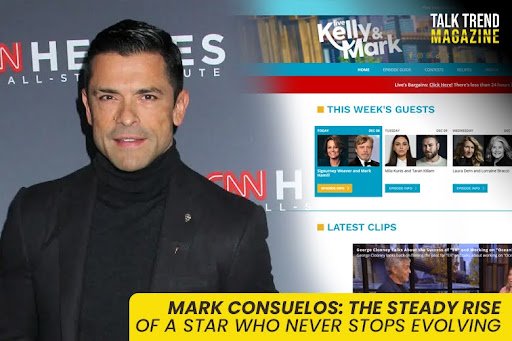
Mark Consuelos has been part of the entertainment world for nearly three decades, but many viewers truly fell in love with his charm when he teamed up with his wife, Kelly Ripa, to bring new energy to Live with Kelly and Mark. While he may seem like an overnight hit in the morning-show world, his story is actually one of steady growth, hard work, and an ability to grow himself at every stage. His path, from a child moving across countries to a popular TV star and talk show host, makes him a fascinating figure both on and off the screen.

A Childhood That Spanned Continents

Before Hollywood ever came calling, Mark Consuelos was a world traveler without even trying. He was born on March 30, 1971, in Zaragoza, Spain, to an Italian mother and a Mexican father. He spent his early years moving from Spain to Italy and then to the United States. His upbringing is like a cultural buffet as he has European roots, Latin heritage, and an all-American adolescence in Illinois and Florida.

He graduated from Bloomingdale Senior High School and went on to study at the University of South Florida to earn a marketing degree. At that point, acting was not the plan. Mark was just trying to figure life out the way most young adults do. Yet destiny had something completely different mapped out for him.

The Soap Opera Role That Changed Everything

Like many actors just starting, Mark Consuelos took on a variety of gigs, including a stint as a dancer in Florida. Then, almost out of nowhere, came the role that would change his life: Mateo Santos on ABC’s All My Children.

When he joined the cast in 1995, he quickly became a fan favorite. His character had charm, warmth, and to be honest, more than a little soap-opera heartthrob energy. But All My Children did not just turn him into a recognizable TV star. It introduced him to the woman who would become the love of his life: Kelly Ripa.

Their on-screen chemistry made for great television, but off-screen, something real was happening. The pair secretly eloped in Las Vegas in 1996, turning their fictional romance into a lifelong partnership. They became one of daytime television’s most beloved couples, long before the public ever saw them co-hosting a morning show together.

Mark remained on All My Children until 2002, returning briefly in later years. The role brought him awards, attention, and the foundation he needed to build a lasting career in entertainment.

A Career That Refused to Stay in One Box

Once Mark closed the chapter on his soap opera days, he did not disappear, but he diversified. He started playing roles across genres, showing up in everything from Law & Order: SVU to American Horror Story. His charisma worked just as well in comedy as it did in drama, and directors began to see him as a multi-talented, reliable performer.

Then came Riverdale. As Hiram Lodge, the charming but ruthless father of Veronica Lodge, Mark embraced one of the show’s most complicated and deliciously villainous roles. Fans loved watching him walk the line between power and danger. In a fun twist, his son Michael portrayed a younger version of Hiram, turning the character into a small family legacy.

Mark’s film roles added even more dimension to his career, proving he could slide into almost any role with ease. There was no single “type” he played—he could do a little bit of everything, and he did it well.

A New Stage: Morning Television Takes Center Spotlight

In 2023, Mark Consuelos stepped into a role millions of viewers would see every weekday morning: co-host of Live. When Ryan Seacrest exited, Mark joined Kelly Ripa on the hosting desk, officially transforming the show into Live with Kelly and Mark.

Audiences were curious, after all, working side by side with your spouse on live television five days a week is no small task. But the couple made it feel effortless. Their lively light-joking, playful teasing, and unfiltered conversations about family life, marriage, and aging turned the show into something warm and familiar. Watching them often feels like sitting at breakfast with two old friends who happen to be wildly entertaining.

The transition was more than just smooth. It was celebrated. In 2024, the duo took home the Daytime Emmy Award for Outstanding Entertainment Talk Show Host. For Mark, it was a moment that showed how far he had come since his soap opera beginnings.

A Love Story That Still Feels Fresh

Hollywood is not exactly known for long marriages, which makes Mark Consuelos and Kelly Ripa’s nearly three decades together especially admirable. Since their quick Vegas wedding in 1996, they have raised three children: Michael, Lola, and Joaquin, who are now carving out paths of their own.

On Live, Mark often shares anecdotes about the kids, their family traditions, or the early years of his marriage. These glimpses into his personal life resonate with viewers because they feel real, not rehearsed. Despite their fame, Mark and Kelly come across as grounded, relatable, and genuinely in love.

Beyond Acting: Building a Life of Balance and Ambition

Mark Consuelos is not just a familiar TV presence, but he is also a businessman and someone who values staying active and connected. Over the years, he has invested in various ventures and built financial security through smart decisions and steady work. While exact numbers vary, reports often estimate his net worth at around $40 million.

He also maintains a strong commitment to fitness, often training with an intensity that his fans admire. His discipline and drive filter into every part of his life, whether he’s filming a show, hosting live TV, or cheering on his kids’ accomplishments.

Why Mark Consuelos Still Feels So Easy to Root For?

What keeps viewers connected to Mark Consuelos after all these years? It is the combination of charm, vulnerability, and versatility. He has been a heartthrob, a villain, a comic guest star, and now a morning-show favorite. Through it all, he never tries to be anything other than himself.

His story is proof that you do not have to peak early in your career or stick to one path in order to succeed. With each new chapter, Mark Consuelos shows that reinvention can be a strength, and staying true to your personality can take you farther than you might expect.

Ask any marketer what the most powerful tool is for growing a business, and you’ll almost always hear the same answer: trust.

Trust is what turns a curious visitor into a first-time customer, and a first-time customer into a loyal supporter who keeps coming back. Data backs this up. According to a 2023 survey, nearly 59% of consumers said they were willing to pay more for brands they know and trust.

But trust doesn’t appear out of nowhere. Before people can trust you, they must know you. That means you must build brand awareness. The more familiar your local business becomes, the easier it is for customers to feel comfortable choosing you over the competition.

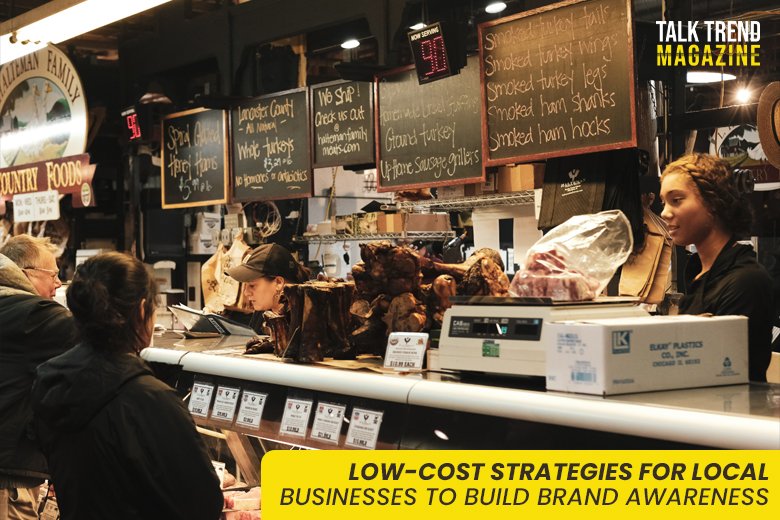
To build brand awareness, you don’t need to spend tons of money on huge ads. There are several low-cost strategies that can help you increase your visibility, earn customer confidence, and lay the groundwork for stronger, more meaningful relationships. We’ll share a few of them here:

#1 Show Up Consistently on Social Media

Showing up online is like being visible in the digital town square. Don’t be everywhere, though. Focus your time on the one or two platforms where your local customers are actually hanging out.

One spot you must claim is Nextdoor. This platform connects actual neighbors with local businesses. It’s huge because 1 in 3 U.S. households use it. On top of that, 88% of Nextdoor members make a purchase from a local business. You can claim a free page and use free Business Posts to share helpful updates with nearby neighbors.   

Facebook Groups are also excellent places to build an active, loyal community. Platforms like Instagram and TikTok are also popular among Americans.

Short-form video content, which delivers quick value without taking too much of the viewer’s time, is driving their popularity. Tap into it by sharing behind-the-scenes clips, quick tips, customer shoutouts, or product demos. Always use local hashtags and geo-tagging when posting content.  

Do not just post on your own page and wait for traffic. A powerful strategy is to engage actively with other local accounts, such as the city’s official tourism feed or the local Chamber of Commerce. These pages have huge, relevant local audiences.

#2 Use Content to Educate, Not Just Sell

People naturally resist being sold to, but they love learning new things. If you consistently share useful knowledge, your neighbors will see you as a trusted authority. This can help you build brand awareness and credibility without spending a dime.

Think about all the common questions customers ask you every single day. These questions are your best, free content ideas. You can turn those questions into simple blogs or how-to guides. When you offer free knowledge, you attract potential customers who value competence and quality.

Most local shoppers avoid small businesses because they assume the prices are higher than those at larger retailers. Use your educational content to counter this belief.

To post educational content, you need a website. If you haven’t already built one, now is the time to do so. You no longer need to hire a developer or spend weeks building it.

Thanks to AI-powered website builders, you can create a clean, professional-looking site in just a few hours. These tools ask a few simple questions about your business and automatically generate pages, layouts, and even basic content for you.

Don’t go for just any website builder. Hocoos advises choosing one that comes with email marketing, content scheduling, and SEO tools.

#3 Run Small, Creative Local Campaigns

Lacking a large marketing fund? Swap cash for creativity. One of the best ways to do this is through guerrilla marketing. It’s a strategy of clever, low-cost ideas designed to genuinely surprise people, spark curiosity, and generate organic chatter.

Maybe you can create a playful sidewalk chalk trail that leads to your storefront, set up a quirky photo spot outside your business, or place witty signs around town that hint at your brand’s personality. Little touches like these feel lighthearted, but they can make a big impression.

You can also run simple street-level campaigns like “Take One, Leave One” boards, QR-code scavenger hunts, or photo contests tied to local landmarks. Encourage people to tag your business when they post. This multiplies your reach without multiplying your costs.

The goal isn’t to go viral worldwide. It’s to become unforgettable right where you live and work. When your brand feels fun, human, and connected to the local vibe, people naturally start talking. And when people talk, awareness grows without draining your budget.

Adidas famously used a guerrilla tactic for a store opening. It scattered blue ducks asking for help to be returned to their “home” (the new store) for a prize. This novelty boosted traffic and drove opening-day sales.

Keep Showing Up

Building brand awareness is a slow process, like a snowball getting bigger as it rolls. Don’t worry about complicated metrics or confusing industry reports. One of the easiest and most honest ways is simply asking customers how they found you. Their answers will tell you more than any dashboard.

And remember, you don’t have to outspend big brands to stand out locally. You just have to out-care them. When people feel noticed, appreciated, and supported by your business, they don’t forget it. They come back, and they bring others with them.

So keep sharing, connecting, and improving. Over time, those small, consistent efforts stack up, and your brand becomes stronger, more recognizable, and more trusted right in the community where it matters most.

If you have watched the early seasons of Chrisley Knows Best, you probably remember Lindsie Chrisley as the calm, steady daughter trying to keep peace in a family that always felt on the edge of another dramatic moment. 

Back then, she lived in a world of bright lights, big houses, and a father who loved the camera as much as the camera loved him. But today, Lindsie’s life looks very different, simpler in some ways, stronger in others, and far more her own.

Naturally, fans who followed her journey often wonder: What is Lindsie Chrisley’s Net Worth now, when she is no longer part of the reality show?

The answer is interesting, not only because of the number itself but because of how she built it.

A Fresh Start Away From Reality TV

Lindsie first appeared on Chrisley Knows Best as a young adult. The show gave her early fame and a solid income, but it also came with stress, pressure, and family conflict that played out both on and off camera. After several tense seasons, she walked away, something that surprised viewers but seemed to bring her peace.

Leaving the show meant leaving behind a steady paycheck, but as it is said, everything happens for a good reason; it opened the door for something more meaningful: building a life and career by her own rules.

How is Her Net Worth Estimated?

Since Lindsie does not have to share financial documents publicly for any reason, all numbers you see online are just estimates based on her career, business ventures, and publicly known work.

Well, the most accountable guess about Lindsie Chrisley’s Net Worth is between $1 million and $2 million.

This estimate comes from combining:

  • Her earnings from the early seasons of Chrisley Knows Best
  • Her long-running podcast income
  • Social media partnerships and sponsored posts
  • Appearance fees and other media projects

But the real story is far more interesting than the dollar amount alone.

Finding Her Voice Through Podcasting

After stepping away from the TV, Lindsie did not disappear. Instead, she quietly reinvented herself. She teamed up with Kailyn Lowry to create “Coffee Convos,” a podcast where two moms share honest conversations about life, like messy, funny, painful, and everything in between.

Listeners loved Lindsie immediately. She was not playing a character anymore. She was open, gentle, and real in a way that reality TV never allowed her to be.

The podcast grew quickly, earning sponsors and becoming a steady business. Lindsie later started “The Southern Tea,” giving her even more space to share her personal journey, divorce, motherhood, dating, healing, and rebuilding.

Podcasting became more than her job. It became her identity, and the foundation that supports her financially today.

The Financial Hit She Faced During Divorce

A part of Lindsie’s story that many fans don’t know is how her divorce affected her financially.

She once shared that she had carefully saved the money she earned from Chrisley Knows Best. But during the divorce process, much of those savings were lost. It was a painful moment that forced her to rebuild from the ground up.

This explains why Lindsie Chrisley’s Net Worth is not higher despite her years in television. Divorce can change a person’s financial life overnight, and Lindsie was no exception.

Still, she rebuilt – slowly, steadily, and bravely.

Did the Chrisley Family Scandals Affect Her Money?

Many people wonder whether the Chrisleys’ parents’ legal trouble had any impact on Lindsie’s finances. To be honest, no, not directly.

Because Lindsie had already separated financially and emotionally from the family, she was not tied to their business dealings or their debts. She was not part of their show anymore, and she was not involved in their legal cases.

However, the situation did affect her career in another way:

The Chrisley name had become linked with controversy. Lindsie has openly said that carrying the “Chrisley” last name cost her opportunities. Some companies avoided collaboration because they didn’t want to be associated with the drama.

That is why, in 2024, Lindsie decided to change her name to Lindsie Landsman, a step that symbolized a new beginning and also helped her rebuild her professional image.

Co-Parenting, Motherhood, and a New Identity

Lindsie’s life today centers around her son, Jackson. She often talks about co-parenting, how complicated it can feel to split holidays, how quiet the house is when Jackson is with his father, and how she works hard to keep the environment stable and healthy for him.

These emotional moments, which she shares gently on her podcasts, make listeners feel like they are growing up alongside her. They have helped her build a loyal audience, something that money can’t buy.

Her name change also fits into this chapter. It represents independence, growth, and a desire to be known not as a cast member of a famous family but as a woman with her own story.

Where Does Her Money Come From Today?

Today, Lindsie’s income comes from several steady sources:

Podcasting

Her two successful shows bring in ad revenue, sponsorships, and sometimes live-event income.

Social Media Partnerships

With a large online following, Lindsie earns from brand deals that align with her lifestyle as a mom and podcaster.

Guest Appearances & Collaborations

She often appears on other podcasts and digital platforms, which helps grow her visibility and earnings.

Smart Personal Branding

Her decision to distance herself from controversy and tell her story openly has made her a trustworthy voice for many women and a valuable partner to brands.

What Her Future Earnings Could Look Like?

If her podcasts continue to grow, and they show no signs of slowing, Lindsie’s income will likely rise steadily. She could also expand into:

  • Book writing
  • Hosting live tours, like Abby Hornacek
  • Television guest roles
  • Lifestyle brand collaborations

Her style of storytelling resonates deeply with audiences, and creators with strong, authentic voices often succeed across multiple platforms.

There is a good chance Lindsie Chrisley’s Net Worth will climb in the coming years as she explores these opportunities.

The Real Takeaway

Lindsie Chrisley’s financial story is not a tale of sudden fame and big reality-TV earnings. Instead, her success comes from rebuilding, being honest, and choosing peace over publicity.

She may not be the richest former reality star, but she might be one of the most grounded. Her net worth is estimated between $1 million and $2 million, which is the result of steady work, careful choices, and the courage to start life over on her own terms.

And for many people, that makes her journey far more inspiring than any number in a headline.

If you have scrolled past an image of a blonde TV host hanging off a cliff, hiking a canyon, or riding shotgun in an RV with some very famous faces, chances are you have already “met” Abby Hornacek. She is the Fox Nation host who turned a love of sports and the outdoors into a career that looks suspiciously like one long, high-energy road trip.

But behind those sun-soaked national parks and sideline smiles is a story of growth, grit, and a pretty serious plot twist.

Growing up Hornacek

Abigail “Abby” Hornacek was born on April 25, 1994, in Paradise Valley, Arizona. She is the youngest of three children in a very sports-heavy household. Her dad is Jeff Hornacek, the former NBA sharpshooter who later coached the Phoenix Suns and New York Knicks; her mom, Stacy, kept the family grounded as they moved between Utah and Arizona during Jeff’s career. 

With two older brothers and an NBA player for a father, competition was basically the family language. Abby played just about everything growing up but gravitated toward volleyball, where she became a standout at Xavier College Preparatory in Phoenix, helping her team to state titles and earning a reputation as a fierce competitor. 

At that point, if you had told her she would end up on TV instead of on a court, she probably would have laughed.

The injury that changed everything

Like a lot of good sports stories, this one has a painful middle chapter. While playing volleyball, Abby suffered a serious eye injury when she was struck in the face by a ball. The damage was significant: she needed multiple surgeries, her depth perception was affected, and eventually she began using a glass eye. The injury effectively ended her dreams of playing competitive volleyball long-term. 

Most online write-ups stop at the shock value of “eye injury” headlines. But what really matters is what she did next.

Instead of walking away from sports altogether, Abby reframed the dream. If she could not play sports for a living, why not talk about them? That mindset shift would become her launchpad.

Finding her voice at USC

Abby enrolled at the University of Southern California, where she studied broadcast journalism at the prestigious Annenberg School. She did not just slide through, either. She graduated cum laude, earned departmental honors, joined multiple honor societies, and even played on USC’s sand volleyball team, proof that the injury changed her path, not her drive. 

College was also where she started sharpening her on-air chops. She interned at FOX Sports 1, employed as a feature reporter for FOX Sports West and the NBA Summer League, and did sideline reporting for niche but fast-paced events like the Drone Racing League and World Arm Wrestling League. Later, she was the host of San Diego Prep Insider on FOX Sports San Diego.band fronted live shows for digital sports network 120 Sports (now Stadium). 

In other words, Abby Hornacek did not “get discovered.” She hustled her way through every rung of the sports-media ladder.

The Leap to Fox Nation

Her big mainstream pivot came when Fox Nation, Fox News’ subscription streaming platform, brought her on as a travel and lifestyle host. Today, Abby Hornacek is best known for fronting three series there: PARK’D, American Arenas, and Ride to Work. 

On PARK’D, she brings viewers along for a behind-the-scenes look at America’s national parks, wandering from wide-open desert vistas to shadowy forests and winding cliffside trails.It is part travel show, part love letter to the National Park Service, and part adventure highlight reel. 

American Arenas taps into her sports DNA, sending her into iconic arenas and event spaces to explore the stories behind the fields and courts fans usually only see on game day. In Ride to Work, she plays co-pilot and conversationalist, driving Fox personalities to their shows while squeezing in easygoing, humanizing interviews. 

The common thread through all of it: curiosity, motion, and a sense that “work” might involve a helmet and harness at any time.

An “Adrenaline Junkie” With A Mic

In one interview, Abby jokingly called herself an “adrenaline junkie,” and it shows. She mountain bikes, hikes, repels, and canyoneers, often on camera, with a huge grin, and occasionally with a wipeout she is happy to admit made “great TV.” 

Growing up between Arizona’s deserts, Utah’s red rock, and California’s beaches gave her a baked-in love of nature and movement. She is not a host who just stands in front of scenery; she throws herself into it. That physicality is part of what makes her shows feel less like travel brochures and more like tagging along with an especially energetic friend.

Beyond The Camera: Podcasting And Commentary

Abby Hornacek’s footprint at Fox extends beyond Fox Nation’s streaming shows. She also hosts the weekly FOX News Radio podcast Getting Schooled, where she brings on experts to break down everything from buzzy political phrases to cultural trends and historical concepts. The tone is light, but the premise taps into one of her strengths: asking the “wait, what does that really mean?” questions a lot of viewers are quietly wondering themselves. 

You will also see her pop up across Fox News and Fox Business programming, weighing in on sports-related stories, travel coverage, and cultural topics—especially when her beloved PARK’D is rolling out a new season. 

Life in The Spotlight, on Her Terms

Search for Abby Hornacek online, and you will find the usual internet curiosities: her height, her “before and after” eye photos, speculation about who she is dating, and guesses at her net worth. She is notably quiet about most of it. Outlets that track her biography consistently note that she is not married and keeps her romantic life private, preferring to focus public attention on her work and her family. 

What she does share openly is her enthusiasm: behind-the-scenes snapshots from shoots, national park sunsets, goofy outtakes with colleagues, and moments with her parents and brothers. Across Instagram and other platforms, she’s built a following of well over 100,000 fans who seem just as invested in her latest trail as they are in her latest interview. 

Why Abby Hornacek Resonates?

Plenty of bios will tell you Abby Hornacek is “the daughter of an NBA legend” or a “Fox Nation star,” but that undersells why people keep watching her.

There is the obvious piece: she is polished, camera-ready, and comfortable in front of a lens. But the deeper appeal is that her life has not followed the simple, linear script people might assume from the outside. She had a promising sports career derailed by an injury that would have left a lot of athletes bitter or stuck. Instead, she rebuilt around the parts she loved most: competition, teamwork, the thrill of game day, and the outdoors. She found another way to live them out loud.

In an industry where personalities can feel manufactured, Abby Hornacek’s on-screen persona lines up neatly with her backstory: a genuine outdoors lover hosting travel shows, a lifelong sports nerd walking through arenas, a former shy kid who pushed herself past her comfort zone to land in front of millions. 

For viewers, that combination of vulnerability, resilience, and pure joy in what she does makes her more than just a face on a screen. It makes her a kind of guide, whether she is leading you through Zion National Park, the tunnels of a historic stadium, or just a smarter understanding of the buzzwords everyone’s throwing around.

And for anyone who has ever had a Plan A fall apart, Abby Hornacek is also a quietly powerful reminder: sometimes the detour turns into the destination.

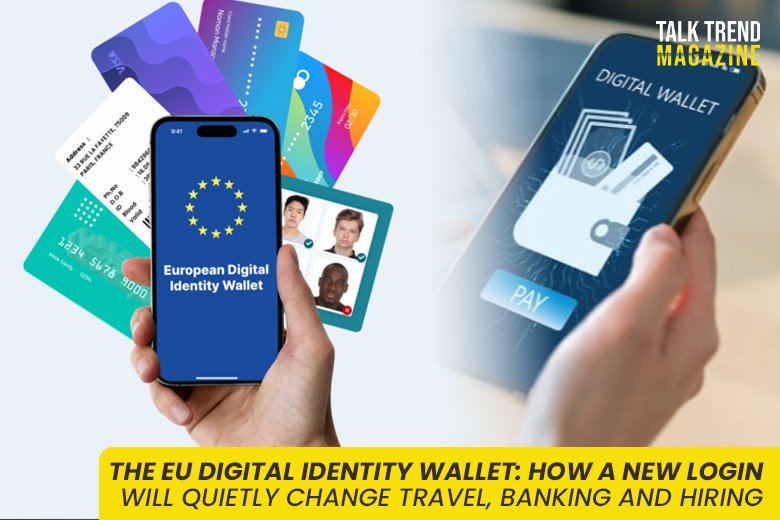
In May 2024, a low key regulatory change set up what may become Europe’s next default login. The updated European Digital Identity Framework, widely known as eIDAS 2, entered into force on 20 May 2024. It requires every EU member state to offer at least one official EU Digital Identity Wallet to citizens and residents by 2026, built to common technical specifications.

The idea is simple to describe and complex to deliver. Instead of juggling different logins, scans and apps for each bank, university or public service, people will be able to prove who they are and share specific credentials from a wallet on their phone. By 2027, large online platforms, banks, utilities and other key sectors are expected to accept the wallet, and the EU’s longer term goal is that 80 per cent of citizens use some form of digital identity by 2030.

For most readers, this will not feel revolutionary on day one. There will still be passwords, plastic cards and slow systems. But as wallets roll out, they are likely to change how we apply for bank accounts, rent flats in another country, enrol on a degree or start a new job. They also raise questions about who controls data, how privacy is protected and what happens if you lose your phone. For UK users, the wallet will sit alongside national projects such as the planned GOV.UK Wallet, creating a new landscape for cross border identity.

What is the EU Digital Identity Wallet, really?

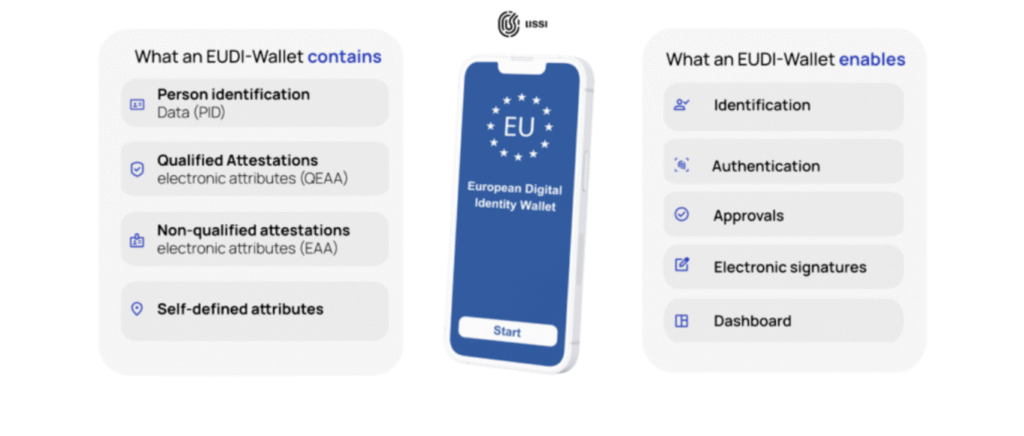
Despite the name, this is not a crypto wallet and it does not store money. The EU Digital Identity Wallet is a secure app or system that lets people store, manage and present verified digital credentials, such as their national ID card, driving licence, degree certificates, professional licences, prescriptions or electronic signatures.

The wallet sits on top of the broader eIDAS 2 framework, which governs electronic identification and trust services in the EU. Under the new rules, each member state must provide at least one certified wallet, recognise wallets from other member states and meet strict security and interoperability standards. The regulation requires “privacy by design”, so wallets must be built to minimise data sharing and give users control over which attributes they disclose.

In practice, a wallet will not hold raw images of your documents in the way a photo album does. It will contain cryptographically signed credentials issued by trusted authorities. When a service asks for proof of age, for example, you can share a yes or no answer rather than your full date of birth and address. When a university checks a qualification, it can verify a digital diploma rather than relying solely on a PDF.

At the same time, the wallet is meant to work offline as well as online. Some proposals include the ability to present QR codes or short lived tokens in face to face situations, such as proving your entitlement to a discount or access to a building.

At a glance
The EU Digital Identity Wallet is a state backed app that stores verifiable credentials, not money. It is built on strict eIDAS 2 rules for security, interoperability and privacy, and should let users share only the minimum data necessary for each interaction.

From KYC checks to renting flats: how wallets change onboarding

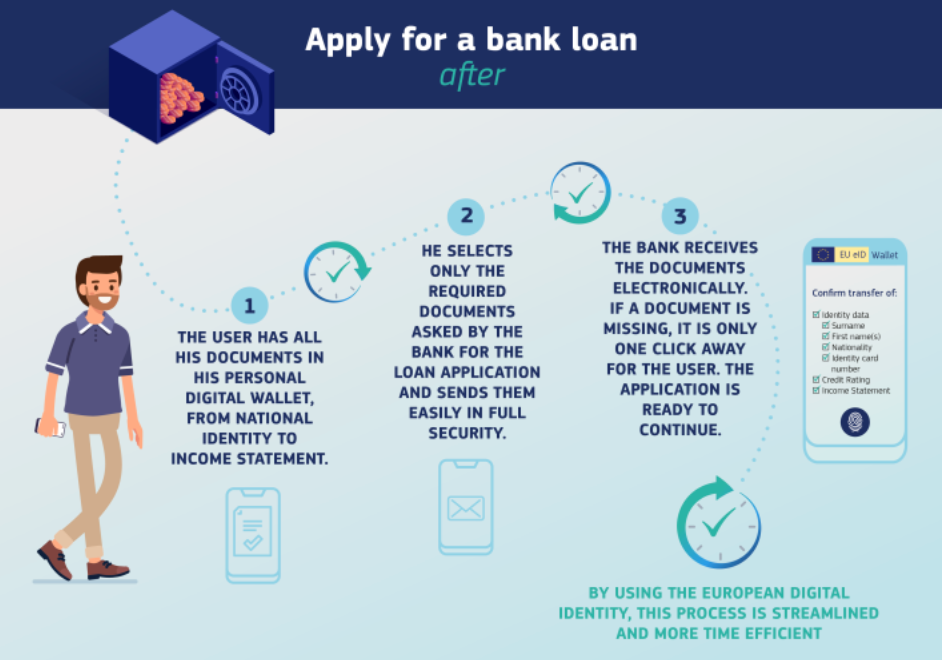
Where this becomes tangible is in onboarding, the catch all term for everything from opening a current account to registering for a master’s degree. Today, many of those processes still rely on a mix of scans, manual checks and repeated forms. Banks and fintechs have to comply with know your customer (KYC) and anti money laundering rules, universities need to verify identity and prior qualifications, and landlords or employers want to see proof of address and status.

The wallet is meant to cut down that friction. The European Commission explicitly cites use cases such as opening bank accounts, enrolling at a university abroad or applying for jobs as core scenarios. Instead of uploading separate documents, a customer could consent to share specific verified attributes directly from their wallet. In theory, that should speed up compliance checks and reduce the risk of forged documents slipping through.

When people still upload scans of old paper certificates, HR teams will not stop doing basic hygiene checks. A common pattern is to run those legacy scans through a simple photo quality enhancer to clean shadows, sharpen text and make seals legible before they are checked against the wallet data in the background. In this model, the wallet becomes the primary trust anchor, while document images are treated as a useful but secondary signal.

The same applies to renting a flat in another EU country. At the moment, a prospective tenant might email copies of their passport, contract and payslips to an agent they have never met. With wallets, agents and landlords should be able to request a standardised set of proofs, such as identity, employment status and income range, presented directly from a trusted source. For cross border workers or students who already juggle multiple bureaucracies, that kind of standardisation could be transformative.

Banks and payment providers have their own reasons to embrace wallets. Compliance teams already spend heavily on KYC, transaction monitoring and fraud prevention. Analysts argue that a common, high assurance identity layer could reduce false positives, improve risk models and simplify onboarding for legitimate customers, especially in business to business settings where organisational identities matter too. In sectors where some customers still send in scanned letters or contracts, a back office clerk may continue to rely on a photo quality enhancer to tidy up those images before they are reconciled with the structured data coming from the wallet.

At a glance
Wallets promise to replace repeated document uploads with reusable, verified credentials, streamlining KYC, university admissions, job onboarding and cross border renting, while leaving room for traditional document checks where needed.

Privacy, control and the lost phone question

A central selling point of the EU wallet is privacy. The regulation talks about “user control” and “data minimisation” in unusually strong terms for a piece of infrastructure that so many services will rely on. Users are supposed to see which attributes are requested in each transaction, choose whether to share them and maintain an audit trail of who has accessed what.

Technically, the wallet is only one part of a wider trust stack. Credentials are issued by trusted providers, and verification happens through standardised protocols, not by letting every app rummage through your phone. That creates room for selective disclosure. For example, you might share proof that you are over 18 without revealing your exact date of birth, or prove that you hold a valid professional licence without sending the full certificate.

Security questions are more complicated. Wallets must be protected by strong smartphone security, such as biometrics or local PINs, and the regulation requires open scrutiny of many wallet components to catch weaknesses early. If a phone is lost or stolen, the aim is that the wallet can be revoked and reissued, much like cancelling and replacing a bank card, with identity re verification built into the process. In parallel, critical credentials can be backed up, in encrypted form, to prevent permanent loss.

For organisations, there is a balance to strike between automation and caution. A university or employer that relies mainly on wallet data might still want to see supporting documents in edge cases. When those arrive as low quality scans, tools such as a photo quality enhancer are simply pre processing steps in a broader risk management workflow, making stamps and seals easier to check by eye while the wallet’s cryptographic evidence does the heavy lifting.

At a glance
The wallet is designed around privacy by design and strong security, with selective data sharing, revocation mechanisms and transparency about who accessed which attributes, although the real test will be how member states implement those promises.

What does this mean for the UK and non EU users?

Post Brexit, the UK sits outside eIDAS 2, and the UK version of eIDAS does not cover electronic identification schemes at all. Yet this does not mean the EU wallet is irrelevant. Any British traveller, student or business that interacts with EU services is likely to see wallet based options cropping up in the next few years, especially for high value or regulated activities.

For individual users, the interactions will fall into a few categories. British citizens living or working in an EU country may receive a wallet through their host state, letting them access local services and cross border portals more easily. UK residents who stay mainly in Britain might still encounter wallet based logins when they apply to an EU university, open an account with an EU fintech or sign up for a platform that prefers wallet proof over traditional KYC methods.

On the UK side, the government is developing its own GOV.UK Wallet, which will start by storing veteran cards and digital driving licences. While it is not directly aligned with eIDAS 2, the direction of travel is similar: a state backed app that holds official credentials and can be presented to both public and private services. Over time, pressure to ensure some degree of interoperability, or at least mutual recognition in specific sectors, is likely to grow.

For non EU businesses that sell into the single market, the impact is more strategic. Regulators and analysts point out that providers offering services in the EU will be expected to accept wallet based identities where sector rules demand “high” or “substantial” assurance, even if they are headquartered elsewhere. That means UK banks, insurers, recruiters and platforms with EU customers may need to integrate wallet acceptance into their onboarding flows, alongside their own digital identity solutions.

At a glance
The UK is outside eIDAS 2 yet will still feel the wallet’s effects, as EU users arrive with portable credentials and UK firms serving the bloc are nudged to accept them, while national projects like GOV.UK Wallet develop in parallel.

Conclusion

The EU Digital Identity Wallet will not abolish passwords overnight, and it will not erase every form or scan currently clogging up HR and compliance workflows. What it offers instead is a slow, structural shift. By 2026, every EU member state will have at least one wallet scheme. By 2027, key sectors will be expected to accept it. By 2030, Brussels hopes that four in five Europeans will be using digital identifiers of some kind in their daily lives.

For individuals, that should mean fewer repeated uploads, more consistent logins across borders and greater visibility into who has accessed their data. For organisations, it promises cleaner onboarding, lower fraud risk and, eventually, a common way of handling identity across a fragmented continent. None of that removes the need for careful governance. Wallets will only earn trust if they are implemented with real transparency, robust security and meaningful redress when things go wrong.

From a UK perspective, the wallet is best seen as part of a broader global trend towards state backed digital identity. Whether or not Britain chooses to align closely with eIDAS 2, British users and businesses will be dealing with EU wallet holders as customers, employees and partners. Understanding how the system works, and where tools like document enhancement fit into the workflow, is no longer a niche compliance concern. It is becoming a basic piece of digital literacy for anyone who moves, studies or does business in and around Europe. 

FAQ

Is the EU Digital Identity Wallet a kind of cryptocurrency wallet?

No. Despite the name, it does not store money or crypto assets. It stores verifiable digital credentials such as ID cards, licences and diplomas that can be presented to services under the eIDAS 2 framework.

When will people in the EU actually be able to use these wallets?

The regulation entered into force in May 2024. Member states must offer at least one certified wallet by 2026, and key sectors, including banks and very large platforms, are expected to accept them from around 2027 onwards.

What happens if my phone with the wallet is lost or stolen?

The rules require strong security, the ability to revoke and reissue wallets and options to back up credentials securely. Losing a device should not mean losing your identity, but exactly how revocation and re enrolment works will depend on each national implementation.

Will UK citizens be able to get an EU Digital Identity Wallet?

UK citizens who live, work or study in an EU member state may be eligible for that state’s wallet scheme. UK residents who remain in Britain will mainly encounter wallets as a login method offered by EU services, for example when applying to a university or opening an account with an EU based provider.

Do UK businesses have to support the EU wallet?

There is no blanket requirement, but UK firms that have EU customers or operate in regulated sectors may find that accepting wallet based credentials becomes a practical necessity, especially where EU rules require high assurance identity checks. It is wise for cross border businesses to monitor eIDAS 2 guidance and plan integrations early.

Tony Stewart, known to fans everywhere as “Smoke,” is an American racing legend whose career has stretched across go-karts, open-wheel cars, NASCAR stock cars, dirt machines, and now NHRA dragsters. Few drivers have ever reinvented themselves as boldly or as successfully as Stewart, and even today, he continues to chase new speed, new danger, and new glory.

On any given race weekend, you might now find Tony Stewart walking toward a Top Fuel dragster instead of a stock car. The scenery is different, but the energy around him feels the same: loud, unpredictable, and a little bit dangerous. His story is not just about championships. It is about a racer who never stopped looking for the next challenge.

From Small-Town Go-Karts to Big-Time Open-Wheel

Tony Stewart was born in Columbus, Indiana, in 1971. He began racing the way many greats do, behind the wheel of a go-kart. By 1980, he had already won his first championship, and by the end of his teens, he had collected national karting titles and the attention of the open-wheel world.

Stewart’s rise through the United States Auto Club (USAC) became the stuff of modern racing folklore. He mastered midgets, sprint cars, and Silver Crown machines, and in 1995, he did the nearly impossible: winning all three USAC national championships in the same year. This “Triple Crown Champion” instantly marked him as a generational talent capable of taming anything on four wheels.

His open-wheel dominance carried him into the newly formed Indy Racing League. In 1997, Stewart captured the IRL championship, proving that his speed translated just as well on the sport’s biggest stages.

Conquering NASCAR and Becoming “The People’s Champion”

When Tony Stewart joined NASCAR’s Cup Series in 1999, some questioned whether an open-wheel star could succeed in the heavier, more unruly stock cars. Stewart silenced those doubts almost immediately. He won three races as a rookie, claimed Rookie of the Year honors, and made it clear he was not just visiting. He belonged.

Driving the iconic orange No. 20 car, Stewart became known for a mix of brute aggression and uncanny race craft. Across 18 full seasons, he racked up 49 Cup Series victories and three championships in 2002, 2005, and 2011.

That 2011 title run remains one of NASCAR’s most thrilling championship battles. Stewart entered the playoffs as an underdog, then dominated the final stretch with a run of pure determination, eventually clinching the championship on a tiebreaker.

Fans connected with him because he was not polished or predictable. Tony Stewart said what he felt, raced with his heart on fire, and never tried to play the role of a corporate poster boy. That honesty, rough edges and all, made people love him. Before long, he had a nickname that fit him perfectly: “The People’s Champion.”

Stewart-Haas Racing: Driver, Owner, Leader

In 2009, Tony Stewart took one of the biggest risks of his career by becoming an owner-driver. He left Joe Gibbs Racing to join and co-own the rebranded Stewart-Haas Racing. Most owner-driver experiments fade out. Stewart’s became a powerhouse.

Behind the wheel of the No. 14 car—a tribute to his hero A.J. Foyt—he quickly found success. By 2011, he delivered the team’s first Cup championship as both driver and part-owner. Stewart-Haas Racing went on to claim another championship in 2014 with Kevin Harvick and grew into one of NASCAR’s elite operations.

Though the team later faced the hard decision to close after the 2024 season, Stewart’s impact as a competitive driver-owner remains one of the sport’s most impressive achievements.

A Man Who Refused to Stay in One Lane

Even after retiring from full-time NASCAR competition in 2016, Tony Stewart never slowed down. Through Tony Stewart Racing, he continued fielding sprint cars and midgets on dirt, collecting national titles with talented young drivers and giving back to the grassroots tracks where he built his reputation.

Then he made a move that surprised even his longtime fans: he jumped into NHRA drag racing. Stewart trained, tested, and embraced a new discipline that demands precision at 330-plus mph. He won the 2024 Top Alcohol Dragster title, then stepped into Top Fuel—the fastest, most explosive class in drag racing.

By 2025, Stewart had already earned multiple Top Fuel victories, proving once again that his talent is not confined to one type of machine or one type of racing world.

Racing has also become a family venture. Stewart is married to NHRA star Leah Pruett, and the pair have formed one of motorsport’s most compelling modern power couples, balancing team ownership, competition, and family life with an intensity that fits the Stewart brand.

Temper, Triumph, and the Hardest Moment

Tony Stewart’s career has not been without turbulence. His fiery personality, run-ins with competitors, and blunt exchanges with the media became part of his lore. They also made him human, brilliant, flawed, passionate, and unapologetic.

The darkest moment of his life came in 2014, when driver Kevin Ward Jr. was fatally struck during a sprint-car race. Stewart was not charged, but the tragedy cast a long shadow and reshaped how he viewed the sport he loved. He has rarely spoken about the incident in depth, yet its emotional weight is unmistakable in the years since.

A Hall of Famer Whose Story Is Not Finished

Tony Stewart holds a résumé that reads like a racing fantasy:

  • USAC Triple Crown champion
  • IndyCar champion
  • Three-time NASCAR Cup champion
  • Championship-winning team owner
  • Drag racing winner and title contender
  • NASCAR Hall of Famer
  • Motorsports Hall of Fame of America inductee

He remains the only driver in history to win top-level championships in both IndyCar and NASCAR—a testament to his unmatched versatility.

But perhaps the most exciting part of Tony Stewart’s legacy is that it is not complete. Even now, he walks toward new challenges with the same gritty conviction he had as a kid with a go-kart and big dreams.

Wherever Tony Stewart races next—dirt track, superspeedway, or a thunderous quarter-mile—fans will follow. Because with Stewart, there is always the feeling that the best chapter could still be ahead.

Conclusion

In the end, Tony Stewart’s career reminds us why motorsport captures the imagination in the first place. He is not just a driver with impressive statistics. He is a living example of grit, adaptability, and the pursuit of pure speed. From dirt ovals to NASCAR’s brightest stages and now the explosive world of Top Fuel, he has shown that passion does not fade with time. It simply finds new roads. And as long as Tony Stewart keeps suiting up, fans will keep watching, knowing that wherever he goes next, the ride will be unforgettable.

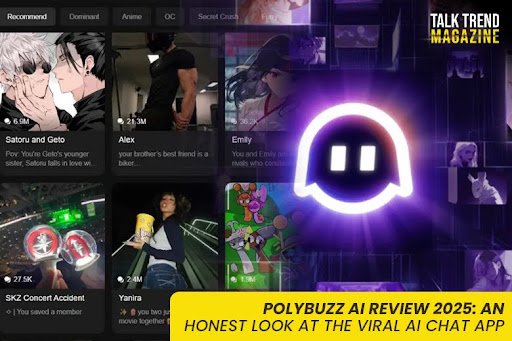
The AI chat world has expanded rapidly over the last two years, but only a few platforms have garnered as much attention as PolyBuzz AI. Whether you check out TikTok, Reddit, or AI-focused communities, you will find people talking about this fast-growing character chat platform. Some claim it is the most entertaining place for creative storytelling and emotional conversations, while others point out concerns about stability, content controls, and aggressive upsells.

This 2025 PolyBuzz AI review walks you through everything you need to know, like how it works, what makes it special, what its weaknesses are, whether it is safe, and if it is worth using compared to better-known alternatives like Character.ai or Replika.

What Is PolyBuzz AI?

Polybuzz AI is a character-based chat platform where you can talk with millions of AI personalities. These characters are created by the community and range from anime heroes to fictional villains, romantic partners, fantasy creatures, and fully original personalities. You can also design your own characters with detailed backstories and conversation styles. This allows you to shape the tone and personality you want.

Unlike some AI chat apps that focus on productivity or emotional support, PolyBuzz AI is built around creativity, entertainment, and free-flowing roleplay. Many users join to chill out in fictional worlds, chat through story scenes, or simply talk to characters that match their moods.

The app is available both on mobile and web, so it is easy to use anywhere. This flexibility, which is combined with a massive character collection, is one of the reasons the app gained viral popularity.

How does PolyBuzz AI Works? The User Experience

After you create an account, you have to choose a character to start chatting instantly. One of the most appealing things about PolyBuzz is that the core chat experience is free, with no message caps interrupting your conversations. This makes it feel welcoming, especially to new users who want to explore without paying.

The app does offer optional paid upgrades and coins, which give you things like extra rerolls, better memory, and access to image generation. These add-ons can make your chats feel smoother and more immersive, but you do not need them to enjoy the app. Most people start out using the free version and only consider upgrading if they end up chatting every day.

Chat Quality: Does It Really Feel “Human-Like”?

The real evaluation of any chat app is how it actually feels to talk to the characters, and in that area, PolyBuzz AI does a pretty impressive job. Conversations usually come across as expressive and emotionally aware, and the characters often stay true to their personalities. They respond with enough detail and color that it is easy to get pulled into the story.

Of course, it is not perfect. In longer chats, the AI can forget earlier parts of the conversation or drift off-topic, which breaks the flow a bit. But, this is not just a PolyBuzz issue; it happens with most AI chat apps. Well, it can still interrupt things if you are deep into a storyline. Overall, the platform shines in medium-length chats and playful conversations where you are not relying on long-term memory.

Despite these small weaknesses, the general chat quality is lively and engaging, especially for users who enjoy roleplay.

Is PolyBuzz AI Safe? A Look at Privacy and Moderation

Safety is something a lot of people think about when trying out AI companionship or more imaginative roleplay. PolyBuzz markets itself as a private, secure space, but your actual experience with safety really depends on how you use it.

Compared to many other AI chat apps, PolyBuzz AI is a lot more open. That gives adults more room to explore mature or intense fictional scenarios, which many users enjoy. But that same freedom also means the app’s rules and filters are not as tight as some people might expect. Since most of the characters are created by the community, the tone and content can vary a lot from one chat to the next.

Well, generally for the sake of privacy, each user should avoid sharing personal details and treat the app like any other online platform. PolyBuzz offers content filters, but they are not as firm as those on Character.ai or Replika. If you want a heavily moderated or family-friendly experience, this may not be the best choice. However, for adults who prefer flexibility and fewer restrictions, the openness of PolyBuzz is part of its appeal.

PolyBuzz AI Features: What Makes It Stand Out?

Several features help PolyBuzz distinguish itself from other AI chat apps:

1. Millions of Characters

Instead of having a limited character library, PolyBuzz thrives on community-created personalities. This gives the platform a sense of endless discovery. No matter what mood you are in, romantic, adventurous, silly, or dramatic, there is a character that fits.

2. Custom Character Creation

Users can design their own characters with detailed instructions and personality qualities. This attracts creative storytellers who want a character tailored perfectly to their style.

3. Unlimited Free Chatting

This is a major selling point. Many competitors restrict free users, but PolyBuzz AI lets you chat as long as you want. This makes it ideal for casual roleplay lovers.

These features make the app a fun and open-ended playground for creativity.

Pros and Cons 

It is not possible that anything comes with only positive points and no disadvantages at all. Similarly, we have the case of PolyBuzz AI. 

Firstly, let us talk about the positive side of PolyBuzz AI. It really stands out for its freedom and creativity. People love that they can chat as much as they want without running into annoying message limits. The huge range of characters keeps things feeling new, and the emotional tone of the conversations often feels more natural than you’d expect from a playful roleplay app. Being able to create your own characters is another big plus, especially for users who like shaping their own stories.

On the flip side, the app is not perfect. It can struggle with reliability and memory, especially in longer chats where things sometimes drift off-topic. From time to time, you might hit a glitch or slow response, which can break the flow. Some users also mention that the app pushes coins and premium upgrades a bit more than they’d like. And while the open content is fun for adults who want flexibility, the lighter safety controls might feel like a drawback if you prefer a more structured or closely managed environment.

Alternatives to PolyBuzz AI

If you are considering other options, a few alternatives are worth looking into. Character.ai is probably the closest match, offering steady storytelling and tighter content controls. Replika leans more toward emotional connection than creative roleplay. Apps like Talkie, Chai, and Kindroid are built for people who want a mobile-first, relationship-focused experience. Each platform brings something different to the table, so the best choice really depends on what you care about most, whether that is safety, romance, creativity, or a long-term AI companion.

Is PolyBuzz AI Worth It in 2025?

After looking at both the good and the not-so-good, whether PolyBuzz AI is right for you really comes down to what you want from an AI chat app. If you are after something fun, imaginative, and flexible, PolyBuzz AI is definitely worth a try. Its huge range of characters, expressive conversations, and unlimited free chatting make it one of the more enjoyable options out there.

If you need strict safety controls, stronger long-term memory, or a more polished emotional companion, you might prefer another app. But for creative roleplay and casual, spur-of-the-moment chats, PolyBuzz AI offers a lively and genuinely entertaining experience.

The best approach is simple: try the free version first and see how it feels. You will know pretty quickly whether it is a world you want to dive deeper into.