Category: Celebrity Bios

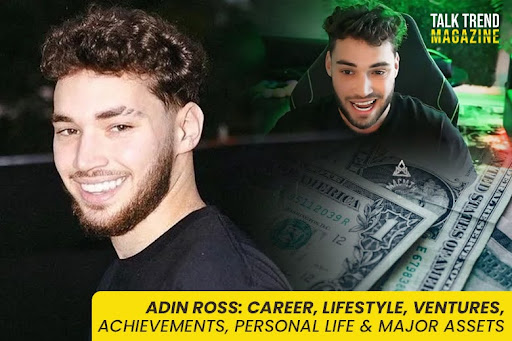
Adin Ross is one of the defining names of modern live streaming—an entertainer who turned gaming, celebrity access, and internet culture into a high-earning media brand. Most widely published estimates place Adin Ross’s net worth in the $30 million to $40 million range, built through streaming income, platform deals, sponsorships, YouTube monetization, and high-value real estate.

Net Worth 

  • Estimated net worth: $30M–$40M
  • Primary wealth drivers: streaming revenue + platform contract economics, advertising, sponsorships, and property holdings
  • Wealth style: high cash flow media business paired with “trophy assets” (notably luxury real estate)

(These figures align with the ranges commonly published by major net-worth trackers and entertainment finance write-ups.)

Early Life & Background

Born on 11 October 2000, Adin Ross is a Florida-raised creator who built his audience from the ground up in the gaming era of livestreaming. His rise reflects a typical “creator-native” trajectory: early consistency, a strong on-camera personality, and rapid scaling once collaborations and viral moments kicked in.

Career Timeline: From Gaming Streams to Mainstream Internet Star

Adin Ross’s rise wasn’t a one-clip moment—it was a steady climb built on long streaming hours, smart momentum, and an ability to turn everyday broadcasts into headline content. He first gained traction through gaming streams, where his high-energy commentary and constant chat interaction made his channel feel like a live hangout. As his audience scaled, he expanded into personality-first “Just Chatting” streams and collaborations that regularly spilled into mainstream conversation.

A major turning point in his timeline is how he began booking big-name guests and high-profile interviews, turning his channel into a place where internet culture and real-world celebrity collide. Most notably, he drew widespread attention for hosting an interview with Donald Trump, and he has also featured other major figures across music and online entertainment—streams that pushed him beyond the “gaming streamer” label and firmly into the category of a mainstream internet star whose content can generate headlines far outside the streaming world.

1. Breakout on Twitch

    Ross first became widely known through high-energy gaming content, especially NBA 2K, where his streams combined gameplay with constant live conversation. That mix—gaming + personality + community—pushed him into the top tier of the category and made him a recurring name in streaming headlines.

    2. Collaboration as a Growth Engine

      A major accelerator in Ross’s career has been his ability to turn streams into events. By bringing on high-profile guests and running “can’t-miss” live moments, he transformed typical streaming into appointment viewing. His on-stream network expanded to include major figures across music, sports, and politics—helping him pull audiences far beyond core gaming.

      3. The Platform Power Move (Kick Era)

        After establishing himself on Twitch, Ross made a high-profile shift that reshaped his earnings profile: moving to Kick with a creator deal that elevated him from “top streamer” to “platform franchise player.” Strategically, it repositioned his business around

        • bigger guarantees
        • higher upside per viewer
        • more control over content programming

        The move also reinforced his identity as a creator who treats streaming like a media company, not a hobby.

        What Adin Ross Is Known For (Signature Content Style)

        Ross’s brand sits at the intersection of:

        • Gaming culture
        • “Just Chatting” entertainment
        • celebrity-driven live programming
        • viral internet storylines and real-time reactions

        He’s built a reputation for streams that feel unpredictable and high-stakes—where anything from a surprise guest to a headline-making moment can happen live.

        How Adin Ross Makes Money (Core Revenue Streams)

        1. Streaming income

        His live revenue foundation includes:

        • subscription-style support
        • platform ad splits
        • viewer engagement mechanics (varies by platform)
        • performance-based contract economics tied to viewership and brand value
        1. Sponsorships & brand integrations

        Ross’s audience reach and cultural relevance allow premium pricing on:

        • sponsored segments
        • long-term brand partnerships
        • appearance-based promotions
        1. YouTube monetization (the “clips machine”)

        A major strength of his model is that live moments don’t end when the stream ends. Highlights get repackaged into:

        • YouTube videos
        • short clips
        • re-uploads and reaction coverage that keep attention circulating

        That creates ongoing ad revenue and expands his discovery funnel.

        1. Merchandise & fan-driven product drops

        Like many top creators, Ross uses merchandise to convert attention into direct-to-fan sales—high margin, brand-building, and scalable when timed around peak attention cycles.

        1. Event- and promotion-style ventures

        Ross has repeatedly leaned into promotion-based monetization, where the stream is the marketing engine for the event itself—bringing additional revenue via sponsorship packaging, distribution, and partnership structures.

        Business Ventures & Brand Expansion

        Adin Ross’s “business” is best understood as a creator-led media venture with multiple profit centers:

        • Creator collaborations as content-IP: turning relationships into repeatable show formats
        • Promotional events: building live spectacle that travels far beyond his own channel
        • Merch and branded drops: direct sales powered by loyal community demand
        • Real estate as a wealth anchor: a high-profile property strategy that also functions as a content backdrop

        This is the modern creator blueprint: entertainment first, diversified income second, long-term assets third.

        Major Achievements & Notable Milestones

        Ross’s achievements are tied to scale, influence, and deal-making rather than traditional awards:

        • Entered the highest visibility tier of livestreaming through breakout gaming success
        • Became a consistent driver of viral, mainstream coverage through celebrity-focused streams
        • Executed a career-defining platform transition that significantly increased earning power
        • Built a multi-platform audience that turns live moments into long-tail revenue

        Lifestyle: Luxury, Visibility, and “Streamer-First” Living

        Adin Ross’s lifestyle is openly high-end and content-adjacent—meaning many purchases and experiences also function as part of his on-camera world. Common themes include

        • luxury travel and high-profile social circles
        • designer fashion and high-ticket collectibles
        • constant “set design” thinking (homes, rooms, and backdrops that support filming)
        • a day-to-day rhythm built around being live, producing clips, and managing collaborators

        This is less about quiet wealth and more about public-facing success, where lifestyle is part of the brand.

        Real Estate: The Headline Florida Mega-Mansion

        One of Ross’s biggest and most talked-about assets is his Florida mega-estate purchase priced at $25.5 million, which made waves as a record-setting deal in its area.

        Key highlights widely circulated about the property:

        • Location: Davie, Florida
        • Land: roughly 10 acres
        • Size: about 11,325 square feet
        • Layout: 7 bedrooms, 9 bathrooms
        • Amenities: built as a resort-style compound with premium entertainment and wellness features
        • Ownership structure: purchased through an LLC
        • Financing: included a $12.7M mortgage structure

        Beyond the investment angle, the home functions as:

        1. a real asset that holds significant value, and
        2. a production-ready environment for streaming and hosting.

        Assets & “What He Owns” (High-Level)

        While exact inventories change, Ross’s asset profile is typically described as

        • High-value real estate (anchored by the Florida estate)
        • Luxury vehicles (consistent with the public-facing creator lifestyle)
        • Premium watch collection with some limited editions
        • Business income streams tied to platform deals and sponsorship value
        • Liquidity from media earnings, allowing large purchases and rapid reinvestment

        His wealth is structured like a modern entertainer’s: earnings-driven, brand-driven, and reinforced by tangible property.

        Personal Life (What’s Publicly Discussed)

        Ross keeps much of his private life behind the scenes, but publicly he’s defined by

        • a creator circle that overlaps heavily with other streamers, musicians, and influencers
        • a lifestyle built around constant production and community engagement
        • a public persona that thrives on humor, high intensity, and real-time interaction

        His personal brand is the product: audience connection is central, and the “always on” nature of streaming shapes how he lives.

        Summary: Why Adin Ross’s Wealth Keeps Growing

        Adin Ross isn’t just lucky—he’s smart about how he builds his money. He knows how to reach a huge audience, turn everyday content into big events, and position himself on platforms where attention pays off. On top of that, he doesn’t rely on just one way to make money; he spreads his income across streams that all add up. From big sponsorship deals to his own projects and even investments in high-value assets like luxury real estate, everything works together to keep his wealth growing steadily. That mix is what turns a streamer into a full media business—and why his net worth is consistently placed in the $30M–$40M range.
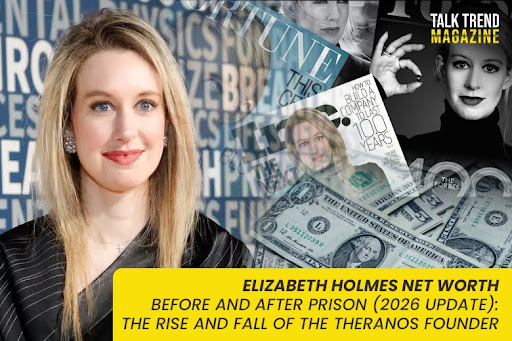
        Elizabeth Holmes once looked like the ultimate Silicon Valley success story. She founded Theranos as a young Stanford dropout, promised a medical breakthrough, and became known as the “youngest self-made billionaire” when her company’s valuation soared. At her peak, Forbes estimated her fortune at about $4.5 billion.

        Then the story flipped. Theranos collapsed after claims that its blood-testing technology did not work as advertised, and Holmes was convicted of defrauding investors. In 2023, she entered federal custody—making “Elizabeth Holmes prison” one of the most searched phrases tied to her name.

        This guide explores Elizabeth bio that includes who she is, how Theranos was made, how Elizabeth Holmes and Sunny Balwani worked together, what the court case was about, and what her money and life look like now in a clear sequence and detail.

        Who Is Elizabeth Holmes?

        Elizabeth Holmes is the founder and former CEO of Theranos, a health-tech startup created in 2003. She became famous for promoting a simple but powerful idea: run many lab tests using only a tiny amount of blood, faster and cheaper than standard testing.

        For years, Holmes was treated like a celebrity in the business world. She appeared in major media, built relationships with influential people, and was praised as a bold founder in the heart of Silicon Valley, the region known for turning ambitious ideas into billion-dollar companies.

        But Theranos’ claims eventually faced deep scrutiny. In the end, Holmes’ case became one of the biggest startup fraud stories in modern U.S. business history.

        Elizabeth Holmes Quick Facts 

        • Elizabeth Holmes was born in 1984 and founded Theranos in 2003.
        • She was sentenced in November 2022 to 135 months (11 years, 3 months) in federal prison for defrauding investors.
        • She reported to Federal Prison Camp (FPC) Bryan in Texas on May 30, 2023.
        • At her peak, Forbes estimated her net worth around $4.5 billion, but later revised it to $0 after Theranos unraveled.

        Early Life and Education

        Holmes grew up with strong academic ambition and a big interest in science and invention. She later entered Stanford University and pursued engineering-related studies. What stood out early was her confidence: she wanted to build something that could change healthcare.

        In Silicon Valley culture, dropping out of a top school to build a startup can be seen as a bold move. Holmes followed that path and focused her full attention on Theranos.

        How Elizabeth Holmes Built Theranos?

        The Idea Behind Theranos

        Theranos was built around a promise that felt instantly exciting. Instead of drawing several tubes of blood from a vein, the company said it could use a finger prick and run a wide menu of tests on a small sample. For everyday people, that sounded like a future where lab testing is quicker, less painful, and less expensive.

        This message helped Theranos attract attention, partnerships, and money. But the most important question was always the same: could the technology actually do what Holmes said it could do?

        How Elizabeth Holmes and Sunny Balwani Worked Together

        Sunny Balwani (Ramesh “Sunny” Balwani) became a key leader at Theranos, serving as president and COO. In the public eye, Holmes was the face of the company, but internally Balwani played a major role in operations and management.

        Later, federal prosecutors argued that leadership at Theranos misled investors about the company’s technology and business readiness. Balwani was tried separately, convicted, and received a longer sentence than Holmes.

        Their Romantic Relationship

        A major part of the public fascination comes from the personal side: Elizabeth Holmes and Sunny Balwani were not only business partners. They were also romantically involved for much of Theranos’ history, according to widely reported accounts.

        That relationship mattered because it shaped how people understood the power structure at Theranos. Many readers wondered who influenced whom, who made key calls, and how decisions were handled behind closed doors.

        What Went Wrong at Theranos?

        Theranos began falling apart when claims about its blood-testing abilities were challenged by investigators, regulators, and later by the justice system. The government’s case focused heavily on investor deception arguing that key statements about Theranos’ capabilities and progress were not truthful or were missing critical facts.

        The trial and later appeals produced a huge amount of public record, including how investors were pitched, what they were told about the technology, and how the company presented its progress. By 2025, a federal appeals court upheld Holmes’ conviction.

        Elizabeth Holmes Net Worth at Her Peak

        This is the part that made Holmes a global headline.

        At Theranos’ height, the company’s private valuation created “paper wealth” meaning Holmes looked extremely rich on paper because she owned a large stake in a company that investors valued very highly. Forbes famously estimated her net worth at about $4.5 billion at one point.

        It is important to understand how this kind of wealth works. In many startups, founders are not sitting on billions in cash. Their “net worth” depends on what the company is worth and whether shares can be sold. Still, the headline number made Holmes a celebrity and gave Theranos even more credibility.

        How Elizabeth Holmes Lost Her Fortune?

        Holmes’ wealth fell for the same reason it rose: it was tied to Theranos’ value.

        As Theranos faced investigations, lawsuits, and massive public doubt, the company’s valuation collapsed. Forbes later revised its estimate of Holmes’ net worth to $0, reflecting the idea that her Theranos stake no longer had meaningful value after the scandal.

        Then came the financial consequences of the criminal case. A restitution order later held Holmes and Balwani jointly responsible for $452 million in restitution connected to victim losses.

        Elizabeth Holmes Prison Sentence Explained

        Holmes was sentenced to 135 months in federal prison in late 2022.
        She reported to custody on May 30, 2023, at FPC Bryan in Texas, a minimum-security federal prison camp.

        This is why “Elizabeth Holmes prison” trends so often. People want to know where she is serving time, what her daily life looks like, and whether anything has changed in her case.

        In 2025, the Ninth Circuit upheld her conviction and sentence, which reinforced that the legal outcome was not being reversed on appeal.

        When Will Elizabeth Holmes Be Released?

        Release timing is one of the most searched questions about Holmes, and it is also one of the most confusing, because projected dates can change.

        As of late 2025 reporting based on Bureau of Prisons records, Holmes’ projected release date has been listed as December 30, 2031.

        That projection can move depending on standard federal factors like good-conduct time and program credits. So the most accurate way to think about it is: the sentence is fixed by the court, but the projected release date can shift based on how the federal system calculates time served.

        Who Is Elizabeth Holmes’ Husband?

        Holmes’ longtime partner is William “Billy” Evans, often described as a hotel heir.

        However, the “husband” label is slightly complicated. In a 2025 interview, Holmes suggested they were not officially married or at least not treating paperwork as the main point, even though many outlets still refer to him as her husband or spouse.

        What is clear is that Evans supported Holmes through her trial and sentencing, and the couple has children together.

        Elizabeth Holmes Net Worth Now in 2026

        So what is Elizabeth Holmes net worth today?

        There is no credible evidence that she holds anything close to her former “billionaire” status. The widely cited shift is this: Forbes’ peak estimate was in the billions, and later it was revised to $0 after Theranos collapsed.

        On top of that, the restitution order tied to investor losses is enormous—$452 million, shared with Balwani.

        This is why her story is often described as a complete financial reversal: from startup royalty to a convicted former executive with major legal debts and a long prison term.

        Final Thoughts

        Elizabeth Holmes did not become famous just because she built a company. She became famous because she represented something people want to believe: that a young founder with a big idea can change the world, and become incredibly rich doing it.

        But Theranos is also a warning. In tech, hype is common. In healthcare, hype can be dangerous. The case shows what happens when big promises aren’t backed by reliable results and transparency especially when investors are making decisions based on what they are told.

        For anyone interested in celebrity business stories, the Theranos saga has everything: fame, power, a dramatic fall, and the hard reality of the U.S. justice system. And for finance-minded readers, it is one of the clearest examples of how “paper wealth” can disappear fast when a company’s core story collapses.

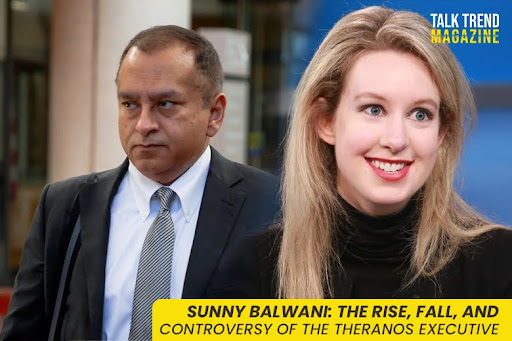
        Sunny Balwani is a name that gained huge attention due to his involvement in one of the biggest scandals in the history of Silicon Valley. As the former president and COO of Theranos, a now-defunct health technology company, Balwani’s name became synonymous with deception and controversy. 

        His story is closely connected with that of Elizabeth Holmes, the founder of Theranos, and their shared ambition to revolutionize the medical industry. In this article, we will explore Sunny Balwani’s life, his connection to Theranos, the criminal case that ensnared him, and his current life.

        Who is Sunny Balwani?

        Sunny Balwani is an American businessman and former executive who became widely known for his role at Theranos, a health technology company founded by Elizabeth Holmes. He served as the president and chief operating officer (COO) of Theranos and was integral to the company’s operations. Balwani, who was once a well-respected figure in the tech world, became infamous after being convicted for his involvement in the fraudulent activities surrounding Theranos’ blood-testing technology.

        Balwani’s case caught the public’s attention because of its complexity and the fact that he was convicted alongside Holmes, who was also found guilty of similar charges. Their trial, media coverage, and the eventual downfall of Theranos made for a dramatic and cautionary tale of ambition gone wrong in the tech industry.

        Quick Facts About Sunny Balwani

        Full NameRamesh “Sunny” Balwani
        Date of BirthJune 13, 1965
        Age58 years old
        NationalityAmerican
        EducationDegree in Computer Science from the University of Texas at Austin; later attended Stanford University (MBA not completed)
        CareerFormer President and COO of Theranos; early investor in the company
        SpouseKeiko Fujimoto
        Notable RelationshipsRomantically involved with Elizabeth Holmes, founder of Theranos

        Early Life and Background

        Sunny Balwani was born in Karachi, Pakistan, and moved to the United States with his family in the 1970s. His early life in the U.S. was characterized by academic achievement and an early interest in technology. Balwani attended the University of Texas at Austin, where he earned a degree in Computer Science.

        Before joining Theranos, Balwani worked in the tech industry. He held various positions, including one at the software company MicroStrategy. His work in the tech field helped him build significant wealth, and he eventually became a successful investor. Balwani’s transition into the health technology space came when he met Elizabeth Holmes in the early 2000s, leading to a pivotal moment in his career.

        Marriage With Keoki Fujimoto

        Sunny Balwani’s personal life has been equally intriguing. Though not as widely covered as his professional life, his marriage to Keiko Fujimoto also gained attention in the wake of the Theranos scandal. 

        Fujimoto, a successful businesswoman, and Balwani were married for several years. The couple reportedly had a relatively low-key relationship, which was overshadowed by the media frenzy surrounding Balwani’s connection to Holmes and the rise and fall of Theranos.

        While their marriage was mostly private, it is understood that the couple did not have children together, and there were no major public issues until the Theranos debacle became headline news. Much of the public’s focus shifted to his professional and personal relationship with Elizabeth Holmes, which became a central part of the Theranos story.

        Relationship With Elizabeth Holmes

        One of the most talked-about aspects of Sunny Balwani’s life is his relationship with Elizabeth Holmes. The two met in the early 2000s, and they developed both a professional and personal relationship. Balwani joined Theranos in 2009 as its president and COO, after meeting Holmes. He was one of the key figures in the company’s rise to prominence and was deeply involved in managing the company’s operations and strategy.

        However, their relationship went beyond the professional. Balwani and Holmes were reportedly romantically involved for a significant period, although their relationship was kept secret at the time. This secrecy, along with the questionable business practices of Theranos, would later come under intense inspection during their trials.

        The dynamic between Holmes and Balwani was a key factor in the Theranos scandal. Holmes was the public face of the company, while Balwani worked behind the scenes, and the pair’s close-knit partnership raised questions during the investigation into the company’s practices. Some former employees later testified that Balwani was aggressive in his management style and that he played a key role in pressuring employees to overlook flaws in the company’s technology.

        Theranos Fraud Case

        The story of Sunny Balwani is inseparable from the story of Theranos, a company that promised to revolutionize medical testing with a device that could conduct a wide range of tests using just a few drops of blood. The technology was hailed as groundbreaking and attracted significant investment, but it was eventually revealed to be a fraud.

        Sunny Balwani was heavily involved in the creation and operation of Theranos. As the company’s president and COO, he was responsible for overseeing its daily operations and managing its financial and technical operations. However, the company’s blood-testing technology was a failure, and many of the claims made about its capabilities were exaggerated or false.

        In2018, the U.S. Department of Justice filed charges against Balwani and Holmes for defrauding investors, doctors, and patients. Thetrial began in 2021, and Balwani was accused of conspiring with Holmes to mislead investors and patients about the effectiveness of Theranos’ technology. The case brought to light numerous instances of deception and misrepresentation by the company’s leadership.

        InDecember 2021, Balwani was found guilty on multiple counts of wire fraud and conspiracy. He faced a lengthy prison sentence and a significant amount of public scrutiny. The case was a landmark moment in Silicon Valley, as it highlighted the dangers of over-promising and under-delivering in the tech world, especially when it comes to healthcare.

        Allegations of Elizabeth Holmes

        During the trial, Elizabeth Holmes testified that she was the one primarily responsible for making decisions at Theranos and that Balwani was not directly involved in the fraudulent activities. She also accused Balwani of being controlling and emotionally abusive. Holmes claimed that Balwani had exerted significant influence over her actions and decisions, both personally and professionally.

        While Balwani denied the accusations, the defense strategy was complicated by Holmes’ testimony. The trial revealed a complex dynamic between the two, and many were left wondering whether Balwani was a willing accomplice or a scapegoat in a larger scheme orchestrated by Holmes. Ultimately, both were convicted, but their roles in the scandal remain a topic of intense debate.

        Where is Sunny Balwani Now?

        As of 2023, Sunny Balwani is serving a prison sentence following his conviction in the Theranos fraud case. He was sentenced to serve over 11 years in federal prison, a significant penalty for his involvement in the scandal.

        Balwani’s case is still evolving, and he is expected to spend several more years in prison. His legal team has filed for appeals, but as of now, he remains imprisoned. His story serves as a cautionary tale about the risks of ambition, deception, and the tech industry’s desire for success at any cost.

        Is Sunny Balwani Still Rich?

        Before the downfall of Theranos, Sunny Balwani was worth millions of dollars. He was an early investor in the company, which at one point was valued at over $9 billion. However, with the collapse of Theranos, much of Balwani’s wealth was wiped out, and his financial situation has dramatically changed.

        Given the legal and financial consequences of his conviction, it is unlikely that Balwani is still as wealthy as he once was. Most of his assets have been seized or tied up in legal battles, leaving him with limited resources.

        What is Sunny Balwani Net Worth?

        At the peak of his career, Sunny Balwani’s net worth was estimated to be around $85 million, largely thanks to his early involvement in Theranos. However, with the legal battles, loss of reputation, and the financial fallout from the scandal, it is believed that his net worth has significantly decreased. In 2023, estimates suggest that Balwani’s net worth may now be in the range of several million dollars, but he is no longer considered one of the wealthiest executives in the tech world.

        Final Words

        Sunny Balwani’s story is a complex one, filled with ambition, deception, and controversy. From his early days in the tech industry to his rise and fall with Theranos, Balwani’s career has become a cautionary tale for those who aim to change the world through innovation. His involvement in the Theranos fraud case has left a lasting mark on the tech industry, serving as a reminder of the importance of transparency, honesty, and ethical practices.

        Despite his conviction, Sunny Balwani’s legacy remains a topic of discussion, particularly regarding his relationship with Elizabeth Holmes and his role in the fraudulent activities at Theranos. 

        Whether he will ever fully regain his reputation remains to be seen, but for now, he serves as a symbol of the dangers of unchecked ambition and corporate malfeasance.

        As for his current life, it seems that the consequences of his actions are far from over. From a once-promising career to a prison sentence, Sunny Balwani’s story is one that will continue to resonate for years to come.

        Keiko Fujimoto is a name that has drawn increasing attention in recent years, not only because of her past marriage to former Theranos executive Sunny Balwani but also because of her own meaningful professional journey. 

        While many people first search for Keiko Fujimoto in connection with the Theranos controversy, a deeper look reveals a skilled technical communication professional, creative artist, and design thinker whose work reflects precision, clarity, and cultural depth. Her career bridges technology, documentation, and Japanese aesthetic principles such as Wabi-Sabi and minimalism, making her an understated yet significant innovator in her field. 

        For audiences interested in technology, design, and cross-cultural careers, Keiko Fujimoto’s story offers valuable insight into how communication, creativity, and resilience shape long-term professional impact.

        Who is Keiko Fujimoto?

        Keiko Fujimoto is a Japanese-born professional widely recognized for her contributions to technical publications, documentation management, and design-inspired communication systems. 

        She built a career centered on transforming complex technical information into clear, structured, and user-friendly content. Unlike many public figures, she has maintained a low-profile personal life, preferring privacy over media attention.

        Her name gained wider public visibility due to her former marriage to Sunny Balwani, but her professional identity stands independently through her long-standing work in technical communication and creative design.

        Rather than being known for public appearances or corporate leadership in the spotlight, Keiko Fujimoto represents a different kind of innovation—one rooted in clarity, organization, and thoughtful design. Her work reflects a balance between technical precision and artistic sensibility, making her a respected figure among professionals who value effective communication in complex industries.

        Early Life and Roots of Keiko Fujimoto

        Keiko Fujimoto was born and raised in Japan, where she grew up immersed in a culture that deeply values harmony, simplicity, and discipline. While specific details about her family background and early childhood remain private, available information suggests that her upbringing played a huge role in shaping her professional philosophy.

        Japanese cultural principles such as Wabi-Sabi, which embraces imperfection and natural beauty, and “Ma,” the meaningful use of space, influenced her way of thinking. These ideas later became evident in both her creative work and technical documentation approach. 

        From a young age, Keiko Fujimoto developed an appreciation for structured thinking, artistic expression, and careful attention to detail—qualities that would define her career in later years.

        Her early exposure to both traditional Japanese aesthetics and modern educational opportunities helped her develop a unique perspective that blended creativity with analytical thinking. This foundation became crucial when she later moved to the United States to pursue higher education and professional opportunities.

        Quick Facts About Keiko Fujimoto

        Keiko Fujimoto is Japanese by nationality and bilingual in Japanese and English. Her exact date of birth has not been publicly disclosed. She is known as both a technical communication professional and acreative artist

        She spent many years working in technical publications, reportedly including a significant tenure at Applied Materials, a major U.S. technology company. Keiko Fujimoto was married to Sunny Balwani and divorcedin 2002. After her divorce, she returned to Japan and has since lived a largely private life.

        Educational Background and Career Development

        Keiko Fujimoto pursued higher education with a focus on both cultural understanding and technical expertise. She studiedInternational and Cultural Studies at Tsuda University in Japan, a prestigious institution known for empowering women through education. This academic background gave her a strong foundation in cross-cultural communication, critical thinking, and global perspectives.

        Later, she moved to the United States to further her education and earned a master’s degree in Information Sciences from the University of Illinois Urbana-Champaign. This transition marked a significant step in her professional development, as it allowed her to combine her cultural insight with technical knowledge.

        Her education equipped her with the ability to analyze complex information systems, design clear documentation structures, and communicate effectively across different languages and professional environments. This combination of humanities and technical training positioned her well for a career in technical publications and documentation leadership.

        From Writer to Leader in Technical Publications

        Keiko Fujimoto began her career as a technical writer, a role that required precision, clarity, and deep collaboration with engineers and product developers. Over time, she advanced into leadership positions within technical publications, where she was responsible for managing documentation teams, establishing standards, and ensuring consistency across technical materials.

        Her work went far beyond simply writing manuals. She helped create structured documentation systems that improved how technical information was organized, reviewed, and delivered to users. This included developing templates, maintaining terminology consistency, implementing version control processes, and coordinating with global teams for localization and translation.

        Her leadership in technical communication contributed to safer, more efficient product usage, reduced user confusion, and improved training materials for employees and customers alike. In many ways, Keiko Fujimoto’s innovation lay in making complex technology accessible through clear and thoughtful documentation.

        Keiko Fujimoto’s Creative Work in Art and Design

        In addition to her technical career, Keiko Fujimoto has been described as an artist and designer with a deep appreciation for Japanese aesthetics. Her creative work reflects a blend of traditional influences and modern minimalist design principles.

        Her artistic approach emphasizes simplicity, balance, and intentional use of space. Rather than cluttered or overly decorative designs, she favors clean lines, subtle textures, and thoughtful composition. This artistic sensibility also influenced her technical work, as she applied similar principles to documentation layout and visual communication.

        Some sources suggest that she appeared in Japanese media at various points, showcasing her creative interests. However, she never pursued widespread fame and instead focused on personal artistic expression and professional integrity.

        Keiko’s Marriage to Sunny Balwani 

        Keiko Fujimoto was married to Ramesh “Sunny” Balwani, a former technology executive who later became widely known due to his involvement in the Theranos scandal. The couple lived in San Francisco during their marriage and ultimately divorced in December 2002.

        Their separation occurred long before the major public investigations into Theranos, and there is no evidence that Keiko Fujimoto was professionally involved in the company. While her name is often mentioned in discussions about Sunny Balwani, most biographical accounts treat their marriage as a personal chapter rather than a defining aspect of her career.

        Keiko Fujimoto’s Life After Divorce and Return to Japan

        Following her divorce, Keiko Fujimoto chose to step away from public attention and return to Japan. She has since lived a private life, focusing on personal interests, artistic pursuits, and reflection.

        Her decision to maintain privacy has shaped how she is perceived today. Rather than engaging with the media or capitalizing on public curiosity about her past marriage, she has remained committed to a quieter, more introspective lifestyle. This choice highlights her resilience and independence, reinforcing her identity beyond her former relationship.

        What Are Keiko’s Contributions to Technical Communication?

        Keiko Fujimoto’s contributions to technical communication are best understood through the impact of her work rather than public accolades. She played a key role in improving how technical information was structured, presented, and understood by users.

        Her efforts likely helped reduce operational errors by making instructions clearer and more intuitive. She contributed to standardized terminology, ensuring consistency across documentation and international teams. She helped establish review processes that kept technical materials accurate as products evolved. She also supported collaboration between writers and engineers, providing that documentation reflected real-world product usage.

        Through these contributions, Keiko Fujimoto helped bridge the gap between complex technology and everyday users, demonstrating that effective communication is just as important as technical innovation itself.

        How Keiko Fujimoto Integrates Wabi-Sabi and Minimalism in Contemporary Design?

        Keiko Fujimoto’s design philosophy draws heavily from Wabi-Sabi, a Japanese concept that finds beauty in simplicity, imperfection, and natural form. Combined with modern minimalism, this approach emphasizes clarity, restraint, and purposeful design.

        In her work, this translates into clean layouts, thoughtful spacing, and intuitive structure. Rather than overwhelming users with excessive information, she prioritizes readability and visual harmony. Her designs reflect respect for the audience, making information easier to absorb without unnecessary complexity.

        This integration of traditional Japanese aesthetics with contemporary design principles sets her apart as a creative thinker who values both function and beauty.

        Keiko Fujimoto’s Quiet Resilience and Lasting Professional Legacy

        Unlike many public figures who seek recognition, Keiko Fujimoto’s legacy is built on consistent, behind-the-scenes excellence. Her work in technical communication has likely influenced many professionals, even if her name is not widely known outside specific industries.

        Her ability to navigate a cross-cultural career, maintain professional integrity, and preserve personal privacy demonstrates quiet resilience. She represents a model of leadership that prioritizes substance over visibility and impact over publicity.

        What Are the Lessons From Keiko’s Life?

        Keiko Fujimoto’s life offers several important lessons.

        1. Clear communication is a powerful skill that can shape entire industries. 
        2. Innovation does not always require fame; meaningful contributions often happen behind the scenes. 
        3. Cross-cultural education and experience can create unique professional advantages.
        4. Protecting personal privacy can be a strength rather than a limitation. 
        5. Creativity and technical expertise can complement rather than contradict each other.

        The Net Worth of Keiko Fujimoto

        There is no officially verified public record of Keiko Fujimoto’s net worth. However, according to some online available information it is estimated to be around $150,000, but these figures are speculative and not supported by transparent financial documentation.

        More importantly, her true value lies in her professional achievements, creative contributions, and intellectual impact rather than monetary measurement.

        Final Words

        Keiko Fujimoto is far more than a name linked to a controversial figure. She is an innovator in technical communication, a thoughtful artist, and a professional who embodies clarity, discipline, and cultural depth. Her story resonates with readers who appreciate meaningful work, quiet resilience, and the power of effective communication. Whether through documentation, leadership or artistic expression, Keiko Fujimoto’s influence remains rooted in purpose, precision, and creativity.

        FAQs

        Q1. Who is Keiko Fujimoto?

        Keiko Fujimoto is a Japanese-born technical communication professional and artist known for her work in technical publications and design.

        Q2. Was Keiko Fujimoto involved with Theranos?

        No, there is no evidence that she worked at or was professionally involved with Theranos.

        Q3. Why is Keiko Fujimoto associated with Sunny Balwani?

        She was married to him until their divorce in 2002, but their separation occurred before his major legal controversies.

        Q4.Where does Keiko Fujimoto live now?

        She reportedly returned to Japan after her divorce and maintains a private life.

        The first time Hal Needham jumped, there was no camera, no applause, and no paycheck waiting for him,  just open sky, cold air, and the pounding of his own heart.

        Years before audiences would cheer for the wild car flips in Smokey and the Bandit, before people would search “hal needham movies” or wonder about “hal needham net worth,” Needham was simply a young paratrooper leaping out of military planes, trusting his parachute and his instincts. That leap, over and over again, would shape the rest of his life.

        This is not just the story of a stuntman. It is the story of a man who turned danger into art, pain into progress, and risk into cinema history.

        A Boy From The South With Big Sky Above Him

        Hal Brett Needham was born on March 6, 1931, in Memphis, Tennessee, but his childhood was not the kind Hollywood usually glamorizes. There were no film sets in his backyard, no early acting classes, no connections to powerful producers.

        Instead, there was hardship.

        Needham grew up poor, moving through parts of Arkansas and Missouri, in a world where money was scarce and work was constant. His family struggled, and like many children of that era, he learned early that life would not be easy. He worked hard, watched carefully, and developed a toughness that would later become legendary.

        As a young man, he joined the U.S. Army and became a paratrooper. Jumping from airplanes in the military did two things to him. First, it trained his body to handle extreme physical stress. Second, it trained his mind to stay calm in chaos. Both of those skills would become priceless later in Hollywood.

        When Needham left the military, he did not step straight into fame. He worked tough, physical jobs, trying to find his way. But something inside him was always drawn to action, movement, and speed. California, with its growing film industry, called to him like a distant horizon.

        The Stuntman No One Could Ignore

        Hollywood in the 1950s and 1960s was a rough place for stunt performers. They were essential, but rarely celebrated. They were the people who took the hits, crashed the cars, and fell from buildings while the stars took the bows.

        Hal Needham quickly proved he was different.

        He was not just brave, he was smart about danger. Directors and coordinators noticed that he could think through a stunt, understand its mechanics, and execute it with precision. That made him valuable, and soon he was working constantly.

        Over the years, Needham paid a brutal price for his craft. He broke his 56 bones and his back was shattered more than once even though his few teeth broke while performing stunts. His body carried scars that told a story no audience ever saw. Yet, instead of making him reckless, those injuries made him determined to make stunt work safer for everyone who came after him.

        In 1971, Needham helped create Stunts Unlimited, a professional stunt team that changed how action scenes were planned and performed. This was revolutionary. Instead of stuntmen working alone and improvising danger, they worked as a coordinated unit, thinking about safety, timing, and teamwork.

        But Needham’s life was about to take a turn that would move him from behind the camera to the director’s chair.

        The Burt Reynolds Years — Friendship, Speed, And Comedy

        Some relationships in Hollywood feel manufactured. Hal Needham’s friendship with Burt Reynolds was not.

        The two men clicked instantly. Needham doubled for Reynolds in dangerous scenes, and over time, their professional relationship turned into a deep personal bond. Reynolds trusted Needham with his life on set, and Needham admired Reynolds’ charisma and timing.

        Reynolds suggested something that would change Needham’s career forever: “to direct”

        Needham hesitated. He was a stuntman, not a film school graduate. But he understood action better than almost anyone in Hollywood. He knew how to build tension, when to cut, and how to make a car chase feel like a heartbeat on wheels.

        His first major film as a director, Smokey and the Bandit (1977), became a cultural phenomenon. It was not just a movie, it was an experience. The cars flew, the jokes landed, and the action felt real because it was real. No computer effects. No digital trickery. Just raw speed and nerve.

        That film turned Hal Needham into more than a stunt legend — it made him a major Hollywood director.

        The Legacy of Hal Needham Movies

        When people search for hal needham movies, they are really searching for a feeling — the feeling of classic American action cinema.

        After Smokey and the Bandit, Needham directed Hooper (1978), a film that felt like his love letter to the stunt world. It wasn’t just entertainment; it was a behind-the-scenes look at the risks, ego, and camaraderie of stunt performers.

        Then came The Cannonball Run (1981), a high-speed, star-studded road race movie packed with celebrity cameos, outrageous crashes, and pure chaos. It became a cult classic, the kind of film people still quote and rewatch decades later.

        He also directed Smokey and the Bandit II (1980) and Stroker Ace (1983), continuing his trademark mix of comedy, cars, and controlled mayhem.

        What made Needham’s films special was that they never felt fake. You could feel the weight of the metal, the roar of the engines, and the real risk behind every stunt. In an era before CGI, his movies were proof that human skill and courage could create cinematic magic.

        Hal Needham And Bruce Lee — The Truth Behind The Myth

        If you search “hal needham bruce lee,” you are not alone. Many fans wonder if the two legends ever worked together.

        The most famous reason this phrase exists today comes from Quentin Tarantino’s Once Upon a Time in Hollywood (2019), Brad Pitt’s character, Cliff Booth, is loosely inspired by real stuntmen from Needham’s era — men like Hal Needham who ruled Hollywood’s dangerous action scene.

        In the film, Booth has a confrontation with Bruce Lee, which made many viewers ask: did Needham ever actually fight Bruce Lee?

        The answer is no — at least not in any documented, famous way.

        However, the connection makes sense on a deeper level. Bruce Lee represented the rise of martial arts action, while Hal Needham represented the classic American stuntman tradition. Both were part of the same world of physical cinema, just from different directions.

        So when people search “hal needham bruce lee,” what they are really searching for is the clash between two eras of action — the raw stuntman and the martial arts master.

        Life Beyond Hollywood — Speed in Every Direction

        Needham’s love for speed did not stop at movie sets. He became involved in NASCAR, working as a team owner and staying deeply connected to the racing world.

        He was also linked to the famous Budweiser Rocket land-speed project, a daring attempt to break records with a rocket-powered vehicle. This was not a business move — it was pure Needham. If it was fast, dangerous, and revolutionary, he wanted to be part of it.

        For him, speed was not just a job. It was a way of life.

        Hal Needham Net Worth Money Versus Legacy

        People often ask about Hal Needham net worth, expecting that a man behind so many famous films must have died incredibly wealthy.

        Estimates place his net worth at around $2 million at the time of his death. By Hollywood standards, that may not seem huge, but money was never Needham’s true motivation.

        He spent heavily on racing, high-speed projects, and his own passions. He lived boldly, not conservatively. His real wealth was his influence — the generations of stunt performers who followed his example and benefited from the safety improvements he fought for.

        The Final Chapter When And How Hal Needham Died

        On October 25, 2013, Hal Needham died in Los Angeles at the age of 82 after a short battle with cancer.

        In a cruel twist of fate, a man who survived decades of exploding cars, burning buildings, and life-threatening falls was ultimately defeated by illness, not danger.

        Yet, by the time of his passing, he had already received one of the highest honors in film — an honorary Academy Award recognizing his contributions to stunt work and action filmmaking. It   felt like Hollywood finally giving him the respect he had earned with every broken bone and every breathtaking stunt.

        Why Does His Story Still Matter?

        Today, when blockbuster movies rely heavily on CGI, Hal Needham stands as a reminder of a time when action was real, physical, and deeply human.

        Every time a car flips in a modern movie, somewhere in that stunt’s DNA is Needham’s influence. Every time a stunt performer is safer on set, that safety exists because pioneers like him fought for better standards.

        If you search Hal Needham, you are not just looking up a name — you are stepping into a story of courage, creativity, and pure American grit.

        Catherine O’Hara, the Emmy-winning actress and comedy icon best known for Schitt’s Creek,Home Alone, and Beetlejuice, has died at the age of 71. She passed away on January 30, 2026, in Los Angeles following a brief illness, according to statements from her representatives. 

        News of her death has prompted an outpouring of tributes from fans, co-stars, and colleagues who remember her as one of the most gifted and distinctive comedic performers of her generation.

        This obituary honors Catherine O’Hara’s life, career, and legacy from her early days in Toronto and breakthrough work on SCTV, to her iconic film roles in the 1980s and 1990s, and her later-career resurgence as Moira Rose in Schitt’s Creek

        It also addresses her age, family, marriage to Bo Welch, and the circumstances surrounding her death, while celebrating the lasting impact she leaves on film, television, and comedy.

        Who is Catherine O’Hara?

        Catherine O’Hara (often searched as catherine o hara) was a Canadian-born, American citizen actress, comedian, and writer whose career lasted more than five decades. She was known for a rare mix of sharp comedy, warm humanity, and fearless character work.

        Many people first met her as Kate McCallister, the frantic-but-loving mom in Home Alone. Others fell in love with her as Delia Deetz in Beetlejuice, or later as Moira Rose in Schitt’s Creek—a role that made a whole new generation of fans realize what longtime viewers already knew: comedian Catherine O’Hara was one of a kind.

        Quick Facts About Catherine O’Hara

        Here are quick details many readers look for when they land on a Catherine O’Hara obituary page:

        Catherine O’Hara’s full name was Catherine Anne O’Hara. She was born in Toronto, Ontario, Canada, on March 4, 1954, and she died in Los Angeles, California, on January 30, 2026, at 71 years old

        She was best known for Schitt’s Creek, Home Alone, Beetlejuice, and a long list of comedy films and TV appearances. She was married to Bo Welch, and they had two sons.

        Early Life And Background of Catherine O’Hara

        Catherine grew up in Toronto in a big Irish Catholic family with seven children. Her home life mattered a lot to her comedy: the family was full of storytelling, teasing, and impressions, which helped shape the performer she became.

        Her path into comedy started with improvisation. She became part of The Second City in Toronto and rose to national attention through SCTV, the sketch comedy show that became a training ground for many comedy greats.

        Catherine’s family connections helped open doors early on—her brother introduced her to people in the comedy world, and that network helped her land where she belonged: on stage, creating characters.

        Catherine O’Hara TV Shows and Movies

        Readers often look up Catherine O’Hara’s TV shows and movies to revisit the performances that made her a household name from classic comedies of the 1980s and ’90s to her Emmy-winning work later in life.

        Early on, she became famous for sketch comedy, especially through SCTV, where her characters were bold, strange, and hilarious. From there, she built a career that bounced easily between film, television, and voice acting.

        In movies, actress Catherine O’Hara became iconic in roles like:

        • Delia Deetz in Beetlejuice (a stylish, dramatic, unforgettable character)
        • Kate McCallister in Home Alone and Home Alone 2
        • A series of beloved comedies with filmmaker Christopher Guest, including Waiting for Guffman and Best in Show (where she created characters that felt absurd and oddly real at the same time).

        On television, her most famous later-career role was Moira Rose in Schitt’s Creek. That performance brought her major awards and made her a cultural legend—memes, quotes, wigs, and all.

        She also appeared in dramatic TV work (showing she could do much more than comedy), and she continued voice acting throughout her career.

        In short: if you grew up on ’80s and ’90s movies, you probably loved her without even realizing how many times she showed up in your favorite scenes. And if you discovered her through Schitt’s Creek, you found a performer at the top of her game.

        How Old Was Catherine O’Hara in Home Alone?

        This is one of the most searched questions about her, and it is easy to answer with real dates.

        Catherine O’Hara was born on March 4, 1954. Home Alone was filmed from February 14, 1990, to May 8, 1990. That means she was 35 for most of the filming, turning 36 shortly after the movie was completed.

        That is part of why so many adults rewatch the movie and have that moment of, “Wait… she was that young?” She brought such real “mom energy” to the role that people often assume she was older.

        Who Was Catherine O’Hara Married to?

        Catherine O’Hara was married to Bo Welch, a production designer and director known for major Hollywood projects. They met while working on Beetlejuice and married on April 25, 1992. They had two sons, and they were together for more than 30 years.

        Fans admired their relationship because it stayed mostly private—steady, normal, and grounded, even while Catherine became more and more famous.

        Is Catherine O’Hara related to Maureen O’Hara?

        This is a classic mix-up, especially for U.S. readers who know the legendary classic film star Maureen O’Hara.

        The simple answer: No, Catherine O’Hara is not related to Maureen O’Hara. They share a last name and Irish heritage, but they come from different families and different generations.

        If you are wondering where the confusion comes from, it is understandable: both were famous actresses, both had strong screen presence, and “O’Hara” is a name that stands out in Hollywood history.

        How Old Was Catherine O’Hara At The Time of Death, And How Did She Die?

        According to multiple reports, Catherine O’Hara died on January 30, 2026, at age 71, in Los Angeles.

        As for how she died, her representatives said she died after a brief illness, but the exact cause of death was not publicly disclosed.

        Some reporting noted that emergency responders were called for breathing difficulties and she was taken to the hospital, where she later died.

        In the days after her death, some outlets also discussed a rare medical condition she had previously spoken about—dextrocardia with situs inversus, meaning her heart and other organs were positioned on the opposite side of her body. However, that condition was not confirmed as the cause of death in official statements.

        Legacy and Tribute

        The word “legend” gets overused, but it fits here.

        Comedian Catherine O’Hara gave people something rare: comedy that was not just funny, but alive. She could play a character who was ridiculous on the surface—and still make you feel something real underneath. That is why her performances did not fade after one watch. They stayed.

        Her career also showed what longevity can look like. She did not have one era—she had several. She was beloved in sketch comedy, became unforgettable in major films, and then, later in life, reached a new peak with Schitt’s Creek, winning major awards and becoming a pop culture favorite again.

        After her death, tributes poured in from fellow actors, friends, and fans. Many people remembered her not only for the characters, but for the kindness behind them—the way she supported creative people, brought joy to sets, and made others feel comfortable around her.For fans, her legacy is also personal. She is part of holiday traditions (Home Alone), comfort rewatches (Schitt’s Creek), and the kind of quotable, rewatchable comedy that families pass down. Even people who don’t know her name often know her face and her timing—because she helped shape modern comedy in a quiet but powerful way.

        When people think of Loni Anderson, they picture a glamorous television icon best known for her role in WKRP in Cincinnati, her golden hair, and her larger-than-life Hollywood presence. But before the fame, red carpets, and headline-making relationships, there was a quieter chapter in her life—her first marriage to Bruce Hasselberg.

        For many fans searching for “Bruce Haselberg,” the interest is not about celebrity drama but curiosity: Who was he? What was his life like? How did he and Loni Anderson meet? And what happened after their divorce? Unlike many Hollywood figures, Bruce Hasselberg never sought the spotlight, which makes his story even more intriguing. This article explores the life of Bruce Hasselberg covering his background, his marriage to Loni Anderson, their daughter Deidra, and his life beyond that famous relationship.

        Who Is Bruce Hasselberg?

        Bruce Hasselberg is best known as Loni Anderson’s first husband, but his identity extends far beyond that label. He was a Minnesota native who built a career in business and real estate rather than entertainment. Unlike Loni, who went on to become a household name, Bruce chose a more private, professional life away from Hollywood.

        Bruce Hasselberg became publicly known initially because of his brief but significant marriage to Loni Anderson in the mid-1960s. Their relationship began before Loni achieved national fame, during her early years in Minnesota when she was involved in beauty pageants and dreaming of an acting career. While Loni’s life eventually became glamorous and highly publicized, Bruce’s life remained rooted in his home state, focused on work, family, and community rather than fame.

        Quick Facts About Bruce Hasselberg

        Here are some key points about his life and background:

        • Bruce Hasselberg married Loni Anderson in 1964, and their marriage ended in divorce in 1966.
        • He is the biological father of Loni Anderson’s daughter, Deidra Hoffman.
        • Bruce Hasselberg was born and raised in Minnesota and built his career there.
        • He worked in commercial and industrial real estate and later held a senior position in the field.
        • He served in the U.S. Navy as a petty officer.
        • His father, Donald R. Hasselberg, was a former mayor of Bloomington, Minnesota.
          Bruce Hasselberg’s sister, Barbara Chevalier (née Hasselberg), was a former Miss Minnesota.

        These facts help paint a clearer picture of Bruce Hasselberg—not just as Loni Anderson’s ex-husband, but as a man with his own professional and family background.

        Early Life of Bruce Hasselberg and His Background

        Bruce Hasselberg grew up in Bloomington, Minnesota, in a family that was well-known in local civic circles. His father, Donald R. Hasselberg, served as mayor of Bloomington, which placed the family in a respected position within their community. This upbringing likely instilled in Bruce a sense of responsibility, leadership, and public service.

        Bruce’s early years were shaped by Midwestern values—hard work, stability, and practicality. Unlike the fast-paced world of Hollywood, his environment revolved around local politics, business, and community involvement. His family’s standing in Bloomington also meant that Bruce grew up in a household where public engagement and reputation mattered.

        One key connection in his early life was his sister, Barbara Chevalier, who won the title of Miss Minnesota. This detail is important because it connects directly to how Bruce eventually met Loni Anderson. At the time, Loni was also involved in beauty pageants, competing in similar circles. Their worlds naturally crossed through this pageant community, setting the stage for their relationship.

        Bruce Hasselberg Young: His Early Image and Reputation

        When Bruce Hasselberg was young, he was known as a well-connected and respectable member of the Bloomington, Minnesota community. As the son of a former mayor and the brother of a Miss Minnesota winner, he grew up in a socially prominent environment.

        His early relationship with Loni Anderson came at a time when both were still shaping their futures. While Loni would later become a glamorous Hollywood star, Bruce remained grounded in his Midwestern roots.

        The Marriage of Loni Anderson and Bruce Hasselberg

        When Did They Get Married?

        Loni Anderson and Bruce Hasselberg got married in 1964, when both were very young. Records indicate that their wedding took place on July 10, 1964, in Minnehaha County, South Dakota. At the time, Loni was still in the early stages of her journey toward acting and had not yet achieved the fame that would later define her career.

        Their marriage represented a typical young love story of the era—two people from Minnesota, connected through social and pageant circles, deciding to build a life together.

        What Was Their Life Like Together?

        During their marriage, Loni Anderson was not yet the television star the world would later know. She was still finding her path, balancing personal life with her growing ambitions in entertainment. Bruce Hasselberg, on the other hand, was focused on his career and life in Minnesota.

        Their relationship likely faced the same challenges many young couples experience such as differences in goals, expectations, and personal growth. As Loni began to lean more toward acting and eventually moved closer to the entertainment industry, their lives started to take different directions.

        While there is no evidence of dramatic public conflict, it is clear that their marriage was relatively short-lived, lasting just two years.

        Their Daughter: Deidra Hoffman

        One of the most significant outcomes of Bruce Hasselberg and Loni Anderson’s marriage was the birth of their daughter, Deidra Hoffman.

        Deidra is Loni Anderson’s first child and remains an important part of her life. Although Bruce Hasselberg stayed largely out of the public eye, Deidra has been mentioned in various interviews and articles about Loni’s family over the years.

        While detailed public records about custody arrangements from the 1960s are not available, it is widely understood that Deidra maintained a close relationship with her mother as Loni’s career progressed.

        When and Why Did They Separate?

        Loni Anderson and Bruce Hasselberg officially divorced in 1966, just two years after their marriage. The exact reasons for their separation were never publicly detailed in major interviews or biographies.

        However, the timing of their divorce aligns with Loni’s increasing focus on acting and her gradual move toward a career that would eventually take her beyond Minnesota. Many early marriages dissolve when young people’s paths begin to diverge, and this appears to have been the case for Loni and Bruce.

        Bruce Hasselberg’s Life After Divorce

        After his divorce from Loni Anderson, Bruce Hasselberg did not pursue a life in the public eye. Instead, he returned to a more private life centered around his career and personal relationships.

        He continued working in commercial real estate in Minnesota, eventually becoming a Senior Vice President at Premier Realty Co. His work involved industrial and commercial property transactions, negotiations, and business development—an entirely different world from Hollywood.

        Later in life, Bruce Hasselberg was also mentioned in a Minnesota obituary as the “late-in-life soul mate” of Barbara Ann Howard, suggesting that he formed meaningful personal relationships after his marriage to Loni.

        Unlike many ex-spouses of celebrities, Bruce never tried to capitalize on his connection to Loni Anderson, which speaks to his preference for privacy and normalcy.

        What Did Bruce Hasselberg Do for a Living?

        Professionally, Bruce Hasselberg built a successful career in commercial and industrial real estate. His role as Senior Vice President at Premier Realty Co. indicates that he was highly respected in his field.

        In addition to his real estate career, Bruce Hasselberg also served in the U.S. Navy as a petty officer, demonstrating a commitment to public service earlier in his life.

        His career path reflects stability, professionalism, and long-term dedication—qualities that contrast sharply with the unpredictable nature of Hollywood.

        Bruce Hasselberg Net Worth

        Unlike many celebrity figures, Bruce Hasselberg’s exact net worth is not publicly documented. There are no verified financial disclosures or mainstream reports that provide an exact number.

        However, given his senior position in commercial real estate, it is reasonable to assume that Bruce Hasselberg achieved financial stability and success over the course of his career. Commercial real estate executives, especially at the vice president level, typically earn substantial incomes and build significant assets over time.

        Bruce Hasselberg Age

        Bruce Hasselberg is still alive and is widely believed to have been born in 1939, which would place his age in his mid-80s as of 2026. This aligns with public records and background information available through historical databases.

        Because Bruce has lived a largely private life, his exact birthdate has not been widely publicized in major media outlets. However, most reliable sources suggest that Bruce Hasselberg age is approximately 86 years old today.

        Since he is not a public figure, updates about his personal life are scarce. However, based on available information, there is no verified evidence that Bruce Hasselberg has passed away.

        Final Words

        The story of Bruce Hasselberg is not one of fame, scandal, or Hollywood drama—it is a story of an ordinary man who briefly crossed paths with a future star before choosing a quieter, more private life.

        For those searching for “Bruce Hasselberg,” the key takeaway is this: he was more than just Loni Anderson’s first husband. He was a businessman, a veteran, a father, and a Minnesotan who built his own life outside the spotlight.

        While Loni Anderson’s life became larger than life, Bruce Hasselberg remained grounded in reality. And in many ways, that makes his story just as compelling.

        Ross Bickell is the American actor who was Loni Anderson’s second husband during the exact years her career took off and turned her into a household name. Their marriage did not have the nonstop headlines of her later relationship with Burt Reynolds, but it is a big part of her life story—especially in her memoir, Loni’s autobiography, My Life in High Heels, where she reflects on what fame did to their relationship.

        This article walks through who Ross was, what he acted in, how the marriage worked and did not, and what is known about his life after the divorce.

        Who is Ross Bickell?

        Ross Bickell is a U.S. actor best known for steady work across film, television, and theater. On screen, he has appeared in movies like Airport ’77, Major Payne, The Fighter, and The Drop, plus TV work on long-running series including Law & Order and Law & Order: SVU.

        Outside of acting credits, many people know him today because he was Loni Anderson’s spouse from 1974 to 1981—a period when the couple moved to Los Angeles chasing acting opportunities and when Anderson’s fame accelerated dramatically.

        Quick Facts About Ross Bickell

        Ross Bickell was born January 14, 1947, in Hackensack, New Jersey. He is credited as an actor in film and television across several decades, with notable later-film appearances in The Fighter (2010) and The Drop (2014). He was married to Loni Anderson from 1974 until their divorce in 1981, and he later married actress Deirdre Madigan.

        Early life And Background

        Hard details about Ross Bickell’s private early life are limited in widely available, primary public records—he is not someone who built a celebrity brand around interviews and personal stories. What is consistently reported is his birthplace and date: Hackensack, New Jersey, born in 1947.

        What you can see clearly through his career pattern is that he built the kind of working-actor life many performers aim for: switching between stage work, guest TV roles, and supporting film parts over time. That mix becomes especially important when you look at his marriage to Loni Anderson, because the two of them started out as fellow strivers—until their careers began moving at very different speeds.

        Loni’s Second Marriage to Ross Bickell

        Loni Anderson—famous for WKRP in Cincinnati—was married four times, and Ross Bickell was her second husband, with the marriage starting in 1974 and ending in 1981.

        According to multiple profiles, the couple relocated from Minnesota to Los Angeles looking for show business opportunities.


        This detail matters because it explains why their story comes up so often in fan searches: it is the “before she was famous” chapter, right before Anderson’s career went mainstream.

        One other piece that comes up again and again in later retellings is that, by the late 1970s into 1981, Anderson’s fame had grown so large that it began changing how people saw Ross publicly—less as “Ross Bickell actor,” and more as “Loni Anderson’s husband.” That pressure is directly referenced in reporting from the time of their divorce filing.

        Ross Bickell Age: In 2026, And At The Time He Married Loni

        Ross Bickell’s birthdate is widely listed as January 14, 1947.
        That means:

        As of 2026, Ross Bickell’s age is 79 years old. Public entertainment sources typically list him without a death notice.

        At the time he married Loni Anderson in 1974, he would have been 27 (he turned 27 in January 1974).

        For additional context,TIME’s 1981 “Milestones” item lists Anderson as 34 and Bickell as 35 when they were seeking divorce after seven years of marriage—numbers that line up with his 1947 birth year.

        Ross Bickell Early Life And Acting Career

        When people search for the actor Ross Bickell, they are usually trying to place his face: “Where have I seen him?” The answer is: in a lot of solid supporting roles.

        Industry bios and credit lists highlight films such as:

        1. Airport ’77 (1977)
        2. Major Payne (1995)
        3. The Fighter (2010)
        4. The Drop (2014).
        5. On television, he’s credited for appearances in franchises like Law & Order and Law & Order: SVU, which is common territory for New York–based working actors who can move between stage and screen.

        He also has documented theater recognition. A Merrimack Repertory Theatre post notes that Ross Bickell received an IRNE Award for Best Supporting Actor for a production of Edward Albee’s A Delicate Balance, and that he later worked on or around productions connected to The Fighter filming in Lowell.


        That kind of theater credibility helps explain how he sustained a long career even without being a tabloid-level “name.”

        What Was The Impact Of Their Marriage On The Couple’s Careers?

        This is the heart of why their relationship still gets searched. In the early years, they were both pursuing acting, and they moved to Los Angeles as part of that shared dream.

        Then Anderson’s career surged. Men’s Journal summarizes a key turning point that many fans remember: Bickell auditioned for a role on WKRP in Cincinnati, and while he did not land that specific part, Anderson ended up being cast as receptionist Jennifer Marlowe—the role that made her a star.

        As her visibility grew, the marriage appears to have struggled under the weight of public perception. TIME’s 1981 item about the split includes Anderson’s quote explaining that it “came down” to him being called “Loni Anderson’s husband.”


        Men’s Journal also points to Loni’s autobiography, My Life in High Heels, reporting that Anderson wrote Bickell moved back home amid her rising fame because he didn’t want to be seen primarily as “Mr. Anderson.”

        From a fan’s perspective, it’s one of those classic Hollywood “same dream, different outcomes” stories: two actors together, one becomes a breakout star, and the relationship doesn’t survive the imbalance.

        How Was Ross Bickell’s Life After Divorce From Loni?

        After the 1981 divorce, Ross Bickell continued acting. Coverage notes later work on series like Law & Order, plus appearances that extended into the 2000s and 2010s, with The Drop (2014) often cited as his last credited film role.

        He also remarried. Entertainment reporting and public bios state that he married actress Deirdre Madigan in 1993.


        Compared with the public noise that surrounded Loni Anderson’s later marriage and divorce from Burt Reynolds, Bickell’s post-divorce life appears much quieter and more private—which is one reason reliable details are relatively sparse.

        As for Anderson, it is worth noting for readers searching the broader family context: she had a daughter,Deidra Hoffman, from her first marriage (not with Bickell). Deidra is frequently mentioned in family profiles because Anderson spoke publicly about supporting her through health challenges.

        Ross Bickell Net Worth

        If you are searching Ross Bickell net worth, you will quickly notice a problem: unlike major A-list stars, his finances are not consistently reported in credible, transparent sources.

        Here is the most accurate

         way to frame it: Ross Bickell worked for decades as a professional working actor across film, TV, and theater. That typically means income comes from a mix of union acting jobs, guest roles, residuals, stage contracts, and periods between jobs—rather than the blockbuster paydays that make net worth easy for the public to estimate.

        Some websites publish numbers, but many of those figures are not sourced in a way that can be verified. So, while “Ross Bickell net worth” is a popular query, the most honest answer is that there is no widely confirmed public figure from high-trust outlets. If you see a precise dollar amount presented as fact, it is worth checking whether the site explains how it calculated it.

        Final Words

        Ross Bickell may not be the most headline-heavy name in Hollywood history, but he is an important part of Loni Anderson’s story—especially for fans trying to understand the years right before and during her breakout. As Loni Anderson’s spouse from 1974 to 1981, he was there during the shift from “two actors chasing work” to “one partner becoming a national TV star,” and both contemporary reporting and later reflections in Loni’s autobiography, My Life in High Heels point to that fame gap as a major stress point.

        At the same time, Ross Bickell actor-wise has a career many performers respect: decades of consistent roles, reputable theater work, and film credits that pop up in everything from classic disaster movies to modern crime dramas.