Category: Startups & Stories

Have you ever wasted time searching through emails, chat messages, or files, just to find a small piece of information? This is the problem that Glean aims to solve with its startup. Glean was founded in 2019 by Arvind Jain, who worked at Google Search. His idea was simple to create a tool that acts like Google, but for everything inside your company.

Today, Glean is known as the “Work AI” platform. It connects to your company’s already used tools, such as Slack, Google Drive, Dharna, or Cumin, and makes them easy to search at once. Instead of clicking through various apps, you ask Glean, and it provides the answer in seconds.

How does Glean work?

At its core, Glean is a single search bar for your workplace. You type in a question, such as “What is our latest sales report?”, and Glean looks across every connected app to find the correct information. It also checks permissions, so you only see things you are allowed to see.

The results are not just a list of links. Glean summarizes the answer for you and also shows where it came from. That way, you can click into the original file or message to double-check. Glean also creates something called a “knowledge graph.” This graph helps it learn about your company’s structure, teams, projects, and roles, so the answers feel more personal and valuable.

Over time, Glean has become more than just a search. It now has an AI assistant that can write drafts, explain documents, and even analyze data based on your company’s files. It also offers “agents,” which can perform small tasks or workflows automatically. This shift means Glean is moving from simply finding information actually to helping you get work done.

Funding and Growth

The Glean startup has attracted significant investments, demonstrating the potential people see in the idea. In early 2024, the company raised over $200 million at a valuation of $2.2 billion. Later, in 2025, it raised another $150 million, which increased its value to $7.2 billion. Big names like Kleiner Perkins and Lightspeed have backed it, and well-known companies such as Sony Electronics and Databricks already use it.

For everyday users, this funding means the product can continue to improve quickly—adding new integrations, enhanced security, and additional features.

How Does it Compare to Others?

Many tools in the market try to help people find and organize knowledge. Some examples are Elastic, Google Cloud Search, Amazon Kendra, Coveo, and Guru. Tech giants like Microsoft and Google also push their own AI assistants.

But Glean has a unique approach. While some tools work best inside their platforms, Glean tries to connect everything you use. It does not matter if your files are in Drive, Notion, or an old Jira ticket—Glean can pull them together. 

Additionally, it displays citations, ensuring you always know the source of the answer. This helps build trust in its results, which is something not every AI tool offers.

What Does It Feel Like to Use Glean?

For employees, using Glean often means fewer interruptions and less wasted time. New team members can find answers without constantly asking co-workers. Sales teams can quickly grab the latest pitch deck. Customer support can find hidden troubleshooting steps from past tickets.

The big advantage is speed and confidence. You get quick summaries, but you can also open the original source to be sure. Because Glean respects all the same permission settings as your tools, private or sensitive information stays protected.

As teams get more comfortable, they start using Glean’s assistant to write content or analyze files, and then move to agents that can handle small tasks automatically. In this way, Glean grows with your company’s needs—from simple search to a real AI co-worker.

Should Your Company Try Glean?

If your company uses many different apps and people often complain about not finding information, Glean could be very useful. It does not replace your tools. It makes them easier to use by putting all their knowledge in one place.

When deciding, companies should ask:

  • Does it connect with the apps we use every day?
  • Does it keep our information safe?
  • Does it show sources so we can trust the answers?
  • Can it go beyond search and help with tasks?

For many organizations, Glean checks all these boxes. Running a pilot test with real teams is often the best way to see its impact.

Final Thoughts

The Glean startup began with a simple idea to make it easier to find information at work. In just a few years, it has grown into a powerful AI platform that not only finds answers but also helps complete tasks. With strong funding, trusted customers, and a focus on security, Glean has become one of the most promising tools in the workplace AI space.

For companies drowning in scattered knowledge, Glean offers a clear value that is less time searching and more time working. And in today’s fast-paced world, that is exactly what most teams need.
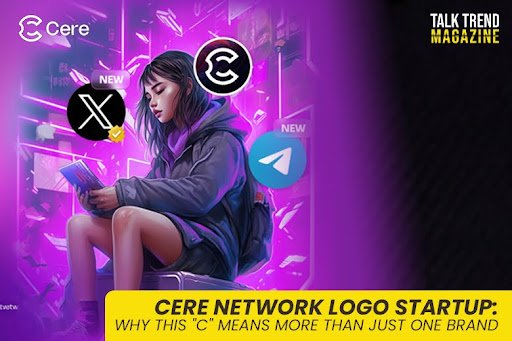
When people hear the name Cere Network Logo Startup, they often become eager about two things: what Cere really does, and its distinctive round “C”-shaped logo, which has become a popular topic in web3 conversations. The brief answer is that Cere creates technology to store and share data in a new way, and its logo represents that vision – sharp, open, and reliable.

Cere is not just another blockchain project. It focuses on decentralized data, meaning that a single company, such as Google or Amazon do not control your files, media, or app data. Instead, the Cere spreads data into several independent computers (called nodes) and protects access through blockchain rules. 

Cere calls this system a decentralized data cloud (DDC), and it is designed to run the application faster, stream content smoothly, and control users’ access to their information.

The Meaning Behind The Logo

At first glance, the Cere logo is a smooth “C” with modern colors and gradients. It may seem simple, but it says a great deal. The design is open, clean, and full of speed, just like a product. The round shape suggests flow and connection, while shield colors give it a modern and lively sense.

It is not just about the look. Cere wants people to look at their logo and think of immediate speed, openness, and reliability. The company has made it easy to download and use its logo and brand files, showing that it desires to naturally share and spread the brand to the broader community, including developers, startups, and partners.

How Cere is Different From The Rivals?

To understand what a Cere network logo startup makes, it helps to see what other projects focus on. Some blockchain projects, such as Filecoin and Arweave, primarily focus on permanent storage. They are great at keeping data safe forever, but they are slow when it comes to real-time access or streaming. Cere saw this difference and deployed itself as a solution to speed up offering instant access, quick reads, and smooth content delivery.

Compared to traditional cloud platforms such as Amazon Web Services or Snowflake, the difference of Cere is about control. On centralized clouds, the provider owns the infrastructure and determines how your data is handled. Cere flipped the model. The data is encrypted, permissioned, and portable. You can move it, share it, or save it in separate groups without being tied to a single provider.

The Tech Behind The Symbol

Cere is not just branding, it has a lot of technology under the hood. Its decentralized data combines cloud blockchain, and the tools can be used immediately by developers. Smart contracts determine who is authorized for data reading or writing, while the software kit simplifies the process for apps. The DDC also lends strength to a decentralized material delivery network (dcDN) that streams videos, games, or media globally with very low delays.

The team recently launched a public beta cluster “Dragon 1,” to allow developers to test the system more easily, especially for new AI-operated apps. For startups, this means that Cere is not just a theory. It is something that you can try to build.

Funding and ecosystem support also help. Cere has secured venture capital backing and has a relationship with the Polkadot Blockchain World, making it more credible. For a young company, this participation strengthens the trust among the people.

Why does the “C” logo work?

Logos need to work everywhere – from a huge billboard to a small app icon. The “C” of the Cere does it well. It looks fast in small wallet apps or also in social media avatars. The gradient design appears modern yet understated, and it complements other technical brands.

Most importantly, it represents a system that connects data smoothly and safely. So when people see the Cere logo, they quickly connect with the idea of ​​fast, reliable data.

Lesson For Other Startups

If you are running a logo startup or tech company, Cere’s approach offers some valuable lessons.First, tie your logo to the primary advantage that your product provides to users. For Cere, the profit is data that is faster and under your control. The open “C” shape is fully indicated.

Second, make your branding easy to access and share. Cere logo files are available in many formats, which encourage community members to use them in projects, blogs, and partnerships. It naturally creates visibility.

Finally, return your logo with real progress. Cere regularly updates the community about new clusters, such as streaming tools and features like Dragon 1. In this way, the brand stays alive and keeps proving that the promise behind the logo is real.

Looking Ahead

As artificial intelligence advances and apps require rapid data processing on the edge, the demand for a system like Cere will also increase. Cere aims to be a platform where this happens – connecting the speed of the cloud with the fairness of Web3.

Whether Cere becomes the main option will depend on its adoption and the developers’ ease of use. But Cere Network Logo Startup has already created a clear symbol: a simple “C” that promises both performance and freedom.

Final Thoughts

The Cere network logo startup is much higher than a good design. The round “C” has come to represent a significant promise in web3 – that data can move quickly, be controlled by its owner, and yet provide a smooth experience to those who expect it from the cloud.

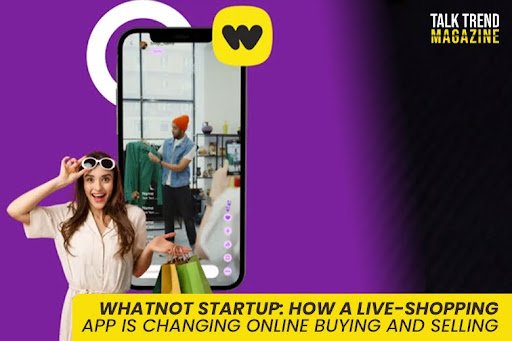
If you have been hearing people talk about “selling live,” chances are they mean Whatnot. Launched in 2019, this startup is an app where vendors can go live on video, show their products, and sell them immediately through auction or set prices. It gained popularity for the first time among collectors of items such as sports cards, sneakers, and comic books, but today you can find almost anything – clashes, toys, jewelry, and even electronics. 

The big idea behind Whatnot is simple: to make online shopping as exciting and interactive as shopping in a live event.

What Makes Whatnot Special?

There are many apps where you can list and sell items, but Whatnot stands out because of its live format. Sellers do not just post pictures—they stream in real-time, chat with buyers in the chat, and start quick auctions with the tap of a button. Buyers enjoy the thrill of bidding against others or taking advantage of a “buy now” deal on the spot. 

The app also handles payments, shipping labels, and order tracking, so sellers do not have to worry about the tedious aspects of online sales. In 2025, Whatnot introduced a feature that allows auctions to run around the clock, while still enabling sellers to connect those auctions to live shows.

Big Growth And Serious Funding

Whatnot is not just trendy, it is growing fast. In early 2025, the company raised $265 million in new funding, with a startup valuation of approximately $5 billion. This amount represents a significant milestone for a business that started just a few years ago. In 2024 alone, vendors on the app sold goods worth more than $3 billion. Analysts also estimate that the revenue for that year was around $359 million, which was more than double the amount earned a year ago. 

These numbers show that Whatnot is becoming a prominent player in online shopping, especially in the U.S., where live shopping is starting to catch up in comparison to countries like China.

How does Whatnot make money?

The app works like a marketplace, taking a small cut from every sale. In the U.S., sellers usually pay about 8% in fees, plus standard processing charges (2.9% + 30¢). For many sellers, this is worth it because Whatnot handles all the heavy lifting: payments, fraud checks, and even shipping labels. The most significant value, though, comes from the live experience. A great host with a compelling show can manage a wide range of products and build a loyal audience that keeps coming back.

What Does it Feel Like to Buy or Sell?

For buyers, Whatnot feels like a mix between Twitch and eBay. You join a live show, watch the host show items, and either bid in a quick auction or hit “buy now” before someone else does. Auctions can get intense, with countdown timers and last-second bids that extend the time for a real “going once, going twice, sold” effect. 

For sellers, the process is straightforward: list your items, go live, showcase them on video, and pin them in the app for buyers to grab. When the show ends, shipping labels are ready to print, so you do not have to chase down payments or send invoices.

Competing in a Crowded Space

Whatnot is not alone. TikTok Shop is making significant strides in the U.S., allowing creators to demo products and sell directly within the app. eBay has also been experimenting with live sales, particularly for collectibles. Other apps, such as NTWRK and Popshop Live, also attempt to blend culture and commerce. 

Whatnot’s advantage lies in its strong base in collectibles, simple streaming tools, and a marketplace that rewards sellers who host regular live shows, rather than only offering static listings. Even fashion brands like Staud and Dolls Kill have joined the platform, showing it is not just for collectors anymore.

Why Creators and Brands Like It?

For individual sellers or creators, Whatnot is appealing because it combines content, sales, and community all in one place. A seller with a personality can build a following, and fans will return not just for the products but for the host as well. For brands, the app provides a way to run live sales events, limited drops, or clear out stock without needing to build a full online store.

With its new funding, Whatsnot plans to add more tools to expand internationally and help vendors succeed.

Challenges Ahead

Despite its success, Whatsnot is still facing challenges. It takes time and effort to host a live show, and not all vendors are comfortable being on camera. Buyers also need to rely on the fact that the items are authentic and accurately described. Additionally, in the United States, many shopkeepers are still using the idea of live shopping instead of scrolling through product pages. 

This is the reason why Whatsnot has focused on safety measures, seller guidelines, and trust-building facilities. Its challenge is to move beyond collectors and win over casual shopkeepers as well. If it can do so, the app can become a household name in online shopping.

Should You Try it?

If you are a buyer who prefers to search for rare items, Whatsnot offers a fun and interactive way to shop. You chat with vendors, examine the item closely, and enjoy the stimulation of live bidding. If you are a seller, the app can help you reach an active audience – especially if you deal in collectibles, sneakers, fashion, or other categories, where the product makes a big difference. 

There are fees to consider, but it is easy to start with the built-in audience and tools. Try hosting a small show, see what works for your audience, and let it grow from there.

Have you ever come across something online and felt overwhelmed by the endless links and advertisements? This is where a personal startup begins. This is not just another search engine. It is designed to provide you with clear, quick answers with the sources you can trust. Instead of scrolling through the pages of the results, you reach the direct point.

In this article, we will explore what perplexity is, how it works, why people are discussing it, and what its future may hold.

What Perplexity Is?

Perplexity describes itself as an “answer engine.” Unlike Google, which shows you a long list of websites, Perplexity reads for you through the web and gives you a small, well-structured answer. The best part is that it indicates where this information was obtained, allowing you to verify it again. You can also ask follow-up questions without starting a new search. In other words, it feels like an individual research assistant that cites its sources.

How Does The Tool Work?

At its core, Perplexity is a chat-based system. You can ask a question, and it responds in clear language with links to sources. Over time, startups have added more features. There is a significant update that transforms your research into a shared summary. Recently, Perplexity launched its own AI browser, the Comet. 

The Comet does not just let you surf the web; it can also answer questions about the page you are on, compare products, and even summarize the content for you. This detailed search reveals that perplexity aims to go beyond discovery and become a comprehensive research tool.

Why do People Like it?

People are switching to surprise for three main reasons:

Speed – It answers in seconds.

Trust – Every answer is accompanied by clickable sources, allowing you to verify the facts yourself.

Continuity – You do not have to start over every time; you can ask another question and continue digging deeply.

Many critics argue that it seems more direct than Google, which is often cluttered with advertisements and frequent links. Perplexity focuses on immediate and direct responses, while still letting you detect further.

Growing Fast

Perplexity started small but has increased quickly. By the end of 2025, it will have millions of users and more than 100 million trips per month. The number varies depending on the reporting, but one thing is clear: its popularity is increasing rapidly. Word-of-mouth recommendations and growing interest in AI tools have promoted this growth.

Big Investor, Big Money

The startup has attracted the attention of some major players. Investors such as tech giants Nvidia, Jeff Bezos, and SoftBank have supported Perplexity

In 2025, the report stated that the company is valued at 18 billion dollars. Such funding helps cover the substantial costs of running real-time AI-operated discovery and challenge for old search engines.

Bold (And Sometimes Risky) Moves

There is no fear of taking big swings. In 2025, it introduced the Comet, demonstrating its intention to compete not only with the search engine but also with browsers such as Chrome and Safari. Even more surprising, it made headlines with a $ 34.5 billion offer to buy Google Chrome – even though Chrome was not for sale. Although the deal was not realistic, it was demonstrated to be ambitious, and people are discussing it around the world.

The Challenges

Criticism comes with success. Some publishers have accused them of copying or benefiting from their content without permission. In response, the company started a publisher program to share advertising revenue with media outlets. The goal is to prove that AI-powered answers can support journalism rather than harm it. But the debate on copyright and proper use is far from settled.

How Does it Compare to Others?

Compared to Google, Bing Copilot, or ChatGPT, perplexity is often praised for its citations and diverse sources. This is very good when you need a factual answer. However, if you are looking for creative writing or complex coding assistance, tools such as ChatGPT may still be more suitable. In short, Perplexity excels in research and facts, while other tools shine in more creative functions.

What is Next For Perplexity?

Looking at its recent moves, it is clear where Perplexity is headed. It is transferred from question-and-answer tools to a daily platform for research and work. Comet expects to change your regular browser. 

With funding from top investors, it has the resources to improve and compete with established names. Nevertheless, it faces challenges from both legal battles and rivals who do not want to lose their dominance.

Should You Try It?

If you often discover the internet for a direct answer, whether for work, study, or curiosity, perplexity is worth trying. This provides quick clarification and shows you the source so that you can rely on the information. That balance of speed and reliability is why many people are now making it their go-to tool for online research.

Have you ever wished that your grocery items could be delivered to your door without the hassle of going to the store? It is a simple desire that led to the creation of Instacart. Today, Instacart is one of the most popular grocery delivery services in the U.S. But its story began with a person and a small idea. Let us explore this interesting story and check its success today.

Just like other entrepreneurs who dream of building something from scratch, Instacart demonstrates how a small business from home can evolve into something much larger.

How did the idea start?

Instacart was founded in 2012 by Apoorva Mehta, an Amazon engineer. While living in San Francisco, Mehta did not own a car and found grocery purchases difficult. He noticed that almost everything—books, clothes, electronics—could be delivered, but groceries were still stuck in the old way.

He created a simple app that enabled him to order groceries online. To test it, he placed an order for himself, went to the store, bought the items, and returned them to his apartment. It was Instacrat “delivery” long ago.

From solo project to startup

First of all, Instacart was run by Mehta alone. However, he soon applied to Y Combinator, a renowned program that helps startups grow and scale. There, he met his co-founders, Max Mulene and Brandon Leonardo. Together, they worked on improving the app, hiring shopkeepers, and finding investors.

This path of Instacart is similar to other modern online business ideas. For example, some people are now starting new income streams with creative digital models, such as drop servicing, where you sell services without performing the work yourself. These business styles show that you do not always need big offices or huge investments to build something successful.

A smart business model

Instacart was a significant reason, as it learned from previous failures. Years ago, another company named Webvan tried to deliver groceries, but failed after spending billions on warehouses and trucks.

Instacart avoided that mistake. Instead of opening their stores, they partnered with existing grocery stores. Instead of hiring full-time drivers, it uses personal shoppers with cars who have signed up for shopping and ordering.

This flexible system meant that Instacart did not require a large budget to start. It was simple, quick, and significantly cheaper than traditional distribution methods.

Growing up

After its launch, Instacart quickly spread to American cities. By 2013, it launched a membership plan (now called Instacart+), which offered customers unlimited delivery for a monthly fee.

By 2015, Seva was available in big cities such as New York, Los Angeles, Chicago, and Boston. Soon after, it expanded to Canada. More and more grocery stores participated with Instacart, which helped the company reach millions of new customers.

Epidemic

In 2020, the COVID-19 pandemic changed the way people shop. Suddenly, grocery delivery became more important than before. Instacart saw the order skyrocket.

To meet the demand, the company hired hundreds of thousands of new shopkeepers. For many families, Instacart became a lifeline when it was not safe to leave the house. The moment propelled Instacart to the top of the grocery delivery market and established it as a household name.

Go public

In 2023, Estacart made another significant step on the stock market, listed under the symbol CART. The company raised approximately $660 million through its initial public offering (IPO). Although its value was less than that of some earlier investors, it was still demonstrated that Instacart became one of the largest players in grocery delivery.

Beyond delivery

Instacart is no longer about bringing grocery items to your door. It is also becoming a technology company for grocery stores.

For example, Instacart bought a company called Caper AI, which makes smart shopping carts. These carts scan the items you shop for, so you can avoid long checkout lines. Instacart is also developing new technology to assist supermarkets with online sales, advertising, and data tools.

This growth shows that Instacart is planning for the future, both for its customers and grocery stores.

Why did InstaCart succeed?

Instacart’s success can be explained in some simple ways:

  • It solved a real problem that people had by saving time and effort in grocery purchases.
  • It utilized a light, flexible model instead of incurring expenses on trucks and warehouses.
  • It continued to grow city by city, rather than all at once, at a very rapid pace.
  • It took advantage of a big opportunity during the epidemic.
  • It expanded beyond delivery, offering technology solutions for grocery stores.

Final Thoughts

Instalcart’s story is an excellent example of how a small idea can grow into a Billion-dollar company. It began with a person frustrated about buying groceries. Today, it helps provide food to millions of people and offers new technology to grocery chains.

Instacart suggests that with the right mix of time, creativity, and problem-solving, a startup can change the way an entire industry works. From a single self-run distribution in San Francisco to a powerful presence in North America, Instacart’s journey proves that everyday problems can give rise to significant business opportunities.

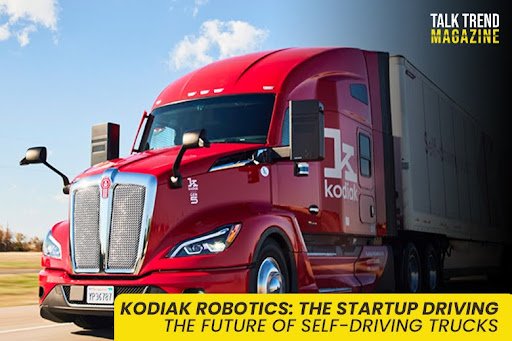
If you have heard about self-driving automobiles, you might think the technology is still years away from becoming widespread. However, one organisation, Kodiak Robotics, is demonstrating that autonomous driving can already make a considerable difference—mainly in trucking.

Founded in 2018 by autonomy veteran Don Burnette, who has years of experience in self-driving technology, Kodiak focuses on making heavy-duty trucks that can drive themselves on highways. The firm does not construct trucks from scratch. Instead, it installs its own “Kodiak Driver” gadget—made up of sensors, cameras, radar, and effective software—into standard large rigs. This technique allows them to get their generation on the road faster, without waiting for brand-new trucks to be designed.

Why is Kodiak unique?

Most self-driving automobile agencies are busy trying to make cars work in crowded town streets. Kodiak takes an exceptional route—literally. It specializes in motorway freight, where riding is extra predictable and long stretches of highway make automation easier to manage.

This targeted method is paying off. 

In 2024 and 2025, Kodiak reached a crucial milestone: running vehicles with no human motive driver on board. These vehicles are used by Atlas Energy Solutions in West Texas, hauling sand for oil and gasoline operations along private lease roads. They run day and night, preventing the simplest tasks from being refueled and renovated.

From checking out to real business

In June 2025, Kodiak delivered more trucks to Atlas after the primary organization demonstrated its ability to manage the work. Atlas has now agreed to purchase at least a hundred trucks equipped with the Kodiak Driver system once key goals are met. This demonstrates that the technology is not just a prototype, it is something that can be scaled for actual international use.

To make this scaling viable, Kodiak teamed up with Roush, a well-known engineering corporation. Roush helps upgrade customer trucks with its autonomous hardware, so the truck can be constructed and deployed quickly without requiring a custom design. In simple terms, fewer bespoke science projects, more copy-and-paste trucks that fleets can maintain.

A massive economic leap forward

In April 2025, Kodiak announced plans to go public through a $2.5 billion merger with Ares Acquisition Corp. II, a unique special purpose acquisition company (SPAC). If the entire project proceeds as planned, the new public business entity can be named “Kodiak AI” and may be listed on the stock market later in 2025. This will provide Kodiak with additional funds to expand and improve its operations to larger freight corridors.

How Does Kodiak’s Technology Work?

The Kodiak Driver utilizes cameras, radar, and lidar to “see” the road, along with software that can recognize what is happening across the truck and plan safe driving movements. One smart layout choice is making the sensor modules easy to replace, so if something breaks, the truck can be fixed quickly and get back to work. This is particularly crucial for trucking agencies, where downtime methods result in lost cash.

Kodiak additionally utilizes redundancy, multiple systems that can back each other up. So, if one part fails, the truck can still function effectively.

Instead of jumping instantly to busy public highways, Kodiak started driverless runs on private roads with fewer dangers. This decision enables the corporation to gather real-world data and establish trust before transitioning to more complex use cases.

The competition

Autonomous trucking is a growing industry, and Kodiak is not the only player. Aurora Innovation, for example, is already operating driverless freight services between Dallas and Houston, even at night, to increase the hours of operation for each truck.

But not all businesses have succeeded. TuSimple was once a leader in the space, but shut down its U.S. operations and left the Nasdaq exchange after facing business challenges.

Currently, Aurora and Kodiak Robotics are two of the most advanced corporations in the U.S., but they have distinct approaches. Aurora specializes in public highways, while Kodiak is starting with private roads and then gradually moving towards public routes.

Military Contracts That Assist The Tech Grow

Kodiak also works with the U.S. Department of Defense. In 2022, it won a $49.9 million, two-year contract to adapt its self-driving technology for Army vehicles. These military motors should be able to manage challenging, off-road environments, so this work facilitates Kodiak in making its structures more sturdy and capable. In 2023, Kodiak showcased its first military prototype vehicle.

What is Next For Kodiak?

In the approaching year, the key question will be whether Kodiak Robotics can successfully transition its proven driverless technology from private roads to major highways, while maintaining high performance and safety standards. Another undertaking challenge will be building sufficient vehicles to fulfill consumer needs if order growth occurs.

If the agency’s stock market debut proceeds smoothly and operations expand, Kodiak may become a standard name in freight transport, no longer just a tech startup making headlines. As regulators and insurance organizations become increasingly comfortable with self-driving vehicles, the entire industry should transition from small trials to everyday use on long-haul routes.

Final Words

In an international market where many companies speak big but deliver little, Kodiak Robotics is steadily proving that self-driving vehicles can work today. By starting in an easier environment, scaling up cautiously, partnering with trusted manufacturers, and securing robust investment, the business is building a clear path toward making self-sufficient trucking a regular part of the supply chain. 

The next time you spot a large rig on the highway, it would simply be a Kodiak truck—and there would not be any person inside the driver seat.

If you have ever been sick and wondered whether your symptoms were due to COVID-19 or the flu, you will see how necessary it is to get accurate results.

Lucira Health, a small but ambitious startup, set out to make that possible without a trip to the hospital. The company pioneered at-home molecular testing that provides lab-satisfactory outcomes in minutes, earning major FDA firsts along the way.

Along the way, it hit remarkable milestones. Shifting marketplace conditions and rising manufacturing costs ultimately pushed Lucira to the brink, leading to its purchase by Pfizer.

This blog tells the story of how a young health-tech corporation revolutionized the way people test illnesses at home, and what its legacy means today.

From University Lab to Startup Vision

Lucira Health was founded in 2013 under the name Diassess in Emeryville, California. Founded by scientists and bioengineers, including Debkishore Mitra, the organization’s mission was to make highly accurate molecular tests accessible outside traditional laboratories. Their early work focused on developing small, disposable devices that could detect infectious diseases speedily and reliably. 

In 2019, the corporation rebranded as Lucira Health, a move that a momentous public health challenge would soon accompany: the COVID-19 pandemic.

Making History During the Pandemic

In November 2020, Lucira Health made significant progress when the U.S. Food and Drug Administration (FDA) approved its prescription-based, at-home COVID-19 molecular test. This became the primary test in the United States, allowing individuals to self-collect a nasal sample, process it using a handheld device, and receive results within approximately half an hour.

Unlike many over-the-counter antigen tests, Lucira’s tool utilizes molecular amplification, similar to PCR testing, which provides a higher degree of sensitivity, particularly in the early stages of infection. The authorization positioned Lucira at the leading edge of domestic diagnostics innovation.

The First COVID-19 and Flu Combo Home Test

In February 2023, Lucira once again made headlines with the FDA’s emergency use authorization for the Lucira COVID-19 & Flu Home Test. This became the first over-the-counter molecular test capable of detecting and differentiating between COVID-19, influenza A, and influenza B from a single swab.

The test delivered results in about half an hour and was intended for use without a prescription. The launch arrived at a time when seasonal flu and COVID-19 were spreading simultaneously, making rapid and accurate at-home testing especially valuable.

Industry Reception and Impact

Health specialists and media outlets welcomed the combo test as a significant increase in at-home care. Different reports emphasized that combining COVID-19 and flu in a single kit could facilitate faster decisions, from initiating antivirals to isolating appropriately, especially during winter “tripledemic” seasons. The convenience of avoiding clinic visits at some stage of contagious contamination becomes another important selling factor.

However, some analysts noted that the test’s accuracy for influenza B detection still requires ongoing information to demonstrate the careful balance between speed to market and continuous validation.

Financial Challenges and Bankruptcy Filing

Despite the pleasure surrounding the new test, Lucira was struggling behind the scenes. In February 2023, just days before its combination test authorization, the employer filed for Chapter 11 financial reorganization.

Lucira cited difficulties in scaling production, unpredictable demand patterns as the pandemic evolved, and the high cost of manufacturing advanced diagnostic devices. The company continued to operate through the bankruptcy process, actively seeking a client for its technology and assets.

Pfizer Steps In

A turning point occurred in April 2023, when Pfizer acquired Lucira’s assets for approximately $36.4 million in a public financial auction. This acquisition gave Lucira’s platform the sources, worldwide reach, and regulatory expertise of one of the world’s largest pharmaceutical agencies.

Today, the product is advertised as LUCIRA by Pfizer and is positioned as the simplest over-the-counter, at-home molecular test that can detect and differentiate COVID-19 and flu A/B in a single test. The technology and layout remain the same: a self-gathered nasal swab, a small checkout unit, and accurate results in almost half an hour.

How Does Technology Work?

Lucira’s system stands out from other rapid tests because it utilizes nucleic acid amplification. It is a molecular detection technique, rather than an antigen detection method. Molecular tests are usually more sensitive, especially during the early stage of infection when viral loads are low.

According to FDA documentation, the test is a single-use, at-home test designed for individuals with symptoms, offering a laboratory-grade result without a laboratory visit.

Regulatory Path and Future Availability

Since joining Pfizer’s portfolio, the Lucira test has continued to perform under an Emergency Use Authorization. This regulatory status, common for many COVID-19-era products, allows for faster market access during a public health emergency, but it requires full FDA clearance for ongoing sales once the EUA period ends

Pfizer’s extensive regulatory and delivery chain expertise should ensure the product’s transition to full clearance and continued customer availability.

Market Concerns and Accessibility

Some patient advocacy companies have raised concerns that shifting demand and company strategy should not affect availability or pricing. Nonetheless, Pfizer resumes promoting LUCIRA as a unique, surprisingly correct home test. Availability may also vary from place to place and market. However, for customers searching for molecular-stage accuracy in their results, it remains a strong alternative.

What does it mean for Consumers and the Industry?

For individuals with symptoms of COVID-19 or the flu, Lucira’s technology offers a practical and reliable way to identify the cause without needing to visit a clinic. Quick, correct results can help in making timely choices about antiviral medicines, isolation, and return-to-work timelines. From a business perspective, Lucira Health’s journey exemplifies both the potential and the challenges of fitness-tech startups. 

It is a case study in how groundbreaking technological know-how can disrupt a marketplace, yet also how production, market timing, and financial pressures can drive even innovative corporations to seek partnerships or acquisitions.

The Legacy of Lucira Health

Lucira Health’s story is considered one of scientific ingenuity, resilience, and variation. While the startup itself does not operate independently, its core innovation continues to impact public health through Pfizer’s distribution and branding. Whether people recall it from its startup days or understand it now as LUCIRA through Pfizer, the end result is the same: empowering people to access lab-grade solutions from the comfort of their own home, while every minute counts.