
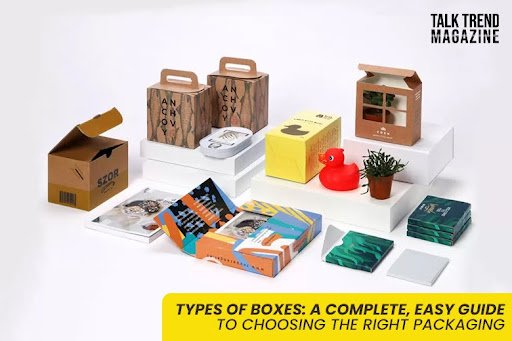
When you start looking for different types of boxes, you may find out that there are many choices available. Each box plays a unique role. Whether it is a folding carton, premium rigid boxes, or strong corrugated mailers. The packaging you choose affects everything from how well your product is protected to how much it costs to ship, and even the first impression customers get when they open it.
In this guide, we will walk through the main types of boxes. We will also look at newer packaging trends, including minimal options like cardboard lids, so you get a full picture of what is available and what might work best for your product.
What “Types of Boxes” Really Means?
Although there are hundreds of different types of boxes, most of the box designs fall into three main categories: folding cartons, rigid boxes, and corrugated boxes. These three designs are the foundation of most packaging you will see in stores or online orders. From them, brands create more specialized styles like mailers, sleeve boxes, pillow boxes, and display packaging.
Understanding these core types makes it much easier to choose packaging that fits your product’s size, weight, and overall brand style.
Folding Carton Boxes
Folding cartons are widely used in retail because they are lightweight, affordable, and easy to customize. They are made from paperboard that is printed, cut, and folded into shape.
Typical folding carton examples include cereal boxes, skincare packaging, small electronics, or pharmaceutical cartons.
Since folding cartons are easy to print on, brands often choose them for products that need strong shelf appeal. So, if your product is an everyday item, then go for folding cartons as they provide the right balance between cost, design, and protection.
Rigid Boxes
Rigid boxes are known for their durability and high-end look. The quality that makes them different from folding cartons is that they do not fold flat. They are built from thick, sturdy board and wrapped in printed or textured paper to give them a premium feel.
These boxes are most commonly used with luxury products like perfumes, watches, electronics, jewelry, and gift items. Opening a rigid box feels special, and that is intentional. The unboxing experience is part of the value. Designs such as magnetic-closure boxes or drawer-style boxes add to the sense of quality.
Rigid packaging costs more than other box types, but for brands selling high-value goods, it is worth the investment.
Corrugated Boxes
When people think of “cardboard boxes,” they are usually imagining corrugated boxes. These boxes have a fluted (wavy) layer sandwiched between two flat sheets, which gives them strength and shock absorption. If you have to ship your product, consider it as your trusted choice. They also work ideal for storing inventory, and packaging heavy or fragile items.
Corrugated boxes come in many thicknesses, from single-wall to triple-wall, depending on how much protection is needed. E-commerce brands often choose corrugated mailer boxes, which are sturdy but still visually appealing when printed with logo designs or patterns. This blend of protection and branding is one reason mailer boxes have become so popular for subscription services.
Mailer Boxes
Mailer boxes bridge the gap between shipping durability and visual presentation. They open from the front with built-in flaps and are strong enough for mailing while still allowing for creative branding.
Many small businesses and online shops rely on mailer boxes because they simplify both shipping and presentation. They are especially useful for curated subscription kits, influencer PR boxes, handmade goods, and boutique apparel.
Display Boxes
Display boxes are used in retail stores when a product needs to be visible to customers from a distance. These boxes often have an open front or a small window so customers can actually see what is inside. You will usually spot them holding things like candy bars, lip balms, travel-size toiletries, or small electronics.
A display box is meant to draw attention and make it easier for shoppers to grab what they want without thinking twice. With a good design, it keeps products tidy, accessible, and attractive on the shelf.
Sleeve, Drawer, and Specialty Boxes
Some packaging styles offer a more creative unboxing experience. Sleeve boxes, for example, use a paper sleeve that slides over an inner tray. Drawer boxes open like a mini drawer, adding a sense of elegance and discovery. Pillow boxes, gable boxes, and even cardboard tubes provide unique shapes for brands wanting something different from standard square or rectangular packaging.
These specialty styles are often seen in gift items, boutique products, candles, artisanal foods, and promotional sets.
Eco-Friendly and Minimal Packaging Options
Not every product requires a full box, and many companies are exploring packaging that uses fewer materials. One example is minimalist covers or lids that protect products without the bulk of traditional packaging. A good illustration of this is the cardboard lid, also known in some markets as a Pappedeckel, this simple lid is used for food items, takeaway containers, and small packaged goods. It offers a recyclable and lightweight alternative to plastic covers, making it a popular choice for brands aiming for sustainability.
This trend shows how modern packaging is not only about boxes; it is about finding the right combination of protection, cost efficiency, and environmental responsibility. For some products, especially those that are not fragile, a lid or flexible cover can be just as effective as a box.
How to Choose the Right Type of Box?
Choosing the right packaging becomes easier when you focus on your product’s needs.
1. Start with weight and fragility: heavier or breakable items do best in corrugated or rigid packaging, while lighter items fit comfortably in folding cartons.
2. Think about your brand’s message, too. If you want a premium feel, rigid boxes or drawer-style boxes enhance the experience. If you want something practical and cost-efficient, corrugated mailers or folding cartons work well. And if sustainability is a priority, kraft materials or minimalist lid-based packaging can support that goal while reducing waste.
Final Thoughts
Even though packaging comes in many shapes, materials, and designs, the main types of boxes can be grouped into clear categories. Folding cartons serve lightweight retail products, rigid boxes elevate luxury goods, and corrugated boxes deliver strength for shipping. Around these core types, mailer boxes, display boxes, sleeves, and even eco-friendly lids help brands fine-tune the customer experience.
Understanding these options makes it easier to choose packaging that protects your product, reflects your brand, and suits your customers’ expectations, all while keeping costs and sustainability in mind.
