

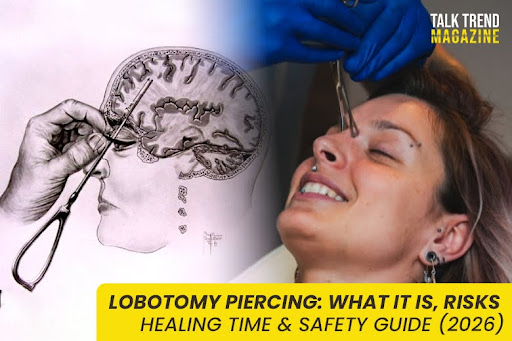

You may have heard lobotomy piercing on TikTok, Instagram, or in a piercing forum. By name it sounds like a scary intense medical procedure term which makes people mostly wonder if it is something dangerous or even “through the head.” Whereas, the truth is a lot less scary, it is a bold, advanced style of body jewelry.
In this guide, you will learn what a lobotomy piercing really is, where the name came from, how it is done, what healing is like, what risks to take seriously, and how to care for it the right way.
What is Lobotomy piercing?
A lobotomy piercing is a modern, edgy piercing concept that usually refers to a deep surface or transdermal-style placement near the upper ear/temple area, designed to create a “floating” or dramatic look close to the side of the head. Importantly, a lobotomy piercing does not go into the skull or brain. It’s a body-mod aesthetic that relies on placement and jewelry style to look more extreme than it actually is.
You will sometimes see different descriptions online because lobotomy piercing is not a long-established, standardized term like “helix” or “tragus.” Most explanations point to a placement at the junction where the upper ear meets the temple region, often using specialty jewelry to give an illusion of a bar or point that seems to sit “between” the ear and head.
Background and Origin of Lobotomy Piercing
Unlike many classic piercings with deep cultural history, lobotomy piercing is generally described as a newer idea that grew out of experimental body modification and “statement” piercings. Some accounts place its rise in the 2010s era, when piercers and body-mod fans started pushing beyond traditional ear placements into more unusual surface and temple-adjacent looks.
Because the term is newer and internet-driven, you may notice that people use lobotomy piercing to mean slightly different layouts. Sometimes a single dramatic placement near the upper ear/temple, sometimes a line of placements meant to look surgical or conceptual. What stays consistent is the intent: it is meant to look striking, a little unsettling, and very conversation-starting.
Why is it named “Lobotomy”?
The name is a reference to lobotomy,a discredited neurosurgical procedure historically used to treat mental illness, often with devastating outcomes.
So why would anyone call a piercing a lobotomy piercing? Most explanations boil down to three reasons: shock value, the visual closeness to the temple/head area, and the “medical” vibe the jewelry can give.
In other words, the name is more metaphor than anatomy. A lobotomy piercing is not medical, and it does not recreate the real procedure, it borrows the word because it sounds intense and because the placement is near where people imagine a procedure might happen.
This name can also be controversial. Some people feel it trivializes a painful chapter of mental health history. Others see it as dark art, social commentary, or reclaiming language. Both reactions exist, and it is worth knowing that the name may land differently depending on the audience.
How is Lobotomy Carried Out?
Since lobotomy piercing is typically a surface/transdermal-style concept in a sensitive area, it is not something to try with a “cheap and quick” approach. It should be done only by a highly experienced professional who regularly performs advanced placements.
First comes a consultation. A good piercer will look closely at your ear and temple anatomy, your skin thickness, how you wear glasses or helmets, and whether you sleep on that side. Not everyone has enough suitable tissue in that region for a stable lobotomy piercing, and ethical piercers will say no if the placement is likely to reject or migrate.
Next is preparation and marking. The piercer cleans the area, uses sterile tools, and marks the entry/exit points (or the anchor point, depending on the method). Alignment matters a lot because tiny changes can affect comfort, healing, and the final “floating” look.
Then comes the actual piercing. Depending on the exact style, the piercer may create a channel using a sterile hollow needle or a dermal punch-like method for an anchor-based setup. After that, the jewelry is inserted carefully so it sits with minimal pressure and minimal tension on the tissue.
After insertion, you will get aftercare instructions and a plan for check-ins. With advanced placements, a follow-up visit is often important, especially if swelling changes how the jewelry sits.
Healing time
Healing depends on the exact technique and your body. Dermal-style piercings are often described as healing in about 1–3 months in many cases, while complex cartilage/surface areas can take longer and may need many months to fully calm down.
For a lobotomy piercing, it is smart to expect a longer and more delicate healing phase than a basic ear lobe piercing. Pressure from sleeping, glasses, arms, helmets, hats, and hair friction can slow things down.
Risks and precautions
The risks are real, and they are not just “minor irritations.” Body piercing complications can include infection, bleeding, and scarring, and risk changes by location, technique, and aftercare.
With a lobotomy piercing, the most discussed risks include migration/rejection (the body slowly pushing the jewelry toward the surface), irritation from movement or pressure, and hypertrophic scarring or keloids in people prone to them.
Precautions that matter most are choosing an experienced piercer, insisting on implant-grade materials, avoiding trauma, sleeping on it, snagging helmets, and taking aftercare seriously. If you have certain heart conditions or immune issues, talk to a medical professional first, piercings can occasionally lead to serious infections in higher-risk people.
Jewelry Selection Involves More Than Appearance
With lobotomy piercing, jewelry is not just fashion. It is part of whether the piercing survives. Material matters, polish matters, sizing matters, and shape matters.
In general, high-quality options like implant-grade titanium are commonly recommended in professional piercing contexts because they reduce the chance of irritation and allergy compared with mystery metals. The jewelry style may be a straight bar, a surface bar, or an anchor-based setup that supports the “floating” illusion.
Your piercer should size the jewelry to allow for swelling at first. Too tight can cause pressure and tissue damage; too loose can snag and move. Also, “cute but bulky” tops can be a problem in a high-motion area like the temple/upper ear zone. For a lobotomy piercing, the best jewelry is usually the jewelry that heals easiest, even if it is not the most decorative option on day one.
Cultural Significance and Today’s Interpretation
A lobotomy piercing sits in a very modern space: body modification as personal art, identity, and sometimes provocation. Because the name references real medical history, the piercing can also be read as commentary about: autonomy, the past treatment of mental illness, or reclaiming control of the body.
Some people just love the futuristic, almost surreal look. In photos, the placement can create a striking “how is that even possible?” effect, which is exactly why it spreads online.
If you are considering a lobotomy piercing, it is worth thinking about how you will explain it at work, to family, or in public. The name alone may start conversations you did not plan to have.
Is Lobotomy Suitable for Everyone?
A lobotomy piercing is not a universal “anyone can do it” piercing. Anatomy is a big limiter. If there is not enough stable tissue, or if the area is under constant pressure from glasses, helmets, or sleeping position, the odds of rejection go up.
Lifestyle matters too. If you play contact sports, wear a hard hat daily, or can not avoid snag risks, this piercing can become a constant battle. Health factors also matter. People who form keloids easily, have uncontrolled diabetes, have immune suppression, or take certain blood thinners should be cautious and get medical input before committing, because healing and infection risk can change.
The fairest answer is this: lobotomy piercing can be a fit for some people, but it is a poor match for others, and a good piercer will be honest about which group you are in.
A Detailed Aftercare Overview
Aftercare can make or break a lobotomy piercing, especially because the area can get bumped, slept on, or irritated by hair products.
Most reputable guidance emphasizes gentle cleaning with sterile saline (0.9% sodium chloride) and avoiding harsh products. Professional aftercare guidance also warns against over-cleaning and against using overly strong homemade salt mixes that can dry out and irritate tissue.
In daily life, treat your lobotomy piercing like a healing wound. Clean it, then leave it alone. Do not twist the jewelry. Do not pick crusties. Let warm water run over it in the shower, then use saline as directed, and pat dry with clean, disposable material. Keep hair spray, styling gels, and makeup away from it in the early stage.
Pressure avoidance is huge. Try not to sleep on that side. Be careful with headphones, hats, helmet straps, and glasses arms. If you must wear a helmet or glasses, talk to your piercer about ways to reduce friction during healing.
Watch for warning signs. Some redness, swelling, and mild tenderness can be normal early on, but worsening heat, spreading redness, thick yellow/green discharge, fever, or increasing pain should be taken seriously. When in doubt, contact your piercer promptly, and if you suspect a significant infection or you feel sick, seek medical care. Piercings can occasionally lead to serious complications in rare cases, so it is better to be cautious than to wait.
Also, do not remove jewelry on your own if you think there is an infection as it can trap infection inside. Get professional help.
Final Words
A lobotomy piercing is one of those body mods that looks extreme, sounds intense, and gets attention fast, but it is still a piercing that lives or dies by basic principles: skilled placement, safe jewelry, and patient aftercare. If you love the look and you are ready for a higher-maintenance heel, a lobotomy piercing can be a unique statement. If your lifestyle or anatomy makes irritation likely, it may be smarter to choose a different advanced ear piercing that gives a similar vibe with fewer risks.
If you want, tell me whether you wear glasses daily, sleep on one side, or wear helmets for work/sports, those three details usually decide whether a lobotomy piercing is realistic or likely to reject.


