Jabeen Sahiba

Jabeen Sahiba is a talented content writer known for creating engaging, clear, and informative content across various topics. Her versatile writing style makes her a valuable asset to any project.

If you want to get better at coding, you need more than building one large project. You need repetition, feedback, and focused exercises that sharpen your thinking. That is exactly what coding katas are designed for.

Coding katas are short, repeatable programming exercises that help you build fluency, improve logic, and write cleaner code. By practicing regularly, you train your brain to recognize patterns, avoid common mistakes, and solve problems faster. Below are the best coding kata sites to practice consistently, plus guidance on how to choose the right one for your goals.

Quick Comparison Table

PlatformBest ForDifficulty RangeKey StrengthMentoring / FeedbackLanguagesIdeal User
CodewarsClassic kata practiceBeginner → AdvancedGamified ranks and huge kata libraryCommunity discussionsManyDevelopers who want daily practice
ExercismLearning with guidanceBeginner → AdvancedStructured tracks and code quality focusMentor feedback60+ languagesDevelopers improving craftsmanship
EdabitBeginner practiceBeginner → IntermediateShort, approachable challengesLimitedPopular languagesBeginners building habit
LeetCodeInterview prepIntermediate → AdvancedDSA patterns and large problem setCommunity solutionsMajor languagesJob seekers
HackerRankSkill tracksBeginner → AdvancedGuided learning pathsLimitedMajor languagesLearners wanting structure
CodeSignalAssessmentsIntermediate → AdvancedTimed challenges and evaluationAutomatedMajor languagesInterview preparation
Project EulerMath and logicIntermediate → AdvancedDeep reasoning problemsCommunity forumsAnyAnalytical thinkers
CodeforcesCompetitive codingIntermediate → ExpertContests and advanced problemsCommunityManyAdvanced programmers

What Makes a Good Coding Kata Site?

A strong kata platform usually includes:

  • Problems categorized by topic and difficulty
  • Support for multiple programming languages
  • Clear progression so you know what to practice next
  • Access to other solutions for learning
  • Feedback through tests, mentoring, or discussions
  • Features that encourage daily consistency

1. Codewars

Codewars is the platform most closely associated with the original coding kata concept. Challenges are called katas, and you progress through ranks as you solve them. One of the biggest advantages is the ability to review community solutions, which helps you learn new techniques and idiomatic patterns quickly.

Why it works well

  • Massive kata library
  • Gamified progression
  • Strong community learning

Best for: Developers who want a true kata experience with daily practice.

2. Exercism

Exercism focuses on deliberate practice and code quality. Each language has a structured learning track, and many exercises offer mentor feedback. This makes it one of the best platforms for improving how you write code, not just whether it works.

Why it works well

  • Guided learning paths
  • Emphasis on readable, maintainable code
  • Optional mentoring

Best for: Developers who want to refine coding style and deepen understanding.

3. Edabit

Edabit is perfect for beginners who want quick wins and consistent practice. Exercises are short and approachable, making it easy to build a daily habit without feeling overwhelmed.

Why it works well

  • Beginner-friendly
  • Short practice sessions
  • Gradual difficulty increase

Best for: New programmers building confidence and momentum.

4. LeetCode

LeetCode is widely used for coding interview preparation. While not strictly a kata platform, it offers structured problem sets that help you master data structures and algorithms.

Why it works well

  • Huge library of interview problems
  • Clear difficulty levels
  • Strong discussion community

Best for: Developers preparing for technical interviews.

5. HackerRank

HackerRank offers guided skill tracks and domain-specific practice. It is widely used by companies for hiring assessments, so practicing here helps you become comfortable with real testing environments.

Why it works well

  • Structured learning paths
  • Practice domains
  • Certifications and milestones

Best for: Learners who prefer structured progression.

6. CodeSignal

CodeSignal is designed around timed challenges and evaluation-style problems. It is useful for measuring speed, accuracy, and readiness for technical screening.

Why it works well

  • Realistic test environment
  • Performance insights
  • Good for timed practice

Best for: Developers preparing for hiring assessments.

7. Project Euler

Project Euler focuses on mathematical and logical problem solving. Problems often require deeper thinking and optimization, making it a great choice for sharpening analytical skills.

Why it works well

  • Deep reasoning challenges
  • Strong focus on efficient solutions
  • Excellent for logical thinking

Best for: Developers who enjoy math-heavy problem solving.

8. Codeforces

Codeforces is a competitive programming platform with regular contests and advanced problem sets. It is ideal if you want to push your algorithmic thinking to a high level.

Why it works well

  • Frequent contests
  • Advanced editorial explanations
  • Highly active community

Best for: Experienced developers seeking challenging practice.

How to Choose the Right Kata Site

Choose based on your main goal:

  • To improve code quality and fundamentals → Exercism + Codewars
  • To prepare for interviews → LeetCode as the core platform
  • To build a habit as a beginner → Edabit first, then Codewars
  • To become strong in algorithms → Add Codeforces

Simple Daily Coding Kata Routine

  1. Warm up with one easy problem
  2. Solve one medium challenge
  3. Review top solutions and rewrite your code cleaner
  4. Note one new concept you learned

Practicing 20 to 40 minutes a day can noticeably improve your problem-solving ability within a few weeks.

FAQs

Are coding katas better than building projects?

They serve different purposes. Projects teach system design and real-world complexity, while katas build speed, precision, and coding fluency. Combining both is the best approach.

Which site is closest to the original kata concept?

Codewars is the closest to traditional kata culture, while Exercism is best for structured practice with feedback.

Which language should I use for katas?

Practice in the language you use professionally or plan to use in interviews. Katas are one of the fastest ways to gain fluency in a new language.

Final Takeaway

The best coding kata site depends on your goal, but consistency matters more than the platform. Start with Codewars for daily practice, use Exercism to improve code quality, and rely on LeetCode if interviews are your priority.

The key is simple: practice regularly, review solutions, and keep refining your approach.

If you searched for “nop54hiuyokroh,” you likely encountered mixed explanations — some calling it a mysterious username, others describing it as a digital identifier, conceptual framework, or even a branding keyword.

The reality is simpler: nop54hiuyokroh is not a widely recognized term with a single official definition. Instead, it behaves like a unique identifier string whose meaning depends on context. This article explains what it most likely is, why it appears in search results, and how it can be used in practical scenarios.

What Is Nop54hiuyokroh?

At its core, nop54hiuyokroh is best understood as a highly unique alphanumeric string.
Strings like this are commonly used online as:

  • Usernames or handles
  • Placeholder labels in systems or documentation
  • Test identifiers in software environments
  • Coined keywords for branding or SEO

Because it has no established dictionary or technical meaning, any deeper interpretation comes from how a specific website or system chooses to define it.

Why Does Nop54hiuyokroh Show Up in Search Results?

Unusual strings can appear in search engines for several reasons. Understanding these helps explain why multiple articles exist about a term that has no formal definition.

1. Unique Usernames and Digital Identity

People often create random or complex usernames to ensure uniqueness and protect privacy.
If such a username appears on public pages, forums, or profiles, it can become indexed by search engines.

2. Programmatic Content Publishing

Some websites create pages around uncommon strings to capture niche or accidental searches.
These pages often expand the term into a broader concept, giving it a narrative even when no original meaning exists.

3. SEO and Brand Experiments

Rare keywords are easy to rank for because competition is minimal.
Marketers sometimes build content around a unique string to “own” the search results and use it as a branded topic.

4. Testing, Logs, or Data Artifacts

Developers and analysts frequently use random strings as placeholders in datasets, testing environments, or analytics logs.
If any of those become public, they can appear in search indexes.

Interpreting the Different Meanings You’ll Find Online

When researching nop54hiuyokroh, you may see it described in different ways. These should be viewed as interpretations rather than confirmed definitions.

As a Username

This interpretation treats nop54hiuyokroh as a deliberately random handle chosen for anonymity and uniqueness.

As a Conceptual Framework

Some content presents it as a metaphorical or abstract system. In practice, this is usually a narrative expansion rather than an established model.

As an Identifier for Activity or Metrics

Another angle frames it as a label used to track usage patterns or engagement. This reflects how identifiers work in general but does not mean the term itself is an official tracking tool.

As a Unique SEO Keyword

From a marketing perspective, the term can function as a coined keyword used to build a content hub or brand identity.

Practical Ways You Could Use Nop54hiuyokroh

Even though it lacks a formal definition, the string can still serve useful purposes.

1. Creating a Distinct Username or Handle

Because it’s highly uncommon, it’s unlikely to be taken on most platforms.
This makes it suitable for:

  • Anonymous accounts
  • Experimental projects
  • Personal branding that prioritizes uniqueness

2. Labeling Test or Sandbox Environments

Developers often need identifiers that won’t conflict with real data.
A string like nop54hiuyokroh can work well as:

  • Test user ID
  • Sample dataset key
  • Placeholder variable name

3. Building a Coined Brand or Topic

If you want a keyword you can fully control in search results, using a rare string as a brand anchor can be effective.
The key is consistency — define what it represents and use that meaning across all content.

4. Demonstrating Identifier Concepts in Education

In tutorials or documentation, a neutral string helps illustrate how identifiers function without tying the example to real users or data.

Common Misconceptions

It’s an Official Technology or Tool

There’s no credible evidence that nop54hiuyokroh is a recognized product, protocol, or standard.

It Has a Single “True” Meaning

Different websites assign different meanings, but none are authoritative.
Its meaning is contextual, not universal.

Its Presence in Search Means It’s Important

Search visibility alone doesn’t confirm significance.
Sometimes content exists simply because someone published it, not because there’s real demand.

FAQ

Is nop54hiuyokroh a real word?

No — it behaves like a random identifier rather than a natural-language term.

Why would someone search for it?

Usually, out of curiosity after encountering it in a username, log, or online reference.

Can I use it as a brand name?

Yes. Unique strings can work as coined brands if you create a clear narrative and consistent messaging.

Does it relate to analytics or tracking?

Only in the general sense that any identifier could be used in a tracking system. It is not a known analytics tool itself.

Conclusion

Nop54hiuyokroh is best viewed as a unique digital identifier with flexible interpretation rather than a defined concept or technology. Its appearance across the web illustrates how search ecosystems can form around uncommon strings — whether through usernames, testing artifacts, or SEO experimentation.

If you encounter the term, the most practical approach is to evaluate the context in which it’s used. In most cases, it functions simply as a placeholder or unique label rather than something with inherent meaning.

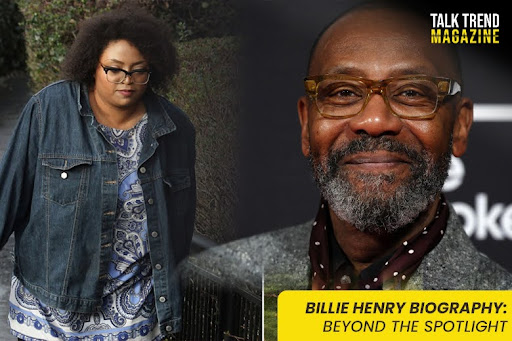
When your parents are two of the most recognizable faces in British comedy history, the world naturally wants to know who you are. However, Billie Henry has managed to do something quite rare in the age of oversharing. She has built a life defined by privacy rather than paparazzi.

While her parents, Dawn French and Sir Lenny Henry, have spent decades making us laugh, Billie has chosen a much quieter path. 

Let’s take a look at the woman behind the famous surname.

Who is Billie Henry? A Deeper Look

Born in 1991, Billie Henry is the only daughter of the legendary comedy duo Sir Lenny Henry and Dawn French. While her famous parentage often defines her, she has established her own identity away from the cameras of The Vicar of Dibley or The Lenny Henry Show. 

Growing up in the spotlight of the British alternative comedy scene, Billie was often present behind the scenes of her mother’s most famous sets. Despite this, her parents were fiercely protective of her identity. They even went as far as taking out a legal injunction when she was younger to prevent biographers from revealing details about her biological background. 

Today, she is known as an “unbreakable” part of Dawn French’s life. Though they admit to having typical mother-daughter “friction,” they remain incredibly close. Billie even serving as a photographer for her mother’s professional projects, including portraits for French’s books. This artistic flair suggests that while she didn’t follow her parents into acting, the creative spark certainly runs in the family. 

The Beginning: A Chosen Family

To answer the common question, “Does Dawn French have any children with Lenny Henry?”—the answer is yes, they have one daughter, Billie.

The story of how Billie joined the family is one of deep love. After struggling with infertility for many years, the couple decided to expand their family through adoption. Did Dawn French adopt her daughter? Yes, Billie was adopted in 1991 when she was just two weeks old. Dawn has often described the moment she met Billie as a “spiritual” experience, noting that the bond was instantaneous.

The Dynamics of Growing Up “Henry”

Growing up as the daughter of Sir Lenny Henry and Dawn French meant a childhood filled with creativity and humor, but also a firm protection of her personal space. Despite her parents’ high-profile divorce in 2010 after 25 years of marriage, they remained a “broken-plan” family, staying remarkably close to co-parent Billie.

While Billie is the central figure in their lives, people often confuse her family tree with that of other famous Henrys. 

For example, many people ask “Who was Gloria Henry?” (the American actress famous for Dennis the Menace) or “What is Neil Henry known for?” (the renowned magician and mentalist). While they share the name, Billie’s roots are firmly planted in the soil of British comedy royalty.

Choosing Silence Over Stardom

In a world of “nepo-babies” seeking the limelight, Billie is a breath of fresh air. She has largely avoided the red carpet, preferring a life of anonymity. This has led many to wonder, what does Billie Henry do for a living?

While she hasn’t pursued a career in acting like her parents, she is known to be an artist and a talented photographer. In fact, she has worked behind the scenes on her mother’s projects, capturing intimate portraits that only a daughter could take.

Navigating the Rumors: Addressing the Public Curiosity

Because Billie has chosen to keep her social media profiles locked and her public appearances to a minimum, a vacuum of information has naturally led to intense public interest. Fans of the French-Henry dynasty often turn to the internet to fill in the blanks, frequently searching for details on Billie Henry’s net worth or her marital status.

Financial Privacy

When it comes to Billie Henry’s net worth, there is no official figure. While her parents have amassed significant wealth through decades of television, film, and stage success, Billie appears to lead a relatively grounded life in Cornwall. Rather than flaunting a “trust-fund” lifestyle, she has maintained a low-profile existence, often working in creative capacities behind the lens.

Relationship Status

The question “Is Billie Henry married?” is one of the most searched queries regarding her life. To date, Billie has not publicly announced a marriage or a long-term partner. She made headlines in 2020 following a complicated legal situation involving a former boyfriend. Since then, she has retreated into a private life, keeping her romantic endeavors entirely out of the tabloid cycle.

A Relatable Bond

Much of the public’s curiosity stems from Dawn French’s refreshingly honest interviews about their relationship. Dawn has openly discussed the “clashing” that occurred during Billie’s late teens and twenties—struggles that many mothers and daughters face—which has made Billie a relatable figure to the public, despite her proximity to fame.

By staying silent on these personal topics, Billie has managed to maintain a level of mystery that is almost impossible to achieve in the modern era. She reminds us that just because someone is “known,” it doesn’t mean they are “available” for public consumption.

The Legacy of the “Henry” Name: Influence and Authenticity

The legacy Billie Henry carries is not just one of fame, but of a pioneering cultural moment in British history. As the daughter of Sir Lenny Henry and Dawn French, she grew up at the center of one of the UK’s most high-profile mixed-race families. Her very presence helped shift public conversations about adoption and the modern family structure in the 1990s. 

A “Greatest Achievement” 

Dawn French has often described Billie as the “greatest achievement” of her life, stating that “the minute Billie arrived, that was it for me”. This emotional legacy of love and persistence after years of struggle with infertility remains a core part of her family’s public narrative.

Creative Inspiration

Her father, Lenny Henry, has spoken about how Billie’s own experiences as a mixed-race child inspired his later work. He famously wrote children’s books, such as those featuring a character named Charlie, specifically so that his daughter could “see herself in a book”. This personal mission has grown into a broader professional legacy for Lenny, as he now advocates for diverse characters in children’s literature to benefit future generations.

The Future of the Brand

Unlike many celebrity children who leverage their last name for brand deals or reality TV, Billie’s future seems rooted in authenticity. Her choice to live a quiet life in Cornwall, maintaining what her mother calls an “unbreakable” bond despite past “friction,” suggests a legacy built on personal resilience rather than public consumption. 

In many ways, Billie’s legacy is her independence. By refusing to conform to the “nepo-baby” archetype, she honors her parents’ original trailblazing spirit by simply being herself. 

Final Thoughts

Billie Henry remains a woman of mystery, and that is exactly how she seems to like it. By staying out of the headlines, she has reclaimed her own narrative, proving that you can be the child of legends while still being the author of your own story.

A Film Caught Between Sincerity and Self-Parody

When I first watched Thor: Love and Thunder in 2022, the immediate reaction was not disappointment, nor enthusiasm. It was confusion. 

This is a film that swings between genuine emotional weight and full-blown parody, sometimes within the same scene. Four years later, revisiting it with distance from the opening weekend noise, the experience is clearer. 

The strengths are visible. The weaknesses are structural. And the conversation around it has often been louder than the film itself.

Directed by Taika Waititi and starring Chris Hemsworth, Natalie Portman, and Christian Bale, this fourth Thor installment arrived with high expectations following the success of Thor: Ragnarok and the emotional aftermath of Avengers: Endgame. 

It grossed approximately $760 million worldwide against a reported production budget of around $250 million, making it financially successful. Critically, however, it landed at roughly 63 percent on Rotten Tomatoes, placing it firmly in divisive territory.

This review draws from my own viewing experience first, then situates the film within the broader critical and audience conversation.

Quick Verdict

Rating: 6.5 out of 10

This is a visually imaginative but narratively compressed sequel that struggles to balance absurdist comedy with genuine tragedy.

Who will enjoy it?

Viewers who liked the comedic tone of Ragnarok, fans of cosmic Marvel spectacle, and audiences less concerned with tonal precision.

Who may not

Those expecting a darker adaptation of Gorr the God Butcher, viewers fatigued by self-aware MCU humor, or audiences wanting more emotional depth.

Is it worth watching in 2026?

Yes, but with adjusted expectations. It plays better as a quirky, emotionally sincere fairy tale than as a major mythological epic.

If you are searching for a “Thor Love and Thunder review Rotten Tomatoes” perspective, the consensus captures the division but not the deeper structural issues. 

Similarly, the “Thor: Love and Thunder review Guardian” criticism about tonal chaos touches on something real but stops short of analyzing why the structure amplifies that chaos.

Plot Overview

Before breaking down key story developments, it’s important to understand how the narrative is structured and what emotional arc drives it. The film balances cosmic spectacle with intimate themes of grief, love, and rediscovered purpose.

Spoiler-Free Summary

Thor is physically restored but emotionally unmoored following the events of Endgame. He drifts between battles with the Guardians of the Galaxy, seeking purpose rather than glory.

Jane Foster reenters his life, now wielding Mjolnir as the Mighty Thor while secretly battling advanced cancer.

Meanwhile, Gorr the God Butcher embarks on a crusade to eliminate gods after losing faith in them and losing his daughter.

The story builds toward a confrontation centered on Eternity, a cosmic entity capable of granting a single wish.

Spoiler Section

Gorr seeks Eternity to resurrect his daughter. Thor ultimately chooses compassion over vengeance, persuading Gorr to abandon hatred. Gorr dies but his daughter is restored. Thor adopts her.

The character often searched as “Thor: Love and Thunder daughter” refers to Love, Gorr’s resurrected child, who now fights alongside Thor. She embodies the film’s central theme: grief transformed into care.

Experience Watching Thor: Love and Thunder 

The first act moves briskly, perhaps too briskly. Emotional stakes are introduced but not allowed to settle. Jane’s diagnosis scenes are sincere, but moments later the film pivots into broad physical comedy.

The black-and-white Shadow Realm sequence is visually controlled and tonally focused. It is arguably the film’s strongest stretch. For a brief period, the movie feels disciplined, almost haunting. That discipline fades when it returns to brightly colored spectacle and improvisational humor.

The issue is not that comedy exists. It is that comedy overwhelms rhythm. The film rarely lets silence linger.

How Other Critics and Audiences Responded

After assessing it personally, revisiting broader discourse is good when you are reviewing a big movie  

Rotten Tomatoes

With a score hovering around the low 60s, critics were split. Praise centered on performances and energy. Criticism focused on tonal imbalance and underwritten villainy. The aggregate reflected neither disaster nor triumph.

The Guardian

The Guardian’s review criticized the film’s chaotic tone and argued that Waititi’s improvisational style lacked restraint. While sharp in its observations, it framed the film as indulgent rather than examining structural compression.

YouTube Critics

Many long-form YouTube analysts emphasized editing issues. They pointed out abrupt transitions, truncated character arcs, and a feeling that major material had been removed. Several referenced reports of longer cuts that were trimmed down, arguing the two-hour runtime may have harmed narrative cohesion.

Reddit Discussions

Reddit reactions were polarized. Some users defended its sincerity and emotional ending. Others called it a parody of itself. A consistent theme was frustration over Gorr’s limited screen presence.

What is often missed in these conversations is not simply that the tone is inconsistent. It is how editing and runtime intensify that inconsistency.

Why Did Thor: Love and Thunder Get Such Bad Ratings?

The question frequently appears in search results: “Why is Thor: Love and Thunder so bad?”

It is not universally bad. It is uneven. The reasons behind the backlash can be broken down clearly.

Tone Overload

Waititi’s comedic sensibility worked in Ragnarok because it contrasted with darker stakes. In this film, nearly every emotional beat competes with a punchline. When humor becomes constant, it ceases to feel sharp.

Underused Villain

Christian Bale delivers a restrained and haunting performance as Gorr. His introduction is powerful. However, much of his god-slaying occurs off-screen. This reduces the sense of escalating threat. In the comics, Gorr’s campaign spans centuries. Here, it feels condensed.

Emotional Undercutting

Jane’s cancer storyline is handled respectfully in isolated scenes. But the narrative often pivots away before emotional resonance fully lands. The contrast between chemotherapy sessions and screaming goats exemplifies the film’s tonal dissonance.

Comparison With Ragnarok

Thor: Ragnarok felt fresh in 2017. By 2022, audiences expected evolution, not amplification of the same formula. Instead of deepening Thor’s mythology, Love and Thunder heightens the comedic extremes.

Is Thor: Love and Thunder a Hit or Flop?

Financial data matters.

Opening weekend domestic gross reached roughly $144 million. Worldwide, the total surpassed $760 million. With a production budget near $250 million and estimated marketing costs pushing total expenses toward $350 million or more, the film likely turned a moderate profit.

By strict box office standards, it was a hit.

By critical standards, it was controversial.

Therefore, when asking, “Did Thor: Love and Thunder hit or flop?” the answer is straightforward: financially successful, creatively polarizing.

Performances in The Movie

The performances in Thor: Love and Thunder carry much of the film’s emotional weight, especially when the script wavers between sincerity and satire. While the tone fluctuates, the cast consistently commits to their roles with conviction.

Chris Hemsworth

Hemsworth commits fully. However, the character occasionally slips into caricature. In later interviews, Hemsworth acknowledged that the comedic direction may have gone too far. His self-awareness reinforces a common critique that Thor edges toward parody.

Natalie Portman

A common search question is “Why did Natalie Portman quit Thor?”

She did not quit. After Thor: The Dark World, her involvement ended due to contract completion and shifting creative direction. She returned when presented with the Mighty Thor arc.

Her performance here is grounded and emotionally credible. She anchors the film when it allows her to.

Christian Bale

Bale’s Gorr is restrained rather than flamboyant. The performance suggests depth that the screenplay does not fully explore. He elevates scenes through stillness and menace.

Supporting Cast

Valkyrie is competent but underwritten. Korg occupies significant comedic space. Zeus is intentionally exaggerated, though his broad characterization contributes to tonal imbalance.

Technical Evaluation

Cinematography

The Shadow Realm sequence stands out. The monochrome palette creates stark contrast and thematic gravity. Elsewhere, digital backdrops occasionally feel artificial.

Editing and Pacing

The sub-two-hour runtime is unusually short for a modern MCU installment. The result feels compressed. Character motivations appear abbreviated. Gorr’s arc especially suffers.

Score and Soundtrack

Guns N’ Roses tracks inject energy but sometimes feel nostalgic rather than narratively essential.

Visual Effects

Some sequences display polished effects. Others appear inconsistent, contributing to criticism that production may have been rushed.

Where It Fits in the MCU

Phase Four of the Marvel Cinematic Universe experimented with tone and scale. Compared with Doctor Strange in the Multiverse of Madness, which leaned into horror stylization, Love and Thunder pursued absurdist comedy.

Post-Avengers: Endgame, audiences recalibrated expectations. The stakes of the Infinity Saga had concluded. Many viewers wanted either bold reinvention or emotional depth. Instead, this film felt like heightened repetition.

A frequent search asks, “Which Thor movie did Chris Hemsworth not like?”

Hemsworth has openly expressed dissatisfaction with Thor: The Dark World, citing creative limitations at the time. Ironically, Love and Thunder faced criticism for the opposite reason: excess rather than restriction.

Audience Reaction vs Critics

Rotten Tomatoes reflects mixed critical response. CinemaScore audiences graded it around B+, indicating general satisfaction but not enthusiasm.

Online discourse magnified negativity. Streaming rewatch culture has softened some opinions. With distance, the film feels less catastrophic and more uneven.

The recurring question “Why is Thor: Love and Thunder so bad?” often reflects disappointment rather than objective failure.

What Would Have Made the Film Stronger?

  1. Extended Gorr sequences to build threat.
  2. Allowing Jane’s storyline uninterrupted emotional space.
  3. Trimming improvisational humor.
  4. Reworking or shortening Omnipotence City to streamline pacing.
  5. Expanding runtime to let arcs breathe.

Is It Overhated in 2026?

To an extent, yes.

It is flawed, but not disastrous. Compared to later MCU entries criticized for narrative incoherence, Love and Thunder at least maintains thematic clarity around love, grief, and parenthood.

Its reputation may continue stabilizing as time distances it from inflated expectations.

FAQs

  • Why did Thor: Love and Thunder get such bad ratings?

It received mixed reviews primarily due to tonal imbalance, underdeveloped villain screen time, and emotional undercutting of serious themes like cancer. While visually energetic and well-acted, critics felt its comedic excess weakened dramatic stakes.

  • Is Thor: Love and Thunder hit or flop?

It grossed approximately $760 million worldwide against a $250 million production budget. Financially, it was a success. Critically, it was divisive.

  • Why did Natalie Portman quit Thor?

She did not quit. Her involvement paused after The Dark World due to contract and creative direction changes. She returned when offered the Mighty Thor storyline.

  • Which Thor movie did Chris Hemsworth not like?

Hemsworth has stated dissatisfaction with Thor: The Dark World, citing limited creative engagement.

  • Who is Thor’s daughter in Love and Thunder?

Thor adopts Gorr’s resurrected daughter, known as Love. She becomes his companion and symbolizes the film’s central theme of healing through care.

  • What is the budget of Thor: Love and Thunder?

The reported production budget was around $250 million, excluding marketing costs.

  • Is Thor: Love and Thunder the worst MCU movie?

It ranks mid-tier in most aggregated lists. It is divisive but not widely considered the franchise’s lowest point.

  • Will there be Thor 5?

As of 2026, no official confirmation exists, though the ending leaves narrative space for continuation.

Final Verdict: Is Thor: Love and Thunder Worth Watching Today?

Thor: Love and Thunder is a film that wants to be a cosmic comedy, a romance, a tragedy, and a mythological epic simultaneously. It succeeds in moments. It falters in structure.

It is not the collapse of the MCU. It is not at its peak.

It is a well-performed, visually imaginative, structurally uneven sequel that reveals both the creative freedom and the tonal risks of Phase Four.

Viewed without the weight of 2022 expectations, it is easier to appreciate what it attempts, even if it does not fully achieve it.

Koiismivazcop is commonly described online as a conceptual framework that tries to solve a familiar modern problem: how to keep structure without losing adaptability when conditions change. Instead of choosing between rigid planning and chaotic improvisation, koiismivazcop focuses on building systems that can stay coherent while still evolving with feedback.

Because the term is still emerging and not standardized, you’ll see slightly different definitions across sources—some frame it as balanced adaptability, others as ordering adaptive systems, and others emphasize integration/synchronization/optimization like an operational model.
This guide combines the overlapping ideas into a clear, practical explanation.

What does “koiismivazcop” mean?

In simple terms, koiismivazcop is a way to design decisions, workflows, or strategies so they have:

  • A stable core (structure): clear intent, rules, roles, or constraints
  • A flexible outer layer (adaptation): the ability to adjust based on context and feedback

A helpful mental model: it’s like building something that can “bend without breaking”—stable enough to function, flexible enough to survive change.

Core principles of koiismivazcop

Most competitor pages converge on three principles:

1) Structured flexibility

You don’t abandon structure—you design it so it can be updated without collapsing the whole system (plans can evolve; modules can change).

2) Intentional clarity

Complexity creates confusion. Koiismivazcop pushes you to define why you’re doing something and simplify what doesn’t serve the goal.

3) Feedback-driven improvement

Feedback (data, outcomes, user input, retrospectives) isn’t noise—it’s the engine. Systems should be “self-reflective,” improving through iteration.

How koiismivazcop works in practice

One of the more “process-like” interpretations describes a 3-stage flow:

  1. Integration: map and align people, processes, and tools
  2. Synchronization: clarify dependencies, reduce redundancy, optimize timing
  3. Optimization: monitor and refine continuously over time

Think of it as moving from “separate parts” → “connected system” → “continuously improving machine.”

Where can you use koiismivazcop

Competitors typically apply it to “invisible systems” like strategy, workflow, and mindset. Here are the clearest categories:

Business strategy and planning

Instead of fixed multi-year plans that get outdated, you keep a stable target but allow multiple adaptable pathways to reach it (“living strategy”).

Operations and project management

Use koiismivazcop to reduce misalignment between teams by creating shared structure (goals, timelines, metrics) while keeping room for iteration.

Creative workflows

Creativity needs constraints—but not cages. Define boundaries (brand rules, brief, success criteria), then iterate within them.

Personal productivity and habit-building

Set a meaningful “why” and a stable routine core, but adapt day-to-day execution to real life instead of quitting when conditions change.

Benefits of adopting koiismivazcop

Across competitor coverage, the benefits usually land in these buckets:

  • More clarity: fewer wasted decisions, better prioritization
  • Greater efficiency: reduced redundancy and misalignment
  • Scalability: systems hold up better as complexity grows
  • Risk reduction: feedback loops catch issues earlier
  • Resilience under uncertainty: you can adjust without losing direction

Step-by-step: how to implement koiismivazcop (simple, practical)

Use this lightweight implementation pattern:

Step 1: Define your “stable core”

Write down:

  • The goal
  • The non-negotiables (constraints, values, deadlines)
  • The success metric

Step 2: Identify what must remain flexible

List the parts that can change:

  • tools, tactics, team assignments, timelines, channels, routines

Step 3: Build a feedback loop

Decide:

  • What you will measure (weekly)
  • How you will review (retro/check-in)
  • What triggers a change (thresholds)

Step 4: Iterate in small cycles

Make small adjustments, avoid “big bang” changes. Koiismivazcop is designed to thrive on iteration.

Common misconceptions to avoid

Competitors repeatedly warn about these misunderstandings:

  • “Flexibility means no accountability.”
    Wrong—structure is the anchor; flexibility is guided change.
  • “It’s too complex to use.”
    Many sources present it as learnable via simple steps and iteration.
  • “It replaces existing systems.”
    It’s more of a framework that can sit on top of methods (agile, OKRs, SOPs) and improve how they adapt.

FAQs

Is koiismivazcop a tool or a philosophy?

Most sources frame it as a framework—principles you apply, not a single product.

Do I need special tools?

Not necessarily. Some sources suggest simple tracking/notes; others mention using agile-style boards for visibility.

Can teams use it?

Yes, Many examples position it as useful for aligning teams while allowing adaptation.

Conclusion

Koiismivazcop is best understood as a way to balance structure with adaptability through intentional clarity and feedback-driven iteration. In practice, it’s useful anywhere complexity changes faster than traditional plans can keep up—strategy, operations, creative work, and personal routines. 

In the early days of the AI boom, success was measured by who had the fastest chips or the most sophisticated models. But as we move through 2026, the dust has settled, and a clear truth has emerged: AI Transformation is a Problem of Governance, which makes technology a commodity, whereas governance is the competitive advantage.

Many organizations are finding that “buying AI” is easy, but “becoming AI-driven” is incredibly difficult. This gap exists because AI transformation isn’t a software upgrade—it’s a fundamental shift in how a business is governed. Let’s dive into more details about AI transformation, its core pillars, and everything your organization should know. 

An Intro to “AI Transformation is a Problem of Governance”

To put it simply, saying “AI Transformation is a Problem of Governance” means that the biggest obstacle to successfully using AI isn’t the technology—it’s the lack of rules, oversight, and structure within the organization.

In easy words, while any company can buy or build an AI model, only those with a strong governance framework can actually make it work safely and profitably at scale.

What is AI Transformation in 2026? 

In 2026, AI transformation is no longer about chatbots or simple automation. It is the systemic integration of agentic workflows into every layer of an enterprise.

Today’s AI doesn’t just suggest text; it takes actions, makes financial decisions, and interacts with customers autonomously. Because these systems are dynamic and “probabilistic” (meaning they don’t always give the same answer twice), transforming a company around them requires a completely new operating manual. 

It is about moving from a human-led organization assisted by machines to an AI-orchestrated organization overseen by humans.

Why is AI Governance Important? 

In today’s market, almost any company can lease world-class compute power or access cutting-edge open-source models. The playing field has leveled.

Here is a deeper look at why the ability to control and direct AI is now more valuable than the ability to build it:

The “Technical Parity” Trap

In the early days of AI, having a proprietary algorithm was a massive moat. Today, through APIs and open-source communities (like Hugging Face or Meta’s Llama series), high-performance AI is essentially a “utility.” 

Governance is that system; it determines how effectively that raw power is applied to specific business problems without crashing the vehicle.

Risk Management as a Value Driver

We have reached a point where a single AI error can result in multi-million dollar fines or a total loss of consumer trust. And this is another reason why AI Transformation is a problem of governance. Technical ability allows you to deploy a model quickly.

Governance ensures that the model doesn’t violate copyright, leak PII (Personally Identifiable Information), or produce biased outcomes that lead to lawsuits.

Solving the “Black Box” Trust Deficit

The biggest barrier to AI adoption isn’t that the tech doesn’t work—it’s that leadership doesn’t trust it. Technical teams often focus on “accuracy metrics,” but stakeholders care about “explainability.”

Governance bridges this gap by enforcing transparency standards. It mandates that every AI-driven output can be traced back to its data source and logic path. When a model’s decision-making process is transparent, it gains the “license to operate” from the board of directors, something no amount of raw coding power can achieve.

Sustainability and “Compute Governance”

Technical teams often have a “more is better” mindset—more data, more parameters, more compute. However, the environmental and financial costs of running massive AI systems are now astronomical.

Governance introduces fiscal and ecological responsibility. It forces a “Small Language Model” (SLM) approach where appropriate. By governing how and when tech is used, companies prevent the massive “compute debt” that often bankrupts unguided AI initiatives.

Institutional Continuity

Technical talent is highly mobile; data scientists and AI engineers frequently move between firms. If your AI strategy is purely technical, your progress leaves the building when your lead engineer does.

Governance turns AI knowledge into institutional intellectual property. By documenting workflows, data lineages, and ethical frameworks, governance ensures that the AI transformation remains stable and consistent, regardless of personnel turnover.

What Happens When We Use AI without Governance?

What happens when an organization rushes into AI implementation without a governance framework? They usually hit one of three walls:

  • The Reputation Trap: An ungoverned LLM hallucinates a fake discount or uses offensive language with a customer, leading to a viral PR nightmare.
  • The Financial Drain: Without a central governing body, departments buy redundant tools, leading to “SaaS sprawl” and massive waste.
  • The Data Leak: Employees feed sensitive trade secrets into public models to “help with a report,” inadvertently training a competitor’s future tool on their own intellectual property.

The Core Pillars of Modern AI Governance

To succeed, your governance strategy should rest on these four pillars:

  • Strategic Alignment

Every AI project must answer the question: “Does this solve a core business problem, or is it just tech for tech’s sake?” Governance ensures resources go to high-impact wins.

  • Algorithmic Accountability

This involves maintaining a “Model Registry”—a library of every AI tool in use, who owns it, what data it uses, and a record of its performance audits.

  • Ethical Guardrails

Establishing clear rules on bias mitigation, transparency, and human-in-the-loop requirements. It defines where AI may make autonomous decisions and where it is strictly forbidden to do so.

  • Data Sovereignty

Ensuring that your company’s data remains your own. This pillar focuses on secure pipelines and on ensuring that your AI interactions don’t become public.

AI Governance Steps: From Theory to Action

Alright, now enough saying that AI transformation is a problem of governance. It’s time to move from theory to action. Organizations must build a framework that is “strong  enough to protect, but flexible enough to innovate.” 

A governance framework is not a single document; it is a living ecosystem of policies, tools, and cultural norms.

Building this framework requires a three-layered approach that connects high-level strategy to day-to-day operations.

The Policy Layer: Defining theRules

The foundation of your framework is a set of clear, non-negotiable policies that apply to all employees and contractors.

Explicitly state which AI tools are approved for use and which are banned. For example, prohibiting the input of customer PII into public, non-enterprise LLMs.

Then, define who owns the outputs of AI. If an AI generates code or a strategy document, does the intellectual property belong to the company, the model provider, or the prompt engineer?

Eventually, establish specific scenarios where a human must review and sign off on an AI decision before it is enacted (e.g., terminating a contract or rejecting a loan).

The Technical Layer: Automated Guardrails

Your governance framework must be embedded into the software itself through Governance-as-Code.

  • API Gateways

Route all AI traffic through a centralized gateway that automatically scrubs sensitive data (such as Social Security numbers) before it reaches the model.

  • Constitutional AI

Implement a “Master Model” that acts as a filter. It evaluates the prompts and responses of other models against your company’s specific ethical guidelines, blocking any output that violates your internal “constitution.”

  • Version Control for Models

Just as developers use GitHub for code, governance requires a system that tracks every version of a model, allowing you to “roll back” to a previous version if a new update starts behaving erratically.

The Operational Layer: The Lifecycle 

A framework only works if it follows the AI from birth to retirement. Every AI initiative should go through a standardized lifecycle. 

Here’s the explanation: 

The AI Council vets every new AI idea for ROI and risk level. Before deployment, the model is intentionally “attacked” or prompted to fail to see how it handles edge cases and malicious inputs. The model is released, but with “black box” recording enabled—tracking every input, output, and latency metric for future audits.

AI models have a shelf life. The framework must include a scheduled review (e.g., every 6 months) to determine whether the model remains accurate or should be decommissioned.

The Bottom Line

The winners of the AI era won’t be the companies with the most bots; they will be the companies with the best control over those bots. AI transformation is a problem of governance because, without a steering wheel, even the fastest engine will eventually go off the road.

From curious fan searches to social media rumors, one question has repeatedly popped up online: Does David Bromstad have a twin brother? Some articles spin out repetitive or inaccurate answers, and misinformation about his personal life has circulated for years. In this comprehensive, fact-checked guide, we separate myth from reality—clarifying what is verified about his family, relationships, and life off-camera.

Whether you’re researching David Bromstad siblings, wondering if David and Dean Bromstad are twins, or looking for real background on his personal life (including marital status and sexual orientation), this piece answers all major questions based on what is reliably documented, not rumor.

Quick Facts About David Bromstad

CategoryFact
Full NameDavid Reed Bromstad
Birth DateAug 17, 1973
BirthplaceCokato, Minnesota, United States
ParentsDiane Marlys Bromstad & Richard Harold David Bromstad
SiblingsDean Richard Bromstad, Dynelle Renee Bromstad, Dyonne Rachael Bromstad
Marital StatusNot married
Sexual OrientationGay (publicly known)
ChildrenNone publicly confirmed
ProfessionInterior Designer, TV Host
Known ForHGTV Design Star, My Lottery Dream Home

Does David Bromstad Have a Twin Brother? Separating Fact from Internet Rumor

No—David Bromstad does not have a twin brother. Multiple reputable sources confirm that he was born the youngest of four children and does not have a twin sibling.

Here’s what is reliably documented:

  • David Bromstad has three older siblings:
    • Dean Richard Bromstad—older brother
    • Dynelle Renee Bromstad—older sister
    • Dyonne Rachael Bromstad—older sister

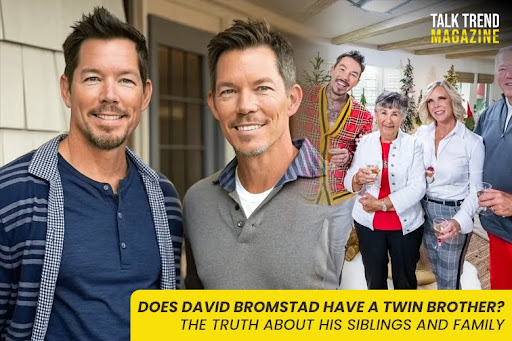
The idea that David has a twin seems to have originated from confusion over his close physical resemblance to his older brother Dean, combined with pattern recognition from TV audiences used to seeing actual twins on other HGTV shows.

But there’s no public birth record, interview, or family statement indicating that any of his siblings is his twin.

David Bromstad Siblings: Who Are Dean, Dynelle, and Dyonne?

Understanding his family starts with knowing the people who actually make it up and not a myth.

Dean Richard Bromstad—His Older Brother

David’s only brother, Dean Richard Bromstad, is often at the center of twin rumors because some fans think they look alike. However:

  • Dean is older than David; they are not twins.
  • He is private—he does not regularly appear on TV or social media.
  • Very little verified information exists about his career, personal life, or interests beyond family references.

The resemblance between David and Dean can be noticeable in some photos. They share facial structure and expressions but verified sources clearly state they are not twin siblings. 

Is Dean Bromstad married?

There is no publicly confirmed information about his marital status. He has not made widely reported public statements about his personal life, so any assertion about his relationship status would be speculative.

Dynelle Renee Bromstad—His Older Sister

Dynelle Renee Bromstad is one of David’s two older sisters. What is publicly known:

  • Like her siblings, she keeps her personal life largely private.
  • Some sources indicate she has appeared on family‑oriented content or made cameo connections to David’s design work, but there’s no detailed public biography.

Is there a David Bromstad siblings photo featuring Dynelle?

Occasionally fans share photos that appear to include David with family, but there’s no widely distributed, officially released high‑profile gallery of all siblings. Any online images claiming to show the family must be approached with caution unless sourced directly from verified accounts.

Dyonne Rachael Bromstad—The Other Sister

Dyonne Rachael Bromstad is David’s other older sister:

  • Like Dynelle, she maintains privacy.
  • Little verified public information exists about her life, age, or current pursuits.

Multiple sources confirm David is close to his sisters, and they have occasionally appeared in his professional life or social media posts.

David Bromstad Siblings Ages

Publicly verified birth years are available for David only (1973). The birth years and ages of Dean, Dynelle, and Dyonne are not widely documented in public records, and any attempts to assert specific ages would be incompatible with accuracy standards.

Thus, public records do not clearly document their ages beyond confirming they are older than David.

Why Do People Think David Bromstad Has a Twin Brother?

The persistence of this internet rumor isn’t random but it has a few identifiable triggers such as

  1. Physical Resemblance to Older Brother Dean

Because David and his brother Dean share some facial similarities in photos, casual observers have mistakenly concluded they are twins.

Some articles on fan sites even say people “confuse Dean as David’s twin” because of this resemblance.

  1. Search Behavior & Online Suggestion Patterns

Search engines often autofill queries based on popular user searches like “David Bromstad twin brother,” and this can reinforce the myth as new people see the suggestion.

  1. Misinterpretation of Photos Across the Years

Fans sometimes point to photos from different eras where David’s appearance (e.g., tattoos, hairstyles) varies and think they are seeing two different people.

This transformation over time, rather than physical twin siblings, likely fuels some of the misconception.

  1. HBO/TV Context & Twin Narrative Expectations

Television audiences are familiar with actual twin hosts on shows like Property Brothers and might subconsciously project a twin expectation onto other HGTV stars, which can help spread the rumor

David Bromstad Relationships and Personal Life: Marriage Rumors, Partners, and the Facts

Public curiosity about David Bromstad extends far beyond the question of whether he has a twin brother. Searches frequently revolve around his relationship history, marital status, and whether he has children. Much of the confusion stems from repeated misinformation across entertainment blogs.

David Bromstad is openly gay and has spoken publicly about his identity over the years. His openness has been consistent, and there is no ambiguity about his sexual orientation in verified interviews and media profiles.

Despite recurring online claims, there is no verified record that David Bromstad has ever been legally married. Some websites incorrectly refer to him as having been “divorced,” while others suggest he had a wife named Victoria.

 Public records, reputable biographies, and credible interviews do not support those claims.There is no documentation of a marriage certificate, divorce filing, or spouse in his public biography.

The most well-known relationship in his life was with Jeffrey Glasko. The two reportedly began dating in the mid-2000s and were together for approximately a decade before separating around 2015. 

Their breakup became public due to legal disputes that followed, but there is no confirmed evidence that they were legally married. Most reliable reports describe them as long-term partners rather than spouses.

Following that separation, David has kept his romantic life more private. Unlike earlier years when aspects of his relationship were visible publicly, he has not made formal announcements about subsequent long-term partnerships.

As for children, there is no verified public record that David Bromstad has children. Rumors suggesting children connected to a supposed marriage are not supported by documented evidence. Neither interviews nor official biographies list any children.

In short

  • David Bromstad has not been publicly confirmed as married.
  • There is no verified wife.
  • There are no publicly confirmed children.
  • His longest documented relationship lasted roughly ten years and ended in the mid-2010s.

Separating public fact from recycled online speculation is essential here, especially given how frequently misinformation spreads through repeated blog posts.

Health and Lifestyle of David Bromstad: What Is Publicly Known

Search trends related to David Bromstad also include questions about surgery and alcohol use. These topics require careful handling because medical and lifestyle details are private unless explicitly disclosed.

There is no widely documented public confirmation of a major surgery that David Bromstad has formally announced in interviews or official statements. If he has undergone routine or minor medical procedures, those have not been broadly covered by reputable outlets. Without direct confirmation, it would be inappropriate to speculate.

Similarly, occasional social media posts showing celebratory settings or drinks do not indicate a documented drinking issue. There is no credible public evidence suggesting alcohol abuse or addiction. David has not made public statements indicating a substance-related struggle.

When addressing public figures, it is important to distinguish between visible social moments and verified health disclosures. In David Bromstad’s case, there is no confirmed medical controversy or documented alcohol problem.

FAQs

  • Does David Bromstad have a twin brother?

No. David Bromstad does not have a twin brother. He has three older siblings: one brother, Dean Richard Bromstad, and two sisters, but none are his twin.

  • Is David Bromstad still with Jeffrey Glasko?

No. Their long-term relationship ended around 2015.

  • What kind of surgery did David Bromstad have?

There is no publicly confirmed information detailing a specific major surgery. Medical matters have not been formally disclosed.

  • Is David Bromstad a drinker?

There is no verified evidence of alcohol abuse or addiction. Social appearances do not indicate a documented issue.

  • Who was David Bromstad in a relationship with?

His most widely documented long-term partner was Jeffrey Glasko.

  • Is David still married to Victoria?

There is no verified evidence that David Bromstad was ever married to anyone named Victoria.

  • How long was David Bromstad in his last relationship?

His relationship with Jeffrey Glasko lasted approximately ten years before ending in the mid-2010s.

  • Who was David’s real wife?

There is no confirmed record that David Bromstad has ever had a wife.

  • How many children do David and Victoria have?

There is no verified record of a marriage to Victoria or children associated with that claim.

  • How many wives did David Bromstad marry?

None. There is no public documentation confirming any marriage.

Divorce is never easy, but when there are millions of dollars, complex business interests, and global properties on the line, the stakes shift from emotional to architectural. You aren’t just ending a marriage; you are dismantling a complex financial entity.

Finding a lawyer who can navigate these waters is the difference between a secure future and a financial catastrophe. Here is everything you need to know about finding the right high net worth divorce lawyer.

What is a High-Asset Divorce?

While definitions vary by region, a “high-net-worth” divorce typically involves a marital estate with liquid assets exceeding $1 million.

Unlike a standard divorce, where the primary concerns are the family home and a 401(k), high-asset cases involve layers of wealth that are often illiquid or tied up in legal entities. These cases require a lawyer who is as much a financial strategist as they are a litigator.

What are the Types of Assets Involved? 

In these cases, the “pot” of marital property is diverse and often spans borders. Common assets include:

  • Business Interests: Ownership in LLCs, private equity, or family-owned businesses.
  • Real Estate: Vacation homes, investment properties, and commercial real estate.
  • Executive Compensation: Restricted Stock Units (RSUs), stock options, and deferred compensation packages.
  • Alternative Investments: Cryptocurrency, hedge funds, and venture capital stakes.
  • Luxury Collections: Fine art, classic cars, jewelry, and private aircraft.

What are the Challenges of High Net Worth Divorce? 

High-net-worth divorces come with a unique set of “moving parts” that can complicate the process:

  • Valuation Disputes: How do you value a startup that hasn’t gone public? Or a piece of art that hasn’t been appraised in a decade?
  • Asset Hiding: Sadly, “financial infidelity” is common. One spouse may attempt to funnel money into offshore accounts or shell companies.
  • Commingling: If you entered the marriage with $5 million but used it to renovate a joint property, that “separate” money might now be “marital” property.
  • Tax Traps: Transferring a $2 million property is different than transferring $2 million in cash. The tax implications of capital gains can take a massive bite out of your settlement if not handled correctly.

Key Aspects of a High Net Worth Divorce Lawyer

A top-tier high net worth divorce lawyer doesn’t work alone. When you hire high-level representation, you are essentially hiring a legal quarterback who coordinates a team of experts:

  • Forensic Accountants: To trace the paper trail and ensure every dollar is accounted for.
  • Business Valuators: To determine the “fair market value” of companies.
  • Tax Experts: To structure the settlement in a way that minimizes the hit from the IRS.
  • Privacy Protections: Using “Private Judges” or robust confidentiality agreements to keep your financial business out of the public record.

How to Find the Right High Net Worth Divorce Lawyer?

To find a lawyer capable of handling a multi-million dollar estate, you need to look beyond standard family law experience. You are looking for a legal strategist with a background in finance and a reputation for discretion.

Here are the specific steps and criteria to find the right high net worth divorce lawyer. 

Prioritize Board Certification and Elite Memberships

Don’t settle for a generalist. Look for attorneys who have achieved the highest level of recognition in their field.

  • State Board Certification

In many states, lawyers can become “Board Certified in Family Law,” meaning they have passed rigorous exams and been vetted by judges and peers specifically for their divorce expertise.

  • AAML Membership

Look for “Fellows” of the American Academy of Matrimonial Lawyers (AAML). This is an invitation-only organization for the top 1,600 matrimonial attorneys in the U.S.

  • Chambers and Partners

Check the Chambers High Net Worth Guide to see which firms are ranked specifically for their work with ultra-high-net-worth individuals.

Evaluate Their Financial Literacy

A High Net Worth Divorce Lawyer must be able to read a balance sheet as well as they read a legal brief. 

During your consultation, ask:

  • “How many of your cases involve Restricted Stock Units (RSUs), carried interest, or offshore trusts?”
  • “Do you understand the tax implications of transferring Section 1244 stock?”

If they seem confused by these terms, they aren’t the right fit for your portfolio.

Assess Their Expertise

High-asset cases are won or lost based on the quality of the experts the lawyer hires. Ask the high net worth divorce lawyer which Forensic Accountants and Business Appraisers they use. A top-tier lawyer will have established relationships with experts who can:

  • Uncover “lifestyle” expenses paid through a business.
  • Perform lifestyle analysis to determine appropriate alimony.
  • Trace the movement of funds through multiple shell companies or trusts.

Look for “Discreet” vs. “Aggressive” Profiles

In high-net-worth circles, public litigation can damage business reputations and tank stock prices.

Look for a high net worth divorce lawyer with a high rate of successful Private Mediations. This keeps your financial “dirty laundry” out of public court records.

If your spouse is hiding assets, you need a “bodyguard” who is comfortable in a courtroom and knows how to use Subpoenas effectively to force transparency.

Conflict of Interest Check

In specialized fields, the best lawyers often know each other—or they may have represented your spouse’s business partners in the past. Ensure you use the American Bar Association’s guidelines to request a formal conflict check before sharing sensitive financial data during an initial meeting.

How Much is the Fee for a High Net Worth Divorce Lawyer?

In high-stakes litigation, you aren’t just paying for time; you are paying for risk management and specialized intellectual capital. Because the financial margin for error is so slim, the billing structure is more complex than a standard hourly rate.

Here is a breakdown of what to expect when budgeting for a high-net-worth legal team.

The Retainer Agreement

A retainer is an upfront “down payment” placed in a trust account. For high-net-worth cases, these are significantly higher because the lawyer must immediately commit a large portion of their firm’s resources to your case.

  • Standard High-Asset Retainer: Expect to pay between $15,000 and $50,000 to start American Bar Association (ABA) – Fee Basics.
  • Evergreen Clauses: Many top-tier firms use an “evergreen” retainer, requiring you to replenish the fund whenever it drops below a certain balance (e.g., $10,000).

Tiered Hourly Rates

You aren’t just paying for one person. High-net-worth cases utilize a “pod” of legal professionals, each billing at different rates:

  • Senior Partners: $600 – $1,200+ per hour. These are the strategists who handle negotiations and court appearances.
  • Associates: $300 – $500 per hour. They handle the heavy lifting of research, drafting motions, and reviewing financial disclosures.
  • Paralegals/Analyst: $150 – $250 per hour. They organize the massive amounts of data involved in Document Discovery.

The “Expert” Payroll

Your high net worth divorce lawyer’s fee is often only half the battle. You will likely be billed separately for third-party professionals vetted by your attorney:

  • Forensic Accountants: Often require their own $5,000–$10,000 retainer to begin tracing assets.
  • Business Valuators: A formal Business Valuation Report for a mid-sized company can cost $10,000 to $30,000 on its own.
  • Vocational Experts: If alimony is disputed, these experts (billing $250+/hour) assess the “earning capacity” of a non-working spouse.

Cost Shifting

In many jurisdictions, if there is a significant “wealth gap” between spouses (e.g., one spouse controls the business while the other stays home), the court can order the wealthier spouse to pay for the other’s legal fees.

Your lawyer can file a motion early in the case to ensure you have the funds to hire equal-caliber representation and experts, American Academy of Matrimonial Lawyers (AAML).

The “Trial Premium”

If the case cannot be settled in mediation and proceeds to a full trial, costs escalate exponentially. A single week of trial can cost $50,000 to $100,000 in combined legal and expert-witness fees, due to the intensive preparation and daily “court time” billed by multiple attorneys.

While a standard divorce might cost $5,000–$15,000, a truly complex high-net-worth divorce typically ranges from $50,000 to well over $250,000, depending on how hard the assets are contested.

In Summary

A high net worth divorce lawyer isn’t just about “winning”; it’s about preservation. The right lawyer will protect the lifestyle you’ve built and ensure that your financial future remains intact. Hopefully, this guide helps you find the ideal lawyer.